Category: News

  • States Take the Lead

    States Take the Lead

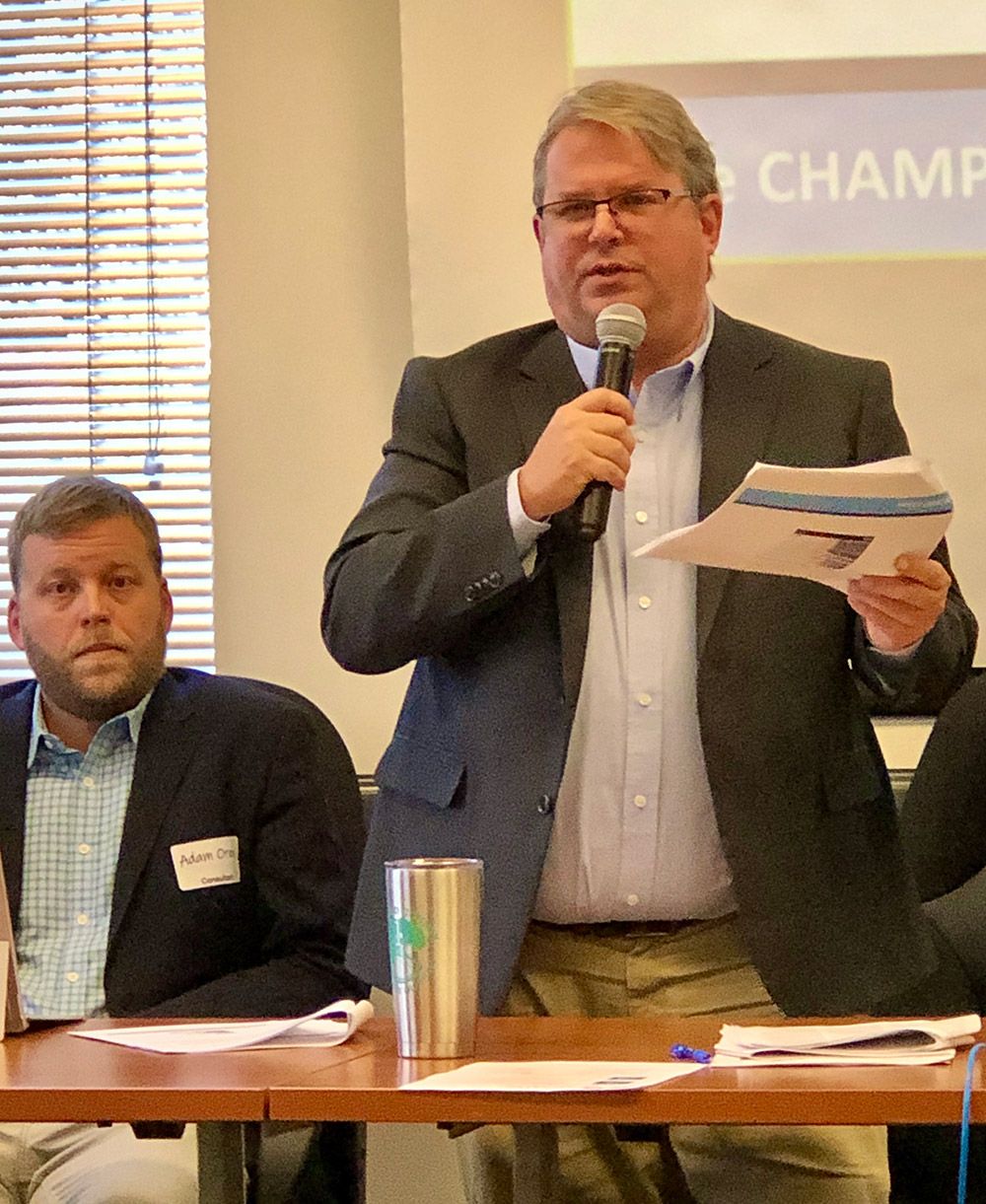
    Brian Koontz, Manager of the Colorado Department of Agriculture’s Industrial Hemp Program (right), shares the state’s concerns
    over USDA’s Interim Final Rule for U.S. hemp production at a public hearing in Broomfield, CO, on December 10. Photo: Compass Natural

    Colorado’s CHAMP Hemp Initiative Welcomes Public Comments in Responding to USDA’s Interim Final Rule on Hemp

    As state and industry leaders sift through USDA’s Interim Final Rule set to govern U.S. hemp production in order to craft a response in advance of the December 30 comment deadline, a number of common concerns are emerging, not the least of which is the rule’s increased potential to place farmers at risk.

    By Steven Hoffman

    The Colorado Department of Agriculture’s Hemp Advancement & Management Plan (CHAMP) initiative welcomed on December 10 more than 100 hemp industry members, advocates, farmers, researchers, academics and others to the agency’s office in Broomfield, CO, for a public meeting to hear comments on the USDA Interim Final Rule (IFR) to establish a national hemp production program and how it affects the state’s own plan for hemp.

    The goal of the hearing was to gather comments from the public and coordinate a unified response from the state of Colorado to the USDA in advance of USDA’s December 30 comment period deadline regarding the Interim Final Rule governing U.S. hemp production. In addition, state leaders gathered information at the hearing to help align Colorado’s comprehensive hemp plan with IFR requirements.

    The comment letter to the USDA, to be prepared on behalf of the state in coordination with the Colorado Department of Agriculture (CDA), the state’s Attorney General and the office of the Governor, will be signed by Governor Jared Polis and Agriculture Commissioner Kate Greenberg. The response will express the state’s perspectives and concerns as a first mover and leader in industrial hemp regarding USDA’s IFR and its impact on Colorado hemp producers who have already been operating under a well-established, state-managed regulatory system in Colorado since 2014. At issue is where USDA rules differ from Colorado regulations and how the state’s farmers may be subject to increased violations and financial risk from seemingly inflexible federal rules that don’t allow for variation in a young, maturing industry.

    To date, the USDA has received approximately 1,100 comments regarding the IFR. Hemp and industry leaders and advocates are urging all constituents to submit comments. “The USDA needs to hear from all of us and there should be 100,000 comments, not 1,100,” said one Colorado hemp farmer commenting at the Colorado CHAMP public hearing. The U.S. Hemp Roundtable prepared a letter outlining its issues with the IFR, and other states including Maine submitted comments to USDA sharing their concerns about USDA’s rule.

    Percent of Violations Could Increase Under USDA’s IFR

    “The way [the IFR] is written, the percentage of violations could increase. More farmers could be unnecessarily subject to violations,” observed Adam Orens, a consultant with Colorado State University and CHAMP who reported at the hearing on how the USDA’s IFR could impact the state’s hemp producers. “USDA’s set of rules was written for a state with half or less of the total acreage of Colorado. Given the expected scale of production in Colorado, we have concern that public and private investment could be affected as a result of USDA’s IFR on hemp,” he added.

    Orens noted that USDA’s IFR will govern hemp for two years, after which a Final Rule will be issued. “The two year interim period allows for a full crop cycle; the 2020 season will be a test drive,” he added.

    According to Orens, USDA’s interim rule defines acceptable levels of THC (“with a hard limit of 0.3%”), covers registration for hemp farmers, sampling, testing, disposal of “hot” plants, and enforcement and violations. “The showstopper is that USDA will require 100% of all lots to be sampled, while only random sampling had been required in Colorado,” Orens said. “Plus, the top one-third of the plant is to be tested; it’s not more specific than that. We see a challenge there with logistics,” he added.

    Orens added that in terms of percentages of THC content, under USDA’s IFR, “the line is drawn at 0.5%.” “If the crop sample tests at greater than 0.3%, it must be destroyed. If it tests at less than 0.5%, it is not considered a negligent violation. If a crop comes in at greater than 0.5%, that is considered a violation. In Colorado, the limit is 1%, so that is different.” Orens noted that if a farmer receives three violations in one year, a suspension would be issued under the USDA interim final rule.

    A concern raised by a number of hemp growers at the hearing was that crop sampling and testing for THC content must be conducted within a very narrow window of 15 days prior to anticipated harvest. Harvest is not allowed until samples are taken and the crop cannot enter the stream of commerce until THC content is verified. Farmers expressed concern that, with the current scarcity of approved testing laboratories, the overwhelming demand for sample testing during the harvest months of September and October would create an impossible backlog, impacting the allowed window for sampling and testing and in consequence, farmers’ harvests. A number of citizens also asked why “hot” crops have to be destroyed and not repurposed into fiber, animal feed, or other uses where the farmer doesn’t have to lose the entire income on his or her crop.

    Adding potential insult to injury, just as hemp farmers have been cleared under the 2018 Farm Bill to qualify for crop insurance, USDA’s interim rule pulls the rug out on farmers if a crop tests “hot.” According to CannaLaw Blog, “Hemp with a THC level above the compliance level will not constitute an insurance cause of loss…The lack of crop insurance coverage for hemp that fails testing, when combined with the rules about crop destruction, creates enormous risk for hemp farmers. A farmer may try to do everything right only to end up with an uninsurable crop that must be destroyed and a complete loss of their investment into hemp farming.”

    USDA’s rules further require that testing labs be registered with the U.S. Drug Enforcement Administration (DEA). But current DEA rules limit registration to jurisdictions in which medical or recreational marijuana is legal, reports CannaLaw Blog. “Although the number of such jurisdictions is growing, no one in the industry believes that the number of DEA registered laboratories can handle the quantities of hemp being produced by American farmers. This is an area where Congress may need to place pressure on the USDA and DEA to avoid causing a significant bottleneck in the hemp supply chain.”

    States Will Need to Adopt Final USDA Rule by November 1, 2020

    Brian Koontz, Manager of the Colorado Department of Agriculture’s Industrial Hemp Program, told the public meeting attendees, “We can operate under our existing state plan through October 31 of next year; after that all states including Colorado will need to adopt USDA’s final rule regarding hemp on November 1, 2020.

    Koontz expressed the state’s concern that, given the 100% testing requirement, more testing staff will be required and testing labs will have to be certified by the DEA. “About 2,000 acres of hemp were ordered destroyed in Colorado last year, and that was at an average of 25% testing. Given the 100% testing requirement, our concern is that the percentage of crops required to be destroyed may significantly increase, which could adversely affect our state’s farmers,” Koontz said.

    Koontz also noted that, whereas the USDA IFR stipulates that hemp growing licenses will not be issued to individuals with any felony convictions, “that rule should not apply to farm workers, drivers and others who are not key personnel,” he said.

    “Also, USDA in its IFR did not address certified seed. However, we see this as important, as hemp growers want reliable genetics,” Koontz added, and he encouraged people to submit comments to USDA regarding their concerns and thoughts on certified seed and seed genetics.

    Commenting at the hearing, Ed Lehrburger, founder of Pure Hemp Technology and Chair of Colorado’s Hemp Advisory Committee, offered: “When farmers’ crop tests hot, it can destroy hopes and dreams. As such, I recommend that USDA’s definition of hemp be changed. The 0.3% THC limit must be increased to 0.5%. Any hemp crop testing at greater than 1% THC could be considered as ‘noncompliant,’ he suggested.

    Speaking on behalf of the Rocky Mountain Farmers Union, Nick Levendofsky, RMFU’s Director of External Affairs, told the CDA and CHAMP officials conducting the public hearing, “We support the issuance of the rule overall as it supports an emerging industry that can help rural farmers. However, dealing with acceptable levels of THC is not something we’ve seen before. Our real concern is that testing could be too costly and may reduce opportunities for rural farmers. Disposal is also a concern. Family farmers should have the same opportunities in hemp, not just venture capital backed operations, and a negligent violation should not be so punitive as to deter farmers,” he commented.

    Hunter Buffington, Director of the Colorado Hemp Feed Coalition, wondered if DEA involvement in the hemp program “is another example of government overreach? No other crop has to deal with the DEA,” she observed. Buffington and others also advocated that by requiring testing of the top one-third of the plant “ignores the rest of the plant.” She advocated for testing homogenized samples of the whole plant instead, and also asked that the program make exceptions for research and development. “We want stable and compliant varieties. The rule is written for farmers but not for researchers. An exemption is absolutely necessary to allow institutions to conduct research,” she said.

    Jared Stanley, co-founder of Charlotte’s Web, noted that industrial hemp is not just CBD. “The 2018 Farm Bill allows for all parts of the plant,” he reminded the CHAMP hearing panel. Stanley also advocated for exploring the allowance in the program for an export market for U.S. grown hemp. “American hemp was created via this program,” he said. “We need to promote an export market for our hemp so we don’t have to grow hemp in Uruguay just to sell to Europe.”

    In summary, says CannaLaw Blog, “Everyone in the hemp industry ought to submit a comment. Submitting a comment is easy: just click here. Note that you can also upload documents, such as prepared statements or other relevant materials.”

    # # #

    Steven Hoffman is Managing Director of Compass Natural, providing brand marketing, PR, social media, and strategic business development services to natural, organic, sustainable and hemp/CBD products businesses. Compass Natural serves in PR and programming for NoCo Hemp Expo and  Southern Hemp Expo, and Hoffman serves as Editor of the weekly Let’s Talk Hemp Newsletter, published by We are for Better Alternatives. Contact steve@compassnaturalmarketing.com.
     

  • The FDA Strikes Back

    The FDA Strikes Back

    Agency Issues Warning Letters to 15 CBD Makers, Releases Consumer Guide Expressing Doubts About CBD Safety

    By Steven Hoffman

    As the USDA Takes Public Comments on Its Final Interim Rule for Hemp Production, FDA on November 25 Issued Warning Letters to 15 CBD Makers and Expressed Doubts about the Safety of CBD in a Newly Released CBD Consumer Guide

    The U.S. Food and Drug Administration (FDA) seems to have flipped the Thanksgiving bird, so to speak, to the hemp and CBD industry when it issued on November 25 – the Monday before Thanksgiving – warning letters to 15 companies for allegedly selling products containing cannabidiol (CBD) in ways the agency said violate the Federal Food, Drug and Cosmetic (FD&C) Act.

    On the same day, the FDA also released a revised Consumer Update – titled What You Need to Know (and What We’re Working to Find Out) About Products Containing Cannabis or Cannabis-derived Compounds, including CBD – that details the agency’s alleged safety concerns about CBD products, in particular the safety of CBD in food. In a blow to the burgeoning CBD marketplace, the FDA said it couldn’t conclude that CBD is safe for use in human or animal food.

    Despite the 2018 Farm Bill removing hemp — defined as cannabis and cannabis derivatives with very low concentrations (no more than 0.3% on a dry weight basis) of THC — from the definition of marijuana in the Controlled Substances Act, CBD products are still subject to the same laws and requirements as FDA-regulated products that contain any other substance. “The FDA is concerned that people may mistakenly believe that trying CBD ‘can’t hurt,’” it said in the Consumer Guide. “The agency wants to be clear that we have seen only limited data about CBD’s safety and these data point to real risks that need to be considered,” the agency added.

    The FDA expressed particular concerns in the Consumer Guide about potential liver toxicity, drug interactions and male reproductive toxicity. The FDA also stated that using CBD may have certain temporary side effects, including, among others, drowsiness, insomnia, gastrointestinal distress, decreased appetite, irritability, and agitation. The FDA says it is actively working to answer questions about science, safety and quality of products containing cannabis and cannabis-derived compounds, particularly CBD. It also said it wants to learn about and identify potential risks associated with cumulative exposure such as ongoing use and ingestible or topical use, the effect on special populations such as elderly, children, and pregnant or breastfeeding women, and the use of CBD by pets and other animals.

    Bad Comparisons

    However, Dr. Stuart Titus, CEO of Medical Marijuana, a publicly traded company which has created a CBD product line, challenged the FDA’s decision, telling Forbes, “The FDA has mistakenly substituted the adverse effects of Epidiolex, a refined, isolated and semi-synthetic form of CBD, as being the same form of CBD that is being sold by those in the nutritional supplement industry,” he said. “Nothing could be further from the truth. There is no evidence to show that botanical forms of CBD have much more ‘drug interaction’ than normal foods or that the natural botanical form of CBD confers the ‘toxic liver effects’ that the FDA mentions in its statement.”

    Titus also told Forbes that the CBD industry, the Hemp Roundtable and the U.S. Hemp Authority have been working to increase their standards and industry-wide vigilance toward the quality of manufacturing, and other regulations regarding the production of a safe and well-tested form of CBD.

    In a 2018 report, the World Health Organization found no adverse health effects but rather several medical applications for cannabidiol (CBD), despite FDA policy, reported Forbes. According to the WHO, naturally occurring CBD is safe and well tolerated in humans (and animals), and is not associated with any negative public health risks. Experts with the international health organization further stated that CBD does not induce physical dependence and is “not associated with abuse potential.” According to the WHO, people are not getting high off of CBD, either. “To date, there is no evidence of recreational use of CBD or any public health related problem associated with the use of pure CBD.”

    Currently, writes Stephanie Savage of law firm Miller & Martin, Epidiolex is the only FDA-approved drug product containing CBD. The FDA believes that the new drug approval process is the best way to ensure the safety and effectiveness of new medicines, she says. Even though products are being marketed and sold as a food or dietary supplement, FDA asserts it is illegal to market CBD by adding it to a food or labeling it as a dietary supplement. The FDA is evaluating the regulatory frameworks that apply to certain cannabis-derived products that are intended for non-drug uses, including whether and/or how the FDA might consider updating its regulations, as well as whether potential legislation might be appropriate, she writes.

    Calling Companies Out for Making Health Claims

    In issuing the warning letters, the FDA says it identified 15 companies that “are using product webpages, online stores and social media to market CBD products in interstate commerce in ways that violate the FD&C Act, including marketing CBD products to treat diseases or for other therapeutic uses for humans and/or animals. Other violations include marketing CBD products as dietary supplements and adding CBD to human and animal foods, the agency said in a release.

    “As we work quickly to further clarify our regulatory approach for products containing cannabis and cannabis-derived compounds like CBD, we’ll continue to monitor the marketplace and take action as needed against companies that violate the law in ways that raise a variety of public health concerns. In line with our mission to protect the public, foster innovation, and promote consumer confidence, this overarching approach regarding CBD is the same as the FDA would take for any other substance that we regulate,” said FDA Principal Deputy Commissioner Amy Abernethy, M.D., Ph.D., in a statement.

    Michael Harinen, Chief Brand Officer at Louisville, CO-based Bluebird Botanicals, which makes hemp-derived CBD products, told Forbes that the FDA brought up valid concerns about companies that are selling products with unverified medical claims or are unsafe for human consumption. Some of the products are tainted with pesticides or herbicides, while others have little to no CBD in them, he said. “It’s affected our business because whenever the FDA comes out with an announcement, including this one, customers call us up,” said Harinen. “They are very wary and scrutinizing us. And they are concerned about the legal status of CBD.”

    Companies receiving warning letters from the FDA include the following:

    • Koi CBD LLC, Norwalk, California
    • Pink Collections Inc., Beverly Hills, California
    • Noli Oil, Southlake, Texas
    • Natural Native LLC, Norman, Oklahoma
    • Whole Leaf Organics LLC, Sherman Oaks, California
    • Infinite Product Company LLLP, dba Infinite CBD, Lakewood, Colorado
    • Apex Hemp Oil LLC, Redmond, Oregon
    • Bella Rose Labs, Brooklyn, New York
    • Sunflora Inc., Tampa, Florida / Your CBD Store, Bradenton, Florida
    • Healthy Hemp Strategies LLC, dba Curapure, Concord, California
    • Private I Salon LLC, Charlotte, North Carolina
    • Organix Industries Inc., dba Plant Organix, San Bernardino, California
    • Red Pill Medical Inc., Phoenix, Arizona
    • Sabai Ventures Ltd., Los Angeles, California
    • Daddy Burt LLC, dba Daddy Burt Hemp Co., Lexington, Kentucky

    The FDA also stated it has previously sent warning letters to other companies it says were “illegally selling CBD products in interstate commerce that claimed to prevent, diagnose, mitigate, treat or cure serious diseases, such as cancer, or otherwise violated the FD&C Act. Some of these products were in further violation because CBD was added to food, and some of the products were also marketed as dietary supplements despite products which contain CBD not meeting the definition of a dietary supplement,” the FDA added in a release.

    # # #

    Steven Hoffman is Managing Director of Compass Natural, providing brand marketing, PR, social media, and strategic business development services to natural, organic, sustainable and hemp/CBD products businesses. Compass Natural serves in PR and programming for NoCo Hemp Expo and  Southern Hemp Expo, and Hoffman serves as Editor of the weekly Let’s Talk Hemp Newsletter, published by We are for Better Alternatives. Contact steve@compassnaturalmarketing.com.
  • Lawyers Weigh In on USDA Interim Final Hemp Rule

    Lawyers Weigh In on USDA Interim Final Hemp Rule

    By Steven Hoffman

    As USDA seeks comments by December 30 for its new Interim Hemp Rule that lays out regulations to establish a U.S. Domestic Hemp Production Program, a big concern is the rule’s timeline for farmers getting their plants tested to make sure they don’t exceed the maximum allowed level of THC.

    The challenge is the rule requires that the plants be tested within 15 days before harvest begins. The USDA says if farmers delay harvest beyond 15 days, the plants will likely have a higher THC level than the sample. If the level exceeds 0.3%, the plants will have to be disposed of under Drug Enforcement Administration regulations because the hemp would be considered a controlled substance.

    But the 15 days aren’t much time to submit the plants and get the results needed to know whether it’s OK to go ahead and harvest the crop, Michael Bowman, a co-founder of First Crop, a public benefit company working with hemp farmers, told the Denver Post. “I would call it unworkable at this point,” Bowman said of the provision.

    Meghana Shah, a co-leader at the New York City office of Eversheds Sutherland law firm, told the Denver Post, “It doesn’t address the fact that all of the sampling and testing is essentially happening around the same time for all of the producers. There’s uncertainty as to when the results will come back and how that affects a producer’s decision to actually harvest. There are a lot of sort of logistical and practical hurdles posed by the 15-day window with not a lot of answers. That is one of the areas where USDA sought comment, so I think we can expect to see it addressed during the comment period,” Shah added.

    According to USDA, the draft hemp rule outlines provisions for USDA to approve plans submitted by states and Indian Tribes for the domestic production of hemp. It also establishes a federal plan for producers in states or territories of Indian Tribes that do not have their own USDA-approved plan. The program includes provisions for maintaining information on the land where hemp is produced, testing the levels of delta-9 tetrahydrocannabinol, disposing of plants not meeting necessary requirements, licensing requirements, and ensuring compliance with the requirements of the new part. The rule will become effective when it is published in the Federal Register. Comments received by December 30, 2019, will be considered prior to issuance of a final rule.

    To help producers and businesses make sense of USDA’s draft Hemp Rule, a number of law firms and legal experts specializing in industrial hemp have published opinions, analyses and client alerts about the impact and key takeaways of the draft rule. Here is a sampler of recent analysis, interviews and video segments with leading law firms tracking the industrial hemp marketplace about their views on USDA’s new interim hemp rules.

    Read the Draft Rule here.

    Comment on the Rule here. To date, USDA has received 714 comments on the draft rule to establish a domestic hemp program. To submit an official comment on USDA’s Interim Rule, visit here. Comments received by December 30, 2019 will be considered prior to issuance of a final rule.


    USDA (Finally) Releases Groundbreaking Interim Hemp Regulations
    By Garrett Graff, Hoban Law Group
    https://hoban.law/2019/10/usda-interim-hemp-regulations/

    Attorneys Scrutinize USDA Hemp Rule
    By Law Week Colorado
    https://lawweekcolorado.com/2019/11/attorneys-scrutinize-usda-hemp-rule/

    Key Takeaways from USDA Final Interim Rules for Domestic Hemp Production
    By Jennifer K. Mason and Ambur C. Smith, National Law Review
    https://www.natlawreview.com/article/key-takeaways-usda-final-interim-rules-domestic-hemp-production

    Client Alert: Legal Analysis of USDA Interim Final Hemp Rule
    By Michelle Nicole Diamond, et. al., WilmerHale
    https://www.jdsupra.com/legalnews/usda-releases-interim-hemp-regulations-71800/

    Video Interview: What Hemp Businesses Need to Know about the New USDA Hemp Rules
    Featuring Shawn Hauser, Partner, Vicente Sederberg
    https://vicentesederberg.com/updates/shawn-hauser-hemp-industry-daily-interview/

    Legal Alert: USDA’s Rule on Hemp Is Here, and It Needs Greater Clarity
    By Gregory Kaufman, et. al., Eversheds Sutherland
    https://us.eversheds-sutherland.com/NewsCommentary/Legal-Alerts/226749/Legal-Alert-The-USDAs-eagerly-anticipated-rule-on-the-production-of-hemp-is-here-and-it-needs-greater-clarity-and-would-benefit-from-more-industry-input

    Client Alert: USDA Issues Hemp Rule
    By Cameron Field, et. al., Michael Best, Attorneys at Law
    https://www.michaelbest.com/Newsroom/222606/USDA-Issues-Hemp-Rule

    One Step Toward Clarity: USDA Issues Interim Final Rule Establishing Hemp Production Program
    By Ropes & Gray
    https://www.ropesgray.com/en/newsroom/alerts/2019/11/One-Step-Toward-Clarity-USDA-Issues-Interim-Final-Rule-Establishing-Hemp-Production-Program

    USDA Interim Hemp Regulations Provide Welcome Guidance But Need Refinement
    By Mackenzie Schoonmaker and Christopher Strunk, National Law Review
    https://www.natlawreview.com/article/usda-interim-hemp-regulations-provide-welcome-guidance-need-refinement

    Will USDA’s Rule Get Hemp Over the Hump? (Maybe Not Without a Little Help from FDA)
    By Ricardo Carvajal, FDA Law Blog
    http://www.fdalawblog.net/2019/11/will-usdas-rule-get-hemp-over-the-hump-maybe-not-without-a-little-help-from-fda/

    USDA Issues Rules for Hemp Production – Many Questions Remain for Hemp and CBD Sales
    By Jay Dubow, et. al., Pepper Hamilton LLP
    https://www.pepperlaw.com/publications/usda-issues-rules-for-hemp-production-many-questions-remain-for-hemp-and-cbd-sales-2019-11-08/

    Does the USDA Rule Affect Hemp That Is Currently On the Market?
    By Cannabusiness Law
    https://cannabusiness.law/does-the-usda-rule-affect-hemp-that-is-currently-on-the-market/


    # # #

    Steven Hoffman is Managing Director of Compass Natural, providing brand marketing, PR, social media, and strategic business development services to natural, organic, sustainable and hemp/CBD products businesses. Compass Natural serves in PR and programming for NoCo Hemp Expo and  Southern Hemp Expo, and Hoffman serves as Editor of the weekly Let’s Talk Hemp Newsletter, published by We are for Better Alternatives. Contact steve@compassnaturalmarketing.com.
     

  • Hemp Producers Face Harvest Challenges

    Hemp Producers Face Harvest Challenges

    Hemp Producers Face Harvest Challenges; Seek Creative Ways to Profit in 2019

    By Steven Hoffman

    States and farmers throughout the U.S. are celebrating the nation’s first legal hemp harvest in more than 80 years, and this year’s harvest is estimated by Vote Hemp to come in at 115,000 – 138,000 acres, up 50% over 2018 hemp harvest levels. However, many first-time and even more experienced growers faced a number of adverse conditions and/or they went through a steep learning curve this growing season, resulting in significant crop and monetary losses for some producers and processors.

    In addition, among the hemp industry’s growing pains for many new producers has been finding an end market for harvested product. Federal legalization of industrial hemp as a result of the 2018 Farm Bill brought on a “green rush” of new farmers across the country. With so much product on the market and jitters around possible links between CBD and a recent rash of vaping injuries and fatalities, a good portion of the nation’s 2019 hemp harvest could end up in storage.

    “There’s a lot of excitement about the new [hemp] crop in New Mexico,” the state’s Secretary of Agriculture Jeff Witte told the Albuquerque Journal. Witte noted that more farmers joined the state’s hemp program this past year than the Department of Agriculture anticipated. It’s also a learning year for hemp producers, with plenty of trial and error as growers attempted to find the right approach to growing in New Mexico’s sometimes unforgiving conditions, Duke Rodriguez, President and CEO of Ultra Health, New Mexico’s largest medical marijuana producer and parent company of Ultra Hemp, told the Albuquerque Journal. Rodriguez said he expects only a third of the hemp grown this year to be successfully harvested. “Even for our own grow, we had what I would consider mixed results,” he said.

    For hemp farmers in the Midwest, torrential spring rains damaged many crops, including hemp, or delayed planting. “The late planting date caused challenges because the plants didn’t get as tall, they never canopied and that created weed problems,” farmer Mark Boyer told WFYI News in Indianapolis, IN. However, many Midwestern farmers remain hopeful that hemp will provide farmers — many of whom have been struggling due to low commodity prices — the chance to diversify, and it could generate the next generation of farmers, Justin Swanson, an attorney and the Midwest Hemp Council’s co-founder, told WFYI News.

    MA State Edibles Ban Chokes Off Lucrative Market for Farmers

    In Massachusetts, seeds were already in the ground in June when state agricultural officials without warning banned the state’s hemp farmers and processors from making or selling practically any edible product infused with hemp-derived cannabidiol, or CBD. While claiming that the ban was a clarification of existing law, to the 104 licensed hemp farmers in the state, the ban cut off one of the most lucrative markets for their crops and disrupted farmers’ financial calculations for the 2019 growing season.

    Now, the Boston Globe reported, farmers claim “the disaster they warned of all summer has arrived: tens of thousands of pounds of hemp harvested this fall and currently drying in barns across Massachusetts have nowhere to go, with edibles makers sidelined and other buyers offering extremely low prices to use the crop as biomass for fuel or feed. Lacking a financial incentive to process the plants into CBD and with state rules also banning exports and the sale of smokable hemp flower, growers are bracing for ruin,” the Globe reported. “Everybody is finishing the harvest, and none of us know what to do,’’ Linda Noel, a longtime farmer in Franklin, MA, told the Globe. Noel said she was offered $100 per pound for her artisanal hemp crop instead of the $500 she expected or the more than $900 per pound that premium, well-trimmed hemp might fetch in nearby Vermont, which has more liberal regulations, the Globe reported. “The state keeps changing the rules halfway through the game. It’s insulting,” she said.

    Producers Facing Five Big Challenges in 2019

    According to a recent report in Forbes, there are still too many uncertainties and challenges that the agricultural sect must face before hemp as a crop takes off in the way that advocates have long predicted. Forbes writer Mike Adams noted that the following are the most common problems hemp farmers have been dealing with since America’s latest cash crop was made legal.

    • Poor first-year yields make it difficult for farmers to be profitable – Torrential spring rains in the nation’s heartland – which some call a “sweet spot” for growing hemp – delayed planting dates, stunted plants and affected yield for many first-time farmers.
    • Growing hemp is more labor intensive than traditional crops – Growing hemp is a laborious affair, especially since many farmers do not presently have the proper equipment to efficiently see the process through from seed to harvest.
    • Some of the hemp seed being sold for CBD-rich plants is of questionable quality – Farmers interested in producing plants to sell go CBD processors require all female plants. However, a Philadelphia Inquirer report indicates that for many growers male plants showing up in the crop have negatively affected harvesting of plants, rendering some crops “worthless.”
    • Thieves are stealing hemp plants – With thieves often confusing hemp for its intoxicating cousin marijuana, growers are being forced to either invest in increased security or recruit watchmen to keep a constant lookout. Often the farmers themselves are losing sleep keeping watch at night over their hemp fields.
    • Too much hemp is being produced with no new markets to which producers can sell – Now that the first harvest is considered mostly a wrap, many farmers are struggling to find a market where they can sell it. “It’s not like corn or wheat or other commodities, where you just go down to the local grain elevator,” Matt Cyrus, the president of the Deschutes County (Oregon) Farm Bureau, toldthe Philadelphia Inquirer.

    Ways Farmers May Profit this Season

    Ultimately, 2019’s growing pains will be a good thing for hemp producers. In New Mexico, for example, Duke Rodriguez noted that the learning process has helped growers identify strains and discover growing techniques that will allow hemp to thrive in New Mexico’s climate. In fact, Rodriguez told the Albuquerque Journal that, given the available land and direct sunlight, New Mexico could become a “major powerhouse” in hemp production. New Mexico Agriculture Secretary Witte and Rodriguez both agreed that it would be beneficial for New Mexico’s hemp industry to focus on adding value by processing and extracting oil from hemp going forward, through public or private investment.

    For hemp producers throughout the U.S., from posting hemp for sale on PanXchange, a new online hemp trading platform or working with brokers, experts say that profit opportunities aren’t lost even for those who haven’t yet sold their hemp crops, “as long as cultivators are able to harvest and take steps to protect their hemp from dampness, mold and other potentially ruinous dangers,” Hemp Industry Daily reported.

    Farmers who can’t sell their raw crops immediately or get them to an extractor should try to do as much preprocessing as possible to buy themselves some time, Joel Bedard, CEO of The Vermont Hemp Co. in Corinth, VT, suggested in Hemp Industry Daily. Preprocessed dry material can be stored in large white sacks or totes and plastic bins until farmers can find a buyer or an extractor for further processing, but even well-stored, dried material shouldn’t be kept beyond six months, Bedard said.

    Farmers who can get their hemp to an extractor for processing should try to have it processed into winterized, decarboxylated crude oil, advised William Goodall, CEO of Denver-based Eco Extract Labs. “The sooner that you can extract it and get it into a concentrated oil and then sort in a barrel, preferably a cool location, the more you’ll get out of your plants,” Goodall told Hemp Industry Daily.

    Ultimately, experts also advise to “network, network, network.” Some farmers have also found that posting photos and details of their crops on social media can help move material. Wesley Ray, Co-founder of Combined Hemp in Bend, OR, uses LinkedIn to promote his hemp farm. “Comments turn into (direct messages) and then eventually farm visits, Ray told Hemp Industry Daily.

    In addition to the PanXchange, other online hemp trading platforms include The Hemp Marketplace, which began operation in 2017, and the Hemp Exchange, founded in 2019.

    Photo: Compass Natural

    # # #

    Steven Hoffman is Managing Director of Compass Natural, providing brand marketing, PR, social media, and strategic business development services to natural, organic, sustainable and hemp/CBD products businesses. Compass Natural serves in PR and programming for NoCo Hemp Expo and  Southern Hemp Expo, and Hoffman serves as Editor of the weekly Let’s Talk Hemp Newsletter, published by We are for Better Alternatives. Contact steve@compassnaturalmarketing.com.
     

  • Mitch McConnell Meets Behind the Scenes with California Hemp, Cannabis Execs on Banking Legislation

    Mitch McConnell Meets Behind the Scenes with California Hemp, Cannabis Execs on Banking Legislation

    By Steven Hoffman

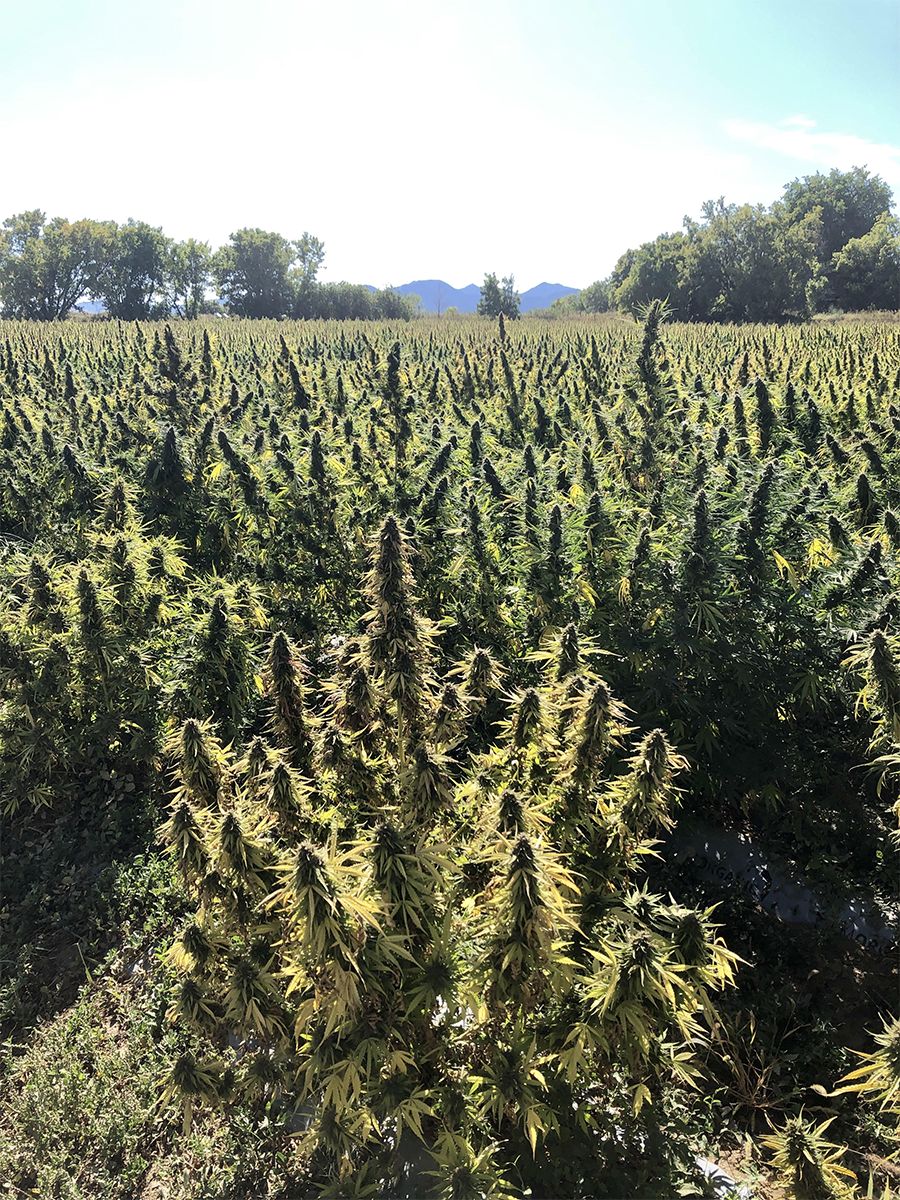
    Senate Majority leader Mitch McConnell has been a longtime opponent of reforming marijuana laws, yet the Kentucky Republican will go down in history as the Senator who helped legalize industrial hemp in the U.S. However, due to confusion between federal and state laws around hemp and cannabis, the commercial hemp industry – as well as the legal marijuana industry – has been severely hampered by the banking industry’s reluctance to provide services to cannabis-related businesses.

    To help reconcile this issue, in late September the House of Representatives passed the SAFE Banking Act (Secure and Fair Enforcement Banking Act) to allow banking services for hemp and cannabis-related businesses. Now that the bill has reached the Senate, McConnell’s support to pass the banking legislation is critical to furthering the hemp agriculture and business he originally championed.

    To learn more about the issue, McConnell earlier this week made a discreet two-day visit to California to meet over lunch with hemp and cannabis leaders, small business owners and at least one hemp farmer, and to take a tour of a cannabis-related company, MarketWatch reported. The cannabis industry representatives participating in the meetings advocated to Senator McConnell that banking and credit card transaction reform is necessary because confusion over current laws unfairly penalizes businesses that obey federal laws, such as hemp farmers producing the crop for legal CBD products, for example.

    “I think this is absolutely positive that McConnell is meeting with stakeholders in the cannabis market. The U.S. market needs the banking act to flourish; without it – there are legitimate companies that are following rules that are facing major obstacles. Banking legislation would be a huge positive catalyst,” Jason Zandberg, a financial analyst with PI Financial, told MarketWatch.

    Calling marijuana an “illicit cousin” to hemp, McConnell has been on the fence regarding the Senate taking up the SAFE Banking Act bill. However, a provision in the bill grants specific protections to hemp farmers, who are key voters in McConnell’s home state of Kentucky. According to MarketWatch, it was not immediately clear whether McConnell’s California visit signaled a shift in his thinking about cannabis banking reform, and his office did not respond to requests for comment.

    According to one attendee interviewed by Marijuana Moment, at a 90-minute luncheon meeting at the Newport Beach Country Club with about 20 people, McConnell mostly listened as others spoke about challenges experienced by hemp, CBD and marijuana businesses under current federal laws. “We put our best face forward. We were strategic by not forcing him into a corner” by pressing him with pointed questions, the attendee said. According to Marijuana Moment, cannabis industry representatives, including a hemp farmer, made up about one third of the attendees at the fundraising luncheon, with the other seats taken by Orange County, CA, Republican donors.

    “We’re happy to see that Leader McConnell is coming to see how a regulated market is an improvement over prohibition,” National Cannabis Industry Association Executive Director Aaron Smith told MarketWatch. “Right now, the priority is banking, which affects [McConnell’s] constituents in the hemp and CBD industry, as well as legal cannabis businesses here in California. That’s really our primary ask – common-sense policies around banking and public safety, and we’re hopeful [McConnell] will see the need for that and move forward along with Chairman [Sen. Mike] Crapo.” (Sen. Crapo (R-ID) is Chair of the Senate Banking Committee.)

    While Republicans have advanced other bills to ease financial sector regulation, GOP senators have shown little interest in grappling with cannabis, The Hill reports. Only two GOP senators attended a July banking panel hearing on the bill: Sen. Crapo and Sen. Cory Gardner (R-CO), one of only five Republican co-sponsors of the Senate version of the bill.

    “Senator McConnell, a man who already ended decades of prohibition on industrial hemp production, needs to see the importance of changing marijuana laws in this country, too,” columnist Mike Adams wrote in Forbes.

    Photo: Courtesy of the Office of Senator Mitch McConnell

    # # #

    Steven Hoffman is Managing Director of Compass Natural, providing brand marketing, PR, social media, and strategic business development services to natural, organic, sustainable and hemp/CBD products businesses. Compass Natural serves in PR and programming for NoCo Hemp Expo and Southern Hemp Expo, and Hoffman serves as Editor of the weekly Let’s Talk Hemp Newsletter, published by We Are for Better Alternatives. Contact steve@compassnaturalmarketing.com.

  • 2019 Hemp Harvest Up More than 50% Over Last Year

    2019 Hemp Harvest Up More than 50% Over Last Year

    By Steven Hoffman

    While farmers across America faced a number of challenges growing hemp this past season, when all is said and done, it is estimated that the total number of acres of hemp harvested in 2019 increased approximately 50% over the 2018 harvest.

    Vote Hemp, a Washington D.C .-based advocacy group, reported in its 2019 U.S. Hemp Grower License Report that nearly 511,442 acres of hemp were licensed in 34 states this year – a four-fold increase over acres licensed in 2018. Of that total licensed acreage approved for the 2019 growing season, Vote Hemp estimates that about half, or 230,000 acres, of hemp was actually planted. This year’s U.S. hemp harvest is expected to come in at 115,000 – 138,000 acres, in part due to losses from crop failure, adverse weather, non-compliant crops, and other factors, says Vote Hemp. Compared to 78,126 acres of hemp harvested in 2018, this represents about a 50% increase in acres of hemp harvested in 2019.

    While that brings much cause for celebration for the first “legal” hemp harvest in the U.S. since historic passage of the 2018 Farm Bill, it also brings pause and perhaps concern for many farmers caught between bad weather, a potential glut of hemp crop that could drive prices down, and for many, difficulty in finding buyers to bring their hemp to market. As growers across 34 states harvest this year’s crop, many newcomers have no idea who will buy their crop or even who will prepare it for sale, Barry Paterno, a Tennessee hemp farmer, told the Philadelphia Inquirer.

    “A significant number of farmers rushed into farming hemp without having a plan in place,” Eric Steenstra, President of Vote Hemp, told UPI. “Since we’re not a commodity crop yet, it’s challenging for people to take this crop to market. You can’t just sell it like corn or soybeans yet.”

    Hemp Seen by Farmers as an Alternative to Survive Trade War

    In addition, according to the New York Times, the promise of profits attracted many Midwestern farmers in 2019 who see hemp as an alternative to corn and soybean crops – and as a way to ride out President Trump’s trade war with China.

    Despite the hype around hemp — particularly hemp-derived CBD, hemp is harder to grow, process, and sell than many first-time growers realize, reported the Philadelphia Inquirer. And the flood of hemp hitting the market this year likely will lower prices and profits. “It’s a high-risk crop — it’s hard to find markets,” Matt Cyrus, President of the Deschutes County (Oregon) Farm Bureau and a farmer who has been growing hemp for CBD since 2016, told the Inquirer.

    According to UPI, since May, the price of isolate, a pure CBD derivative substance, fell by half from about $6,200 per kilogram to about $3,100 per kilogram in Colorado, according to PanXchange, a hemp pricing exchange. CBD oil started to accumulate on the market when online CBD sales slowed this spring after credit card processing companies stopped working with CBD sellers, as many CBD sellers are online, Chris Fontes, founder and CEO of Oregon-based Hemp Exchange, an online buying and selling platform, told UPI.

    Weather has been a factor, too, as it always is in agriculture. While Oregon is rapidly emerging as a leader in hemp production, hail early in the season and wet weather late in the season caused crop and mold damage; similarly, many hemp farmers in Tennessee lost crop due to mold, and excessive wet weather and humidity affected Midwestern and Mid-Atlantic growers. Early snow affected harvests in the Pacific Northwest and in Colorado and heavy spring rains affected Midwestern farmers, too.

    Yet, a number of states reported promising harvest seasons, including Alabama, Rhode Island and Indiana, and despite adverse weather, positive harvests are being reported in North Carolina, Colorado, Kansas and elsewhere around the country.

    Other Factors Farmers Face in Harvesting Hemp

    Drying plants takes up a lot of room – about 38,000 cubic feet for an acre of hemp, UPI reports, and plants must be kept in a climate-controlled space for weeks – or mechanically dried with blowers or a nitrogen infusion process.

    In addition, a lack of a sufficient number of extractors has been called the “bottleneck” of the hemp industry, Chris Fontes of the Hemp Exchange told UPI. “There hasn’t been the ability to install the infrastructure to support” the hemp industry, Roger Cockroft, CEO of Delta Separations, a manufacturer of hemp processing equipment, said in an interview with Chicago Business.

    Cockroft also pointed out in Hoosier Ag Today that a lack of hemp processing equipment is due to the fact that U.S. banks are hesitant to make loans for processing equipment. Banks are “scared that the FDIC will penalize them for supporting anyone that has the word cannabis in their supply chain,” he said. The U.S. lacks roughly 90% of the processing capacity needed for hemp, Cockroft added.

    Hemp Harvest Celebrations Scheduled

    Despite – or perhaps because of – the hardship and hard work in bringing a successful hemp harvest to fruition, farmers, producers, processors and the hemp community are celebrating a historic 2019 harvest season. Kentucky growers gathered recently for the Kentucky Hemp Harvest Fest Dinner at the Bluegrass Heritage Museum in Winchester, KY. Producers in southern Michigan are hosting a Hemp Harvest Party & Mural Raising on October 19 in Jonesville, MI. In North Carolina, the Carolina Hemp Company is teaming up with NCIHA to host a Harvest Party in Asheville on October 12, with a special appearance by Rick Trojan of the Hemp Road Trip.

    And in Colorado, the 6th Annual Hemp Harvest Party, set for October 18 at Oskar Blues in Longmont, CO, brings together an industry of trail blazers and leaders who have worked hard to accelerate the progress made during this year’s planting, growing and harvesting season. The event will feature Fort Collins comedian Luke Gaston along with live music, a DJ and catered food with the purchase of a ticket. The 6th Annual Hemp Harvest Party is presented by Restorative Botanicals and hosted by the Colorado Hemp Project and the Colorado Hemp Company, producer of the 7th Annual NoCo Hemp Expo, March 26-28, 2020, in Denver.

    # # #
    Photo: Compass Natural

    Steven Hoffman is Managing Director of Compass Natural, providing brand marketing, PR, social media, and strategic business development services to natural, organic, sustainable and hemp/CBD products businesses. Compass Natural serves in PR and programming for NoCo Hemp Expo and  Southern Hemp Expo, and Hoffman serves as Editor of the weekly Let’s Talk Hemp Newsletter, published by We are for Better Alternatives. Contact steve@compassnaturalmarketing.com.

  • SAFE Banking Act Clears House

    SAFE Banking Act Clears House

    Bill Would Remove Banking Barriers for Hemp, Cannabis Businesses

    By Steven Hoffman

    While the SAFE Banking Act has yet to pass in the U.S. Senate, last week’s convincing, bi-partisan 321 – 103 vote in favor of the bill by the U.S. House of Representatives has the hemp and cannabis industry feeling bullish that it may soon have access to full banking services.

    Due to confusion over the legality of hemp, banks and credit card processors have been reluctant to provide services to “cannabusinesses,” and in some cases have cancelled banking and financial services for legitimate hemp businesses and related service companies, creating significant challenges for entrepreneurs, online retailers and established business alike. (See Let’s Talk Hemp article dated June 26, 2019: Hemp Harassment).

    The Secure and Fair Enforcement (SAFE) Banking Act of 2019 (HR 1595), sponsored by Representatives Ed Perlmutter (D-CO) and Denny Heck (D-WA), and co-sponsored by Representatives Steve Stivers (R-OH) and Warren Davidson (R-OH), would allow marijuana-related businesses in states with some form of legalized marijuana and strict regulatory structures, as well as businesses selling hemp-derived products, to access the banking system. Today, according to Congressman Perlmutter, 47 states, four U.S. territories and the District of Colombia – representing 97.7% of the U.S. population – have legalized some form of recreational or medical cannabis, including CBD oil.

    “Thousands of employees, businesses and communities across this country have been forced to deal in piles of cash because of the conflict between state and federal law. After six years of working on this bill, the SAFE Banking Act will go a long way in getting cash off our streets and providing certainty so financial institutions can work with cannabis businesses and employees,” Perlmutter said in a statement.

    Under current law, financial institutions providing banking services to legitimate and licensed cannabis businesses under state laws are subject to criminal prosecution under several federal statutes such as “aiding and abetting” a federal crime and money laundering, Perlmutter explained. “Therefore, businesses which legally grow, market or sell cannabis in states that have legalized its sale are generally locked out of the banking system, making it difficult for them to maintain a checking account; access credit; accept credit and debit cards; meet payroll; or pay tax revenue. This has created a significant public safety risk, as these businesses are forced to operate as cash-only businesses in an industry with billions of dollars in transactions. These high-volume cash businesses are being targeted by violent criminals and putting our communities at risk,” the statement said.

    “In response, the SAFE Banking Act seeks to harmonize federal and state law by prohibiting federal regulators from taking punitive measures against depository institutions that provide banking services to legitimate cannabis-related businesses and ancillary businesses (e.g. electricians, plumbers, landlords, etc.) that serve them. The bill establishes a safe harbor for any depository institution that chooses to provide banking services to a cannabis-related legitimate business which holds and maintains a license from a state or local government to engage in manufacturing, growing, or producing, as well as any business who handles, sells, transports, displays or distributes cannabis or cannabis products,” the statement added.

    According to Perlmutter’s team, a U.S. Senate companion bill (S 1200) was introduced in April 2019 by Senators Cory Gardner (R-CO) and Jeff Merkley (D-OR). The Senate Banking Committee held a hearing on the issue in July, and Senate Banking Committee Chair Mike Crapo (R-ID) recently announced plans to take up cannabis banking legislation this fall.

    “Given the strong bipartisanship of the House vote, coupled with Senate Banking Chairman Mike Crapo’s recent pledge to hold a markup on this issue, we believe that Congress’ appetite to resolve this important issue has never been greater,” NORML’s Political Director Justin Strekal was quoted as saying in the Hemp Gazette.

    While cannabis includes both hemp and marijuana, the 2018 Farm Bill defined hemp as separate from marijuana, removing hemp from the Controlled Substances Act. While the National Credit Union Administration last month stated that federally insured credit unions can provide some financial services to hemp-related businesses, in general, hemp entrepreneurs have faced difficulties in accessing financial products and services such as credit card processing. The SAFE Banking Act has a specific section (Section 11) that reaffirms the legal status of hemp for bank regulators that should remove any remaining barriers, according to Hemp Gazette.

    Speaking to Marijuana Moment about the House’s passage of the SAFE Banking Act, Michael Liszewski, Senior Regulatory Affairs Counsel with 4Front Ventures, said, “The fact that (the House vote) got nearly 100% of Dems and pretty close to 50% of Republican demonstrates how mainstream cannabis reform has come. The fact that so many Republicans supported it shows that it can be successful in the Senate.”

    “Despite the Farm Bill legalizing hemp, many hemp businesses continue to struggle gaining access to financial services — an issue we know Majority Leader McConnell is working to address,” Perlmutter told Westword. “By clarifying protections for the hemp industry in the SAFE Banking Act, we hope to help these businesses and look forward to working with the Senate as they address this issue by taking up the SAFE Banking Act or as they work to develop and pass similar legislation.”

    According to Westword, the bill would allow banks and financial institutions to serve hemp businesses and marijuana businesses in states where they are legal  without risking federal prosecution, “marking a landmark step toward marijuana reform.”

    Photo: Pexels

    # # #

    Steven Hoffman is Managing Director of Compass Natural, providing brand marketing, PR, social media, and strategic business development services to natural, organic, sustainable and hemp/CBD products businesses. Compass Natural serves in PR and programming for NoCo Hemp Expo and  Southern Hemp Expo, and Hoffman serves as Editor of the weekly Let’s Talk Hemp Newsletter, published by We are for Better Alternatives. Contact steve@compassnaturalmarketing.com.
     

  • Colorado Hemp Company Honors Legendary Hemp & Cannabis Pioneer Jack Herer

    Colorado Hemp Company Honors Legendary Hemp & Cannabis Pioneer Jack Herer

    Colorado Hemp Company Honors Legendary Hemp & Cannabis Pioneer Jack Herer at Foundation’s Inaugural Dinner & Golf Tournament, Friday, October 4, Santa Clarita, CA

    Industry Leaders, Family, Friends and the Community Gather to Remember the Innovative Icon, Author and Hemp Trailblazer with Fundraiser for Global Hemp Education and Awareness

    “Revered as the founding father of the modern-day hemp movement, Jack Herer’s spirit and legacy must continue. That’s why the Colorado Hemp Company and the NoCo Hemp Expo are proud to honor the Foundation and gather with the community at this event,” says Morris Beegle, Founder, Colorado Hemp Company and Producer of the NoCo Hemp Expo and Southern Hemp Expo. “Jack Herer’s longstanding commitment to ending the prohibition of cannabis has given us the tools and the resources to build new industries and help educate the world about the possibilities of this powerful plant.”

    Santa Clarita, CA (September 25, 2019) – Hemp supporters from across the country are taking to the links and gathering together to honor cannabis trailblazer Jack Herer’s illustrious legacy at the Foundation’s Inaugural Dinner and Golf Tournament on Friday, October 4, at the Sand Canyon Country Club in Santa Clarita, CA. The Jack Herer Foundation unites the medicinal marijuana and hemp industries to educate the public further and raise awareness about the powerful benefits and uses of cannabis.

    The primary goal of the Jack Herer Foundation is to re-introduce the history of hemp by creating a Mobile Education Center and by building the Jack Herer National Hemp Museum. The museum will focus on educating communities nationwide about the renewable agricultural resource and its power to be made into paper, textiles, fuel, nutrition, medicines, building materials, and plastic alternatives.

    Sponsorship Opportunities and Registration

    Proceeds from the Inaugural Dinner and Golf Tournament will go toward the official launch of the Foundation. The tournament will be in the “4-person scramble” format with dinner, dancing, and a live auction beginning at 5:30 pm. For Sponsorship interest, contact Elf Investment Group at elfinvestmentgroup@gmail.com. To register for the golf tournament, visit https://jackherergolf.com/.

    About Colorado Hemp Company

    The Colorado Hemp Company, the organizer of the 2020 NoCo Hemp Expo, is a leading organization for the advancement and advocacy of hemp farming, processing, production, innovation, education, and legalization in the USA. The entire team is committed to researching and developing alternatives so that hemp can once again thrive, prosper, and help individuals and communities throughout America and around the globe.

    Contact

    Steven Hoffman, Compass Natural, 303.807.1042, steve@compassnaturalmarketing.com

    Morris Beegle, Colorado Hemp Company, 970.541.0448, info@southernhempexpo.com

  • USDA Draft Hemp Rules Await White House Approval

    USDA Draft Hemp Rules Await White House Approval

    While USDA has up to a year to finalize regulations governing hemp cultivation in the U.S., the agency submitted draft federal rules to the White House in mid-September to assure states and farmers they can participate in the 2020 growing season.

    By Steven Hoffman

    The hemp industry is anxiously awaiting federal rules for the cultivation of hemp in the United States, and it may soon get its wish. In mid-September, the U.S. Department of Agriculture (USDA) completed a draft of proposed rules for growing hemp and submitted the document to the White House Office of Management and Budget (OMB) for review and approval.

    The new USDA regulations are expected to clarify changes that were included in the U.S. Farm Bill, which was passed into law in December 2018. Currently, most state hemp growing programs are operating under older rules included in the 2014 U.S. Farm Bill. The new USDA rules are expected to provide clarity on the legal definition of hemp and reinforce that hemp has been removed from the controlled substances list by the U.S. Drug Enforcement Agency (DEA). According to UPI, the new rules also are expected to designate hemp as a commodity crop, simplify rules for interstate hemp commerce, and allow for tribal nations and U.S. territories to participate in hemp growing programs.

    Originally scheduled for release on August 1 in advance of the 2020 growing season, William Richmond, USDA’S Director of the Specialty Crops Program in the Agriculture Marketing Service, informed attendees of the American Herbal Products Association’s Hemp and CBD Congress held in Denver in mid-August that the regulations were delayed in part because USDA is struggling with a requirement in the 2018 Farm Bill for a national THC testing protocol. “Our goal is to provide a consistent, easy-to-follow regulatory framework around hemp production,” Richmond said at the AHPA Congress.

    Other issues impacting the rapidly emerging hemp industry include the availability of crop insurance and banking services for farmers, approval pesticides for use on hemp crops, and the import of hemp seeds, Geoff Whaling, Chair of the Washington, DC-based National Hemp Association, told UPI. Whaling predicted the USDA rules would be released “in a matter of weeks.”

    According to Hemp Industry Daily, the USDA regulations will be temporary for the first year, allowing states and farmers around the country to participate in the 2020 growing season and identify and iron out any small fixes. While the 2018 Farm Bill calls for federal authorities to allow states to set their own rules for hemp production, as long as certain criteria are met, states will need to get USDA approval first, a step, Hemp Industry Daily says, that won’t happen until after the national guidelines are released.

    According to UPI, the OMB has scheduled meetings to receive initial public comments regarding the USDA hemp regulations. Once released, members of the hemp industry will be invited to submit feedback before final rules are issued.

    The OMB, the largest office within the Executive Office of the President of the United States, is responsible for producing the President’s Budget, but also measures the quality of agency programs, policies and procedures to make sure they comply with the president’s policies. OMB also coordinates inter-agency policy initiatives, according to Wikipedia. Current OMB Director Mick Mulvaney also currently serves as Acting White House Chief of Staff for the Trump administration.

    Photo: Unsplash.com

    # # #

    Steven Hoffman is Managing Director of Compass Natural, providing brand marketing, PR, social media, and strategic business development services to natural, organic, sustainable and hemp/CBD products businesses. Compass Natural serves in PR and programming for NoCo Hemp Expo and  Southern Hemp Expo, and Hoffman serves as Editor of the weekly Let’s Talk Hemp Newsletter, published by We are for Better Alternatives. Contact steve@compassnaturalmarketing.com.

  • Presidential Candidate, Hemp Supporter, Representative Tulsi Gabbard (D-HI) to Present Keynote – video

    Presidential Candidate, Hemp Supporter, Representative Tulsi Gabbard (D-HI) to Present Keynote – video

    Special Announcement: Presidential Candidate, Hemp Supporter, Representative Tulsi Gabbard (D-HI) to Present Keynote, Friday, Sept. 6, 1:30 – 2:00pm, Southern Hemp Expo, Williamson County AG Expo Park, Franklin, TN

    Rep. Gabbard Introduces Hemp For Victory Act: Legislation Vital to the Success and Modernization of Hemp through Research and Innovation to Protect our Environment

    FRANKLIN, TN (September 6, 2019) – The Southern Hemp Expo (SHE) is excited to announce that Democratic Presidential Candidate, U.S. Representative Tulsi Gabbard(D-HI) will present the conference’s keynote address via Skype teleconferencing on Friday, Sept. 6, 1:30 – 2:00 pm at the Williamson County AG Expo Park, Franklin, TN. Bestselling author of Hemp Bound, Doug Fine, who is also presenting during the conference, will introduce Rep. Gabbard. Attendees at SHE will be able to watch and listen to the congresswoman’s perspective on hemp as a commodity and her goal to modernize and maximize the potential for domestic hemp crops in the coming years.
    Rep. Gabbard introduced Bill #H.R. 3652,The Hemp For Victory Act, this past July to the Department of Agriculture. This legislation would provide a much-needed framework for the emerging hemp industry that protects family farmers and small businesses from the threat of a potential corporate takeover. Also, Bill #H.R. 3652 focuses on researching the benefits of hemp, while ensuring safe agricultural practices.

    “We’re very excited to have Presidential Candidate Tulsi Gabbard deliver the keynote address and be this year’s special guest at the Southern Hemp Expo,” explains Morris Beegle, Southern Hemp Expo Producer. “We applaud the congresswoman’s support for hemp and respect her commitment for implementing effective hemp legislation to protect this growing industry.”

    Friday, September 6, 2019

    Tulsi Gabbard, (D-HI), U.S. Representative, Presidential Candidate

    Keynote address via Skype teleconference

    1:30 – 2:00 pm (EDT)

    Williamson County AG Expo Park, Franklin, TN

    About Tulsi Gabbard

    Tulsi Gabbard is a Democrat who was first elected to Congress in 2012 to serve the people of Hawaii. She is currently a member of the Committees on Foreign Affairs and Armed Services. She was deployed twice to the Middle East and was one of the first female combat veterans ever elected to Congress. She continues to serve as a Major in the Army National Guard. Tulsi Gabbard was Vice-Chair of the Democratic National Committee from 2013 until she resigned in 2016 to support Bernie Sanders for his bid for President. Tulsi Gabbard announced her intention to run for President of the United States on January 11th, 2019. She does not accept campaign contributions from corporations, lobbyists or political action committees.

    EXPO Highlights 

    The second annual conference and exposition is expected to attract 5,000 attendees and is open to entrepreneurs, business leaders, investors, manufacturers, producers, agriculturalists and consumers interested in products made from hemp, CBD and full spectrum hemp extract.

    This year’s SHE event features a business conference; farm symposium; and industry day with a business-to-business expo hall on Friday, September 6. The general public is then invited to attend on Saturday, September 7, with nearly 150 exhibitors, workshops and demonstrations.

    Expo attendees will receive up-to-date information about federal and state legislation and regulations, current trends in CBD and hemp supplements; the latest developments in processing, technology and innovation; certification, market research, compliance, and lab testing; breeding, genetics, seeds and clones, and more.

    Presenting Sponsor: Blühen Botanicals

    Tennessee’s Blühen Botanicals is the Presenting Sponsor of Southern Hemp Expo. Founded by a dedicated team of Knoxville, TN-based entrepreneurs, soil scientists, farmers and hemp advocates, Blühen Botanicals is a hemp biomass processing and extraction company with farming and distribution partners across the United States. With a dedicated, pharmaceutical-grade hemp research facility, Blühen works with manufacturers to produce custom formulations for its own blend of boutique wellness products such as full-spectrum hemp extract oils, soft gels, creams, and pet treats and oils. The company employs expert entomologists, plant pathologists, agronomists, chemists, and engineers. Learn more at www.bluhenbotanicals.com.

    About the Southern Hemp Expo

    The Southern Hemp Expo is produced by the Colorado Hemp Company, a division of WAFBA LLC (We Are For Better Alternatives), based in Loveland, CO, and producer ofNoCo Hemp Expo, the world’s largest and most comprehensive trade show and conference for industrial hemp. WAFBA is the founder of TreeFreeHemp paper and printing services and the Colorado Hemp Company. Areas of focus include product and brand development, event production, consulting, and advocacy. Learn more atSouthernHempExpo.com, and find us on Facebook and Twitter.

    Contact

    Steven Hoffman, Compass Natural, 303.807.1042, steve@compassnaturalmarketing.com

    Morris Beegle, Colorado Hemp Company, 970.541.0448, info@southernhempexpo.com

  • Licensed Hemp Acreage Increases 455% in 2019

    Licensed Hemp Acreage Increases 455% in 2019

    by Eric Steenstra

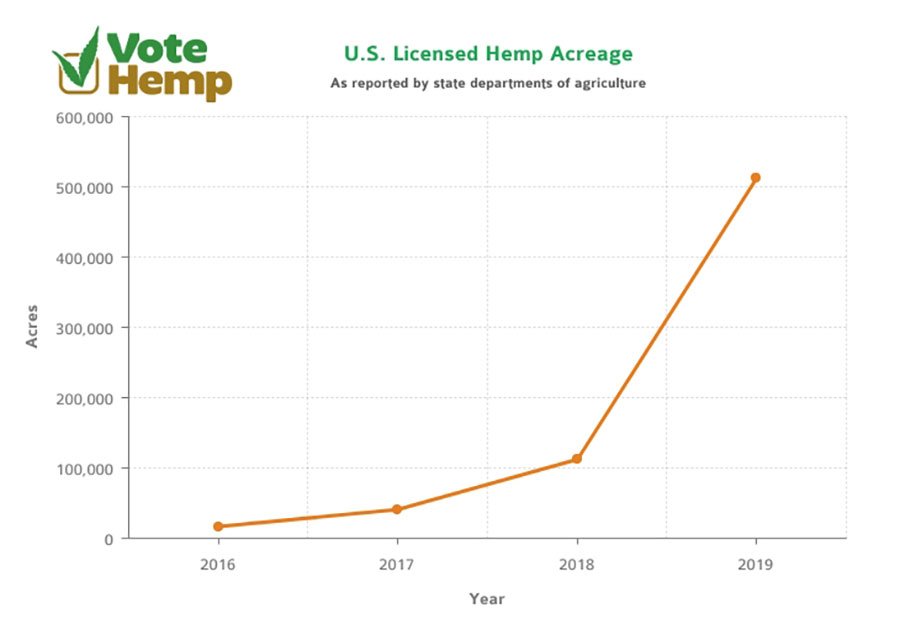
    Licensed hemp acreage increased 455% in 2019 vs hemp acreage under license in the U.S. in 2018, based on new research by VoteHemp.com.
    (View larger graph image)

    Everyone seems to be talking about and using hemp products these days. Hemp extracts are suddenly available almost everywhere including your local supermarket, coffee shop and gas station.  Hemp derived CBD and the benefits of the “entourage effect” from whole plant hemp extracts is driving a revolution in consumer health and it couldn’t come at a better time.  Consumers are seeking natural alternatives to help them live healthier and happier lives.  It also comes at a perfect time for the emerging hemp industry.

    The legalization of hemp farming in the Farm Bill last December was a watershed moment for the hemp industry and for American farmers.  The return of hemp to agriculture while farmers are seeking alternative crops created an intense level of interest in farming hemp and inspired literally thousands to enter the industry as evidenced by a massive increase in licensed hemp growers for the 2019 growing season.  The Farm Bill also inspired thousands of new hemp processors and brands to enter the market.

    Vote Hemp has been conducting an annual survey of state departments of agriculture since 2016 to track the growth of hemp cultivation in the United States.  This year we are releasing a hemp licensing report first to document intent and will follow up with hemp planting and harvesting data once it has been reported.  The results on licensing show more than 500,000 acres of hemp were licensed across 34 states, an increase of more than 455% over 2018 licensed acreage.  Intent is a good indicator but we know from previous years that significantly less hemp is planted than what is licensed due to a variety of factors including access to seed and/or clones as well as inexperience.  This will be the case again for 2019 and we estimate that 230,000 acres of hemp will actually be planted and significantly less harvested due crop failure.

    Another important statistic is the growth in the number of farms that were licensed to grow hemp in 2019.  Almost 17,000 licenses were issued for hemp cultivation in 2019, an increase of 477% over 2018 licensure.  A significant amount of this activity is coming from new farmers which is good news for agriculture.  In Tennessee alone, licensees increased by more than 1000% and many of them are small family farms.  The number of family farms in the United States has been in steep decline for decades.  Today, there are only about 2 million American farms in operation, down from nearly 7 million farms in 1935 and farmers are finding it ever more difficult to make a profit with traditional crops like corn, soy and wheat.  Hemp is helping farmers to find new and more profitable markets and is encouraging new people to consider farming as a way of life.

    However, hemp is not yet a commodity and while demand for biomass has been high, it is not yet clear what the total market demand will be for 2019 and 2020.  Due to this uncertainty, I strongly recommend that farmers only grow hemp with a contract to sell it in hand and carefully vet their partners.  It is also advisable to start with a small crop the first year as there is a significant learning curve.  Bottom line, don’t grow more than you can afford to lose.

    While farming alone contributed $132.8 billion to the US economy, the industry’s reach extends far beyond the soil. From the ethanol gas you recently pumped into your car to the IPA calling your name at the bar, countless products and industries rely on agricultural inputs to contribute value to the economy.  Projections from the Hemp Business Journal show that hemp is likely to add at least $2.5 billion to agricultural output by 2022 and likely will continue growing at a fast pace for at least the next 5-10 years as demand grows for fiber and grain.  The future is bright but there will be speed bumps along the road so drive carefully!

    To learn more about the growing hemp industry, download our hemp licensing report.  If you are looking for more in depth background on the best states for hemp cultivation, you may also be interested in the upcoming Hemp States Report I helped write for the Hemp Business Journal which should be released very soon.

    ERIC STEENSTRA
    PRESIDENT, VOTE HEMP

    Eric Steenstra is a hemp industry pioneer, co-founding hemp clothing and lifestyle brand Ecolution with Steve DeAngelo in 1992.  Eric was a founding member of the Hemp Industries Association and served as HIA Executive Director from 2008 to 2016.  Eric now serves as the president of Vote Hemp, the political advocacy organization that he co-founded and as Vice President of the California Hemp Council. He is a frequent speaker at industry conferences and trusted source to the media, including CBS, the New York Times, Forbes, CNN, Rolling Stone, Reuters and the Washington Post.

    Vote Hemp lead the effort to pass hemp farming legislation nationwide.  In 2005, Steenstra worked with Congressman Ron Paul (R-TX) to draft the first modern U.S. hemp legislation introduced in Congress (H.R. 3037). In 2012 he worked with Senator Ron Wyden (D-OR) to get companion hemp legislation introduced in the U.S. Senate. Steenstra worked with Congressman Polis (D-CO) and Senate Majority Leader McConnell (R-KY) to have hemp legislation included in the 2014 Farm Bill.  The 2014 Farm Bill authorized the first legal hemp farming in over 50 years and resulted in 78,176 acres of hemp being planted across 24 states in 2018. Vote Hemp also played an integral role in the passage of the 2018 Farm Bill including fully removing hemp from the Controlled Substances Act.

  • Athletic Appeal – Former Professional Athletes Passionate About the Hemp/CBD Business

    Athletic Appeal – Former Professional Athletes Passionate About the Hemp/CBD Business

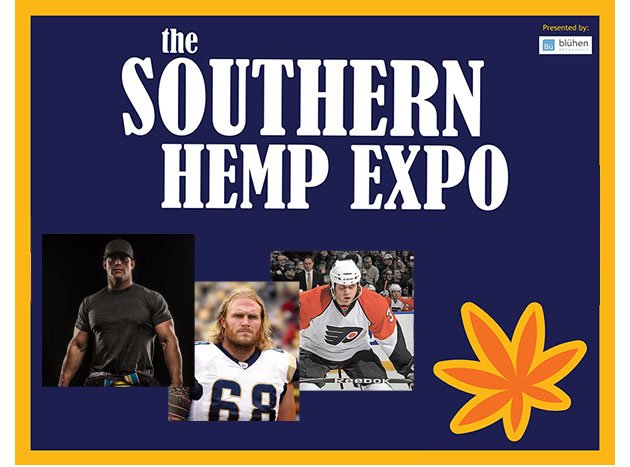
    Hear two-time Funny Car World Champion turned hemp farmer Matt Hagan, NFL veteran and CBD advocate Kyle Turley, and former NHL player Riley Cote, CBD entrepreneur and co-founder of Athletes for Care, speak at the 2nd Annual Southern Hemp Expo, September 6-7, 2019, at the Williamson County AG Expo Park in Franklin, TN.

    By Steven Hoffman

    Professional athletes know how to take a lickin’ and keep on tickin.’ However, after years in the sports world, athletes are increasingly turning to full spectrum hemp extract and CBD to help provide relief for stress and for injuries accumulated over a career or a lifetime of impact athletics.

    Three such former professional athletes were so impressed with results garnered from full spectrum hemp extract that they got into the business – one, two-time Funny Car World Champion Matt Hagan, as a hemp farmer; another, Kyle Turley, is a former NFL player who says CBD saved is life; and the third, former NHL player Riley Cote, is a hemp advocate and educator and also a marketer of CBD products to athletes, weekend warriors and the general public. Matt, Kyle and Riley will be featured speakers at the upcoming Southern Hemp Expo September 6-7, 2019, at the Williamson County AG Expo Park in Franklin, TN.

    From Left: Two-Time Funny Car World Champion turned hemp farmer Matt Hagan; NFL Veteran and CBD advocate Kyle Turley; and former NHL player turned hemp educator and CBD entrepreneur Riley Cote. Photos: Matt Hagan: Matt Hagan/Twitter; Kyle Turley: NeuroXPF.com; Riley Cote: Athletes for Care.
     

    Matt Hagan – Funny CarWorld Champion Turned Organic Hemp Farmer

    Recognized as a top competitor in the world of Funny Car drag racing, Matt Hagan is also a beef cattle farmer. When the 2018 Farm Bill passed, he immediately started planning to plant 140,000 plants on 90 acres, making his TruHarvest Farms one of the largest hemp farms in Virginia. “Every day I feel better about it,” Hagan told his local TV station, WFXR, at the beginning of the planting season. “The first couple of days starting this up I was ready to puke, ‘cause it’s just the unknown, the fear of the unknown.” However, Hagan added, “We’ve picked up over 20 people to work this farm for this year and that alone is driving revenue back into our country and into our state.” Hagan plans to sell his organically produced hemp plants to create CBD and strives to break the stigma around hemp. In the future, he hopes to open his farm to educate people on the uses of hemp and its differences from marijuana.

    Riley Cote – From NHL Enforcer to CBD Educator and Entrepreneur

    Riley Cote is a former professional left winger in the National Hockey League (NHL). He spent four seasons (2006-2010) with the Philadelphia Flyers where he was renowned for his role as an enforcer. Upon retiring from the NHL, Cote founded the Hemp Heals Foundation, a 501 (c) 3 non-profit organization dedicated to promoting hemp as a viable renewable resource that can help increase the quality lives of all people. Cote also sits on the Pennsylvania Hemp Industries Council (PAHIC) board.  As a co-founder of Athletes For Care and one of its NHL League Ambassadors, Cote continues to pursue his passion to help athletes discover safe, non-toxic ways to find relief, manage pain and achieve a better understanding of self-healing. Riley recently launched BodyChek Wellness, a line of full spectrum hemp extract-based products with a mission to optimize everyday performance and challenge individuals to rethink the healing process. The BodyChek Wellness line reinforces Cote’s passion to help individuals discover safe nontoxic methods for pain management and self-healing.

    Kyle Turley – After 100+ Concussions in the NFL, CBD Saved His Life

    Diagnosed with chronic traumatic encephalopathy (CTE) due to the 100-plus concussions he received during the 10 years he played as an NFL offensive lineman, Kyle Turley struggled with pharmaceutical addiction, violent thoughts, and suicidal tendencies — until he started taking medical marijuana. “It saved my life,” he says. “I wouldn’t be where I am today, I would not have my family, my kids, my house, everything I have right now, if not for cannabis.” To help save other lives, Turley founded the Gridiron Cannabis Coalition to use his story and those of other players to advance the idea of marijuana as a valid medicine for neurological conditions and other athletic injuries. “This plant has to be set free,” he says. “We have people committing suicide in football and other sports. How far do we have to go?” Knowing the value of the plant and the hurdles that the government and big pharma has placed on marijuana, Kyle has created Neuro XPF, a lab tested, federal guideline compliant, THC-Free, CBD (Hemp derived) cannabis supplement focused on bioavailability. CBD (cannabidiol) has shown in studies to have neuro-protective and antioxidative properties that could address a myriad of maladies facing our military and NFL veterans while supporting the general health and wellbeing of all aged athletes, says Turley.

    # # #

    Steven Hoffman is Managing Director of Compass Natural, providing brand marketing, PR, social media, and strategic business development services to natural, organic, sustainable and hemp/CBD products businesses. Compass Natural serves in PR and programming for NoCo Hemp Expo and  Southern Hemp Expo, and Hoffman serves as Editor of the weekly Let’s Talk Hemp Newsletter, published by We are for Better Alternatives. Contact steve@compassnaturalmarketing.com.

  • We Are Growing Native American Farmers… and Hemp

    We Are Growing Native American Farmers… and Hemp

    August 8, 2019


    We Are Growing Native American Farmers…
    and Hemp

    By Winona LaDuke

    Winona’s Hemp & Heritage Farm is growing. The winter seemed endless for us here in Northern Minnesota, temperatures ranged far, and the storms were brutal. We are grateful for the warmth of this time.

    Spring has passed, it’s summer now, and the crops are in. More are coming. Cannabis, or hemp, is one of many crops we grow here, to produce cordage, and soon textiles.

    This year, we are growing fifty female CBD plants, all to offer food, textiles and health products. We also grow corn, beans, squash, potatoes, tobacco and a host of garden vegetables. We are interested in growing food for future generations – Indigenous foods, biodiverse foods, and foods in a time of climate change.

    We learn from our work. That’s to say, we’ve grown traditional crop varieties for almost twenty years. As a young woman, my father, Sun Bear, or Vincent LaDuke, told me that he did not want to hear my philosophy if I could not grow corn.


    Harvard-educated economist, tribal leader, water protector, and former U.S. Vice Presidential candidate Winona LaDuke, through her work with Winona’s Hemp & Heritage Farm and the nonprofits Honor the Earth and Anishinaabe Agriculture Institute, is dedicated to advancing regenerative agriculture and a sustainable hemp economy among Native American communities in the U.S. WinonasHemp.com.


    News Briefs

    2nd Annual Southern Hemp Expo to Feature Business Conference, Ag Symposium
    by Colorado Hemp Company

    Presidential Candidate Tulsi Gabbard Introduces 2019 Hemp for Victory Act
    by Tulsi Gabbard

    Rodale Releases Preliminary Results of Four-year Hemp Research Trial
    by Rodale Institute

    CBD-infused Snack & Beverage Maker Weller Closes on $3 Million Investment Round
    by BevNet


    Headline News

    Cronos Group Buys Maker of CBD Brand Lord Jones for USD $300 Million
    by New Cannabis Ventures

    Hemp Textiles in the U.S. Will Take Time, Say Experts
    by UPI

    Hemp Becomes Booming Crop for New York Farmers
    by Wall Street Journal

    KOTA TV Features Native American Hemp Farmer Alex White Plume
    by KOTA TV

    CBD Products Available for Sale Again at Thrive Market
    by Thrive Market

    Ex-Kellogg President: CBD Will Be “Widely Available” in Consumer Products
    by Yahoo Finance

    Monoculture Hemp a Recipe for Ecological Disaster
    by Hemp Industry Daily

    Hemp Processing in Kentucky Sees Flurry of Investment
    by Hemp Today

    British Farmers Prohibited from Growing Hemp for CBD Flowers
    by Hemp Industry Daily

    Credit Card Processor Canna Group Named One of 50 Best Companies to Watch
    by Access Wire

    Hemp Farmer Opts for Straw Over Plastic Mulch for His Plants
    by Oregon Mail Tribune

    First Look Inside One of 10 Farms Licensed to Grow Hemp in Nebraska
    by ABC KETV Omaha

    An Interview with Dr. Jan Roberts:
    From the China International Hemp Industry Forum in Harbin, China
    Join Morris Beegle and Rick Trojan for a brand new episode of the Let’s Talk Hemp Podcast, featuring Dr. Jan Roberts to discuss the endocannabinoid system in the human body, cannabis dosing issues, and the pros and cons of regulating the cannabis industry. Dr. Jan Roberts is a host on the New Hemp Times podcast, CEO and co-founder of the International Research Center on Cannabis and Mental Health (IRCCMH), and a Licensed Clinical Social Worker.


    Send Us Your Hemp News!
    Send press releases and news announcements to news@letstalkhemp.com

  • Patchwork Legislation

    Patchwork Legislation

    Until FDA Issues Guidelines, Hemp-derived CBD Industry Forced to Navigate Shifting Federal, State and Local Regulatory Environments

    By Jane Wilson, Director of Program Development, American Herbal Products Association (AHPA)

    As the Food and Drug Administration (FDA) sifts through the almost 4,500 comments it received during the recent public comment period requesting input on “Scientific Data and Information on Products Containing Cannabis or Cannabis-derived Compounds,” the hemp-derived cannabidiol (CBD) supplement industry remains focused on demonstrating that hemp CBD supplements can be used by consumers with the same confidence with which they purchase and use other supplement products to support their health and fitness. If the May 31, 2019, FDA public hearing on this same topic was any indication, many of the hemp industry’s leading companies, as well as the several national trade associations and advocacy groups that represent the hemp industry, submitted comments urging FDA to take prompt action to provide a critically needed regulatory pathway for these products.

    While FDA contemplates the possibility of such action, numerous states and local jurisdictions are enacting legislation related to the manufacturing and marketing of dietary supplements and foods containing hemp-derived CBD. Some of these laws allow for the manufacture, marketing, and consumer use of hemp-derived CBD products, while others appear to restrict or prevent further sales to consumers. Regardless of the intent, this type of legislation is creating a confusing patchwork of conflicting or inconsistent regulations across states and localities.

    States and local jurisdictions appear to be creating their own laws for hemp- or CBD-containing products due either to a perceived absence of federal regulations that pertain to these products or unfamiliarity with the existing federal regulatory frameworks for supplements and foods and how they can be applied to these products.

    What makes this situation so challenging? Currently, FDA’s position is that CBD is not a legal ingredient that can be used in dietary supplements and foods because it was first approved for investigation as a drug product. The current law for dietary supplements does not allow a compound to be a dietary ingredient or to be added to food, if it was first investigated or approved for use as a drug, unless the FDA issues a regulation that allows for that to happen. While the FDA does have the ability to take this acti

    n for CBD under the dietary supplement and food laws, the Agency has never used this part of the law before in the 25 years the dietary supplement rule has been in place.

    FDA has taken several encouraging actions since the passage of the 2018 Farm Bill in December 2018, which marked the legalization of hemp cultivation and its removal from the Controlled Substances Act. The Agency has created an internal task force of high-level leaders to assess regulatory options, issued public communications, and conducted the May 31, 2019, public hearing and comment period, which concluded July 16, 2019. With public testimony and almost 4,500 comments submitted to the docket, FDA recently signaled they intend to expedite development of regulations for CBD and will provide an update on their progress in late summer or early fall.

    In the interim, hemp-derived CBD manufacturers are taking advantage of the self-regulatory mechanisms available to them, including certification programs that provide independent verification of the authenticity and quality of their hemp products and inspection of production facilities for compliance with good manufacturing practices (GMPs). Some are seeking organic certification for their hemp crops. These activities help the operators who are already in compliance with dietary supplement regulations differentiate their products to consumers in the crowded marketplace for hemp-CBD supplements.

    If you want to learn more about what’s going on in the hemp-derived CBD supplements industry, make plans to attend the American Herbal Products Association’s inaugural Hemp and CBD Supplement Congress taking place in Denver, CO, on August 15-16, 2019. The event combines the opportunity for technical workshops on applying GMPs and new dietary ingredient notifications (NDINs) to the hemp-derived CBD industry with a full day plenary that will explore the financial, supply chain, legislative and regulatory topics pertinent to this fast-growing segment of the supplement industry. More information is available here.

    AHPA also provides several free resources for the growing hemp-derived CBD industry.

    Note: Colorado Hemp Company, publisher of Let’s Talk Hemp and producer of the NoCo Hemp Expo and Southern Hemp Expo, is a supporting sponsor of the upcoming AHPA Hemp-CBD Congress in Denver, CO.

    Jane Wilson is the Director of Program Development at the American Herbal Products Association (AHPA), the national trade association for the herbal products industry. She serves as the staff liaison to AHPA’s Cannabis Committee and supports other AHPA services and activities related to the hemp and cannabis industries. Visit www.AHPA.org.


  • Hemp Harassment: Leading Online Retailer Thrive Market Forced to Cease Sales of All Hemp and CBD Products in Banking Backlash

    Hemp Harassment: Leading Online Retailer Thrive Market Forced to Cease Sales of All Hemp and CBD Products in Banking Backlash

    By Steven Hoffman, Compass Natural

    June 26, 2019

    In a seeming backlash to the burgeoning hemp economy, hemp and CBD retailers, industry associations and other hemp-centric businesses are being denied or threatened with denial of banking, credit card processing and other key business services, including a national newswire service that announced this past month it will no longer accept press releases from hemp companies, and is, in fact, deleting all existing and previously issued press releases related to hemp and CBD from its online archives. It is a disturbing trend in an industry that was made legal across the U.S. as a result of the 2018 Farm Bill and is projected to grow to $26.6 billion by 2025.

    It has forced such retailers as leading online natural products grocer Thrive Market to cease sales of all hemp and CBD products, a best-selling category over the past 18 months on its nationally recognized ecommerce site. The member-based online retailer boasts more than 500,000 members. “In early June, we received a notice from our merchant processor demanding that we cease the sale of all hemp and CBD products on Thrive Market. We unfortunately have no choice but to comply, and we’ll begin removing our assortment as early as Thursday, June 20,” wrote Thrive Market’s cofounder and CEO Nick Green in his blog on June 17. As of this writing, clicking on that assortment link takes you to a blank product page on Thrive Market’s website.

    Meanwhile, the U.S. Hemp Authority, a not-for-profit trade group developing certification standards for the industry, lost payment processing services in June after being dropped by its vendor, Stripe, based in San Francisco, reported Hemp Today on June 20. According a report in CNN Business, Stripe said it dropped the U.S. Hemp Authority’s account because of liability concerns, despite the fact that the trade organization is not a seller of any hemp products. “We’re being told we’re high risk. We’re actually trying to minimize human risk,” Hemp Authority president Marielle Weintraub told CNN.


    Abrupt Notice

    Since a leading credit card processor, Elavon, a subsidiary of U.S. Bank, abruptly notified its hemp and CBD clients in March 2019 that it had recategorized hemp and CBD merchants as a “prohibited business type” and was backing out within 45 days of handling payment processing for such companies, a number of hemp businesses have been scrambling to establish secure and durable payment processing relationships. According to one estimate by Philippa Burgess, cofounder of MMJ FinSol, a Denver-based financial services solutions company for hemp, cannabis and other “high-risk” businesses, Elavon’s policy changes affected up to 40,000 CBD companies.

    Another merchant processor, Fortress Payment Technologies, in May 2019 notified all its ecommerce customers selling CBD products that they would no longer be able to process Visa credit card payments through the bank. Some sellers received less than eight hours’ notice of these changes, reported Folium Biosciences, a vertically integrated hemp-derived phytocannabinoid producer based in Colorado Springs. The company recently launched a CBD/hemp friendly financial services platform for its customers to help remove the financial hurdles faced by the CBD industry, it said.

    Kyle Rapoza, cofounder of Vermont-based Mansfield Provisions, which distributes CBD products online and through brick and mortar retail partnerships, lost credit card processing services for his company in late May 2019, when Elavon stopped doing business with the hemp industry. He explained to Ganjapreneur Magazine that, in the wake of Elavon’s action, many of the industry operators he knows and does business with are moving back to high risk (and high fee) accounts. Rapoza has since been able to access more traditional business accounts through a state credit union, Ganjapreneur reported.


    Biggest Challenge Facing the Hemp Industry

    It’s a “difficult time” for the industry as it related to financial services, which he called “the biggest challenge in the industry right now,” Jonathan Miller, general counsel for Kentucky-based industry association Hemp Roundtable, told Ganjapreneur. “The law, we believe, is clear that since the [2018 Farm Bill], hemp and CBD are no longer controlled substances. There should be no concern whatsoever that there would be violations of federal law to engage in commerce. …Unfortunately, there is a lot of misinformation – it’s banks, it’s credit card companies, it’s merchant services that have been refusing to do business with these hemp and CBD companies.”

    Because banks have been so hesitant to serve hemp and CBD businesses despite the legalization of hemp in the Farm Bill, U.S. Senators Mitch McConnell (R-KY) and Ron Wyden (R-OR) – chief proponents of legalizing hemp – in April 2019 sent individualized letters to four federal banking and financial regulatory institutions, imploring them to prevent banking discrimination of the hemp industry, reported Cannalaw Blog.

    In addition, when pressed by U.S. Senator Jon Tester (D-MT) at a hearing in June 2019, Marijuana Moment reported that Federal Reserve board member Michelle Bowman pledged to inform banks that they can service hemp businesses. When Tester asked specifically how the Fed is advising institutions when it comes to hemp, Bowman responded, “We have not told them that they cannot bank them.” Tester countered that while he and Bowman might be on the same page, it is possible that banks were hearing a different message—hence why hemp businesses have said that they’re still experiencing difficulties accessing credit. Tester said clarification is especially important at this stage because of fallout from trade wars with China and Mexico, as hemp represents a potentially lucrative crop for American farmers. “I would agree with you. We would not discourage banks from banking these types of customers,” Bowman said. “We’ll try to clarify that. Hemp is not an illegal crop.”


    What, No Press Releases?

    While certain merchant banks seek to stifle hemp industry growth through the denial of critical financial services, another service provider in the media newswire business seeks to silence its voice.

    One leading hemp industry media and event production company, Colorado Hemp Company, based in Loveland, CO – producer of the NoCo Hemp Expo, Southern Hemp Expo, and the Let’s Talk Hemp weekly newsletter and podcast – was recently informed by its newswire service, ReleaseWire, that it will not post or distribute any new press releases that mention hemp, and in addition, it was deleting all existing and previous press releases mentioning hemp that Colorado Hemp Company had posted in the past. In a policy update issued on May 8, 2019, ReleaseWire, one of the nation’s leading online national newswire services, issued the following statement, after which it began informing hemp-centric businesses that not only were they not accepting new press releases for distribution, they were deleting all existing press releases and archives related to cannabis, hemp or CBD:

    “ReleaseWire was recently contacted by our credit card processor and informed that they have a policy in place that restricts merchants, including ReleaseWire, from linking to, or providing information about, marijuana, cannabis, CBD, hemp and related products. As such, we have been instructed by our credit card processor that we must not only stop taking press release submissions on these topics, but we must remove any existing press releases and related content from our site. They have provided us with a small window of time to complete this process or risk losing the ability to process credit cards.”

    Meanwhile, other newswire services including Cision, owner of PR Newswire and PRWeb, continue to accept and publish hemp, CBD and cannabis related press releases on behalf of clients.


    Hemp Friendly Payment Processors

    So which payment processors are willing to serve hemp and CBD companies? One such processor, Adept Payments, says on its website that it helps high risk businesses, including vape, CBD, adult, casinos and more.

    While financial services group, Edward Jones, has no official policy about outreach to the hemp industry, a broker in Bend, OR, contacted Hemp Industry Daily to say he was offering a “full spectrum of banking, investment, insurance and financial planning services to hemp farmers.” Officially, Edward Jones is “looking at the provision in the Farm Bill that addresses hemp growing,” John Boul, manager of global media relations for the St. Louis-based Edward Jones told Hemp Industry Daily in April 2019.

    Square, a leading online payment processor, recently soft-launched credit card processing for CBD companies, but the program is still in beta testing phase and is by invitation only. Former credit card processing professional and current blogger Phillip Parker, who describes his site, CardPaymentOptions.com, as a credit card processing watchdog group, posted a guide to the Best Merchant Accounts for Hemp Products in June 2019. Also, Merchant Maverick, a self-described comparison website that reviews and rates credit card processors, mobile payment services and other small business software, published a guide to the Best CBD Oil Merchant Account Providers in April 2019.

    For CBD sellers on Shopify and other major ecommerce platforms, a recently launched processor, Organic Payment Gateways, advertises that its mission is to help people in the CBD business process payments online, and that its payment gateways work smoothly with Shopify, WooCommerce and others. Leap Payments, Instabill and other services promote that they are dedicated to ensuring CBD businesses “can accept debit and credit card payments just like any other business can.”

    So, for now, you won’t find any hemp or CBD products at Thrive Market, however, the ecommerce retailer says it won’t give up without a fight. “We believe that ethical and sustainable hemp is another cause worth fighting for, so rest assured that we will be working behind the scenes in the coming weeks to get hemp products back on Thrive Market,” Nick Green wrote in his blog. “In fact, we’re already in conversations with a new processing partner to try to make that happen.”

    # # #

    Steven Hoffman, is Managing Director of Compass Natural, dedicated to providing brand marketing, public relations, social media, and strategic business development services to natural, organic and hemp-centric businesses. Hoffman also serves as editor of the Let’s Talk Hemp Weekly Newsletter. Contact steve@compassnaturalmarketing.com.

  • Kroger, Nation’s Largest Supermarket, to Carry CBD in Nearly 1,000 Stores

    Kroger, Nation’s Largest Supermarket, to Carry CBD in Nearly 1,000 Stores

    By Steven Hoffman, Compass Natural

    June 12, 2019

    As the hemp and CBD market continues to evolve at hyper-speed, the nation’s largest supermarket chain, Kroger, announced it is joining Walgreens, CVS, Vitamin Shoppe, GNC, Nieman Marcus and other major retailers that have all started carrying CBD products in their stores.

    Kroger, which made a “meaningful investment” in Boulder, CO-based natural foods chain Lucky’s Market, which itself is a leading seller of CBD products, announced on June 11 that it will now sell hemp-derived CBD topical products, including creams, balms and oils, in 945 Kroger-owned stores across 17 states, reported CNBC News, which referred to CBD as “one of the hottest consumer trends.”

    “Like many retailers, we are starting to offer our customers a highly-curated selection of topical products like lotions, balms, oils and creams that are infused with hemp-derived CBD,” said Kristal Howard, head of corporate communications and media relations at Kroger, in a statement. “CBD is a naturally occurring and non-intoxicating compound that has promising benefits and is permitted within federal and state regulations. Our limited selection of hemp-derived CBD topical products is from suppliers that have been reviewed for quality and safety,” she added.

    Consumer interest in and demand for products made with cannabinoid compounds or CBD derived from hemp extract is at a fever pitch. Hemp Industry Daily projects hemp-derived CBD retail sales will surge to as much as $7.5 billion by 2023, up from about $1 billion in sales in 2019.

    Yet, while CBD derived from hemp is now legal thanks to the 2018 Farm Bill passed by Congress late last year, the FDA maintains that companies still can’t add CBD to food or sell it as a dietary supplement. However, with so many CBD supplements and CBD-infused food and beverage products already on the market, the FDA on May 31 held a public hearing to learn more about the issue and hear from hemp industry representatives, manufacturers, advocates and others as it considers its position regarding sales of these products.

    For major retailers, selling CBD-infused, topical beauty and skin-care products brings less legal risk, which may explain why retailers such as Kroger, Nieman Marcus and others are starting to offer those types of products first. Given the explosive growth of the market, big box retailers Walmart and Target are also reported to be exploring the potential for hemp and CBD-related products in their stores.

    Kroger, headquartered in Cincinnati, OH, is the world’s largest grocery retailer, with fiscal 2018 sales of $121.2 billion, and operating stores under names including Kroger, King Soopers, Ralph’s, Dillon’s, City Market, Fry’s, QFC, Mariano’s, Fred Meyer, Harris Teeter and others. Kroger also is a leading seller of healthy lifestyles products – it’s sales of natural and organic products alone exceeded $16 billion in 2017. Kroger’s private label organic brand, Simple Truth, with sales exceeding $2 billion, is one of the largest natural and organic brands in the U.S.

    Kroger says it will sell the CBD products in Arizona, Arkansas, Colorado, Illinois, Indiana, Kansas, Kentucky, Michigan, Missouri, Nevada, Oregon, South Carolina, Tennessee, West Virginia, Washington, Wisconsin and Wyoming.

    # # #

    Steven Hoffman, is Managing Director of Compass Natural, dedicated to providing brand marketing, public relations, social media, and strategic business development services to natural, organic and hemp-centric businesses. Hoffman also serves as editor of the Let’s Talk Hemp Weekly Newsletter. Contact steve@compassnaturalmarketing.com.

    Photo of Kroger Store:  Wikipedia

  • Bringing Balance Back to Mother Earth

    Bringing Balance Back to Mother Earth

    2nd Annual Southern Hemp Expo Returns to Tennessee, Bringing Together the Biggest Names, Brands, Farmers, Investors and Experts in the Rapidly Growing Hemp Market

    Second Annual Southern Hemp Expo to Offer Business and Investment Conference, Hemp Farm Symposium, Exhibit Halls, Workshops and Demonstrations, Networking and Entertainment at the Williamson County AG Expo Park in Franklin, TN, Sept. 6-7, 2019

    FRANKLIN, TN (June 5, 2019) – Following a wildly successful inaugural event that drew more than 4,000 people last year in Nashville, the 2nd Annual Southern Hemp Expo (SHE)—a robust and program-rich trade show structured specifically for the rapidly growing industrial, nutritional, and therapeutic hemp industries—will be held at Williamson County AG Expo Park in Franklin, TN, on September 6-7, 2019.

    More than 5,000 farmers, entrepreneurs, investors, manufacturers, retailers, consumers and others will gather at this year’s Southern Hemp Expo, produced by the Colorado Hemp Company—which has been producing the NoCo Hemp Expo, the world’s largest hemp industry gathering in Colorado, since 2014. This year’s SHE is sponsored by Presenting Sponsor Blühen Botanicals, a leading producer of premium hemp extracts based in Knoxville, TN.

    Participants at the 2019 Southern Hemp Expo will learn about the exploding hemp market—expected to surge to more than$7.5 billion in sales by 2023, up from $1 billion in sales this year—from over 140 sponsors and exhibitors, and more than 60 experts and leaders in the hemp industry speaking on the “Let’s Talk Hemp” stage.

    Participants at the 2019 Southern Hemp Expo will learn about the exploding hemp market—expected to surge to more than $7.5 billion in sales by 2023, up from $1 billion in sales this year—from over 140 sponsors and exhibitors, and more than 60 experts and leaders in the hemp industry speaking on the “Let’s Talk Hemp” stage.

    “The runaway success of the first-ever Southern Hemp Expo blew us away last year, and that was even before the 2018 Farm Bill legalized the production and sale of hemp and hemp-derived products across the country,” said Colorado Hemp Company co-founder Morris Beegle, producer of NoCo Hemp Expo and SHE. “Today, demand for hemp is creating tremendous business opportunities for farmers, producers, retailers and others in the South and throughout the U.S. The Southern Hemp Expo serves as a key national gathering of business leaders, entrepreneurs, investors and others who are creating the market for all things made from hemp – from building materials and bioplastics to fiber, fashion, CBD supplements, cosmetics and much, much more.”

    Experts believe Tennessee, which allowed farmers to grow hemp in 2015, could become a top hemp producer. In 2018, 226 farmers grew hemp on a total of 4,700 acres in Tennessee. This year, more than 2,600 farmers and businesses are licensed to grow hemp or CBD in the state, an increase of 1,100% in just one year. Nationwide, nearly 80,000 acres of hemp were planted in 2018, with Montana, Colorado, Oregon, Kentucky and Tennessee listed as the five top producing states.

    This year’s Southern Hemp Expo will include a business and investment conference; hemp farm symposium; industry day with a business-to-business expo hall; general public day with an expo hall; workshops and demonstrations; and networking and entertainment. Attendees will receive up-to-date information about federal and state legislation and regulations, current trends in CBD and hemp supplements; the latest developments in processing, technology and innovation; certification, compliance and lab testing; and breeding, genetics, seeds and clones, and more.

    SHE sponsors include Presenting Sponsor Blühen Botanicals, a leading producer of premium hemp extracts based in Knoxville, TN. Other Sponsors include GenCanna,LabCanna, Eurofins, ProVerde Laboratories, Myco Sativa, Key to Life and more.

    Let’s Talk Hemp Business Conference

    Reasons to Attend the 2nd Annual Southern Hemp Expo

    • Let’s Talk Hemp Farm Symposium
    • Investment Strategies for Entrepreneurs
    • Industry Day with B2B Expo Hall
    • General Public Day with Expo Hall
    • Workshops and Demonstrations & the Pono Art Zone
    • Farm Equipment, Tools & Machinery
    • Networking, Parties & Entertainment
    • Up-to-Date Information on Federal & State Legislation & Regulations
    • Current Trends in CBD & Hemp Supplements
    • The Future of Smokable Hemp Flower
    • Latest Developments in Processing Technology & Innovation
    • Certification, Compliance & Lab Testing
    • Breeding, Genetics, Seeds & Clones
    • Biomass, Bulk Flower, Isolate, Distillate, Full & Broad Spectrum
    • Retail and Wholesale Sales Strategies & More

    Exhibit space and sponsorship opportunities for the Southern Hemp Expo are now available online at www.southernhempexpo.com.Exhibit Space and Sponsorship Opportunities Now Available

    About the Southern Hemp Expo

    The Southern Hemp Expo is produced by the Colorado Hemp Company, a division of WAFBA LLC (We Are For Better Alternatives), based in Loveland, CO, and producer of NoCo Hemp Expo, the world’s largest and most comprehensive trade show and conference for industrial hemp. WAFBA is founder of TreeFreeHemp paper and printing services and the Colorado Hemp Company. Areas of focus include product and brand development, event production, consulting and advocacy. Learn more at SouthernHempExpo.com, and find us on Facebook and Twitter.

    Contact

    Steven Hoffman, Compass Natural, 303.807.1042, steve@compassnaturalmarketing.com

    Morris Beegle, Colorado Hemp Company, 970.541.0448, info@southernhempexpo.com

  • FDA Hearing on CBD Raises More Questions than Answers

    FDA Hearing on CBD Raises More Questions than Answers

    By Ben Droz

    Last Friday, May 31, the FDA held its first ever, full day public meeting on Cannabis.  7am-6pm, the meeting is part of a Public Comment Period  for “Scientific Data and Information about Products Containing Cannabis or Cannabis-Derived Compounds”

    (Docket ID FDA-2019-N-1482)  https://www.regulations.gov/docket?D=FDA-2019-N-1482&fbclid=IwAR05aRmzKEcjdjqrDU80qZDgtNWe6ew9-QmFeOCkv-7oBg5p2skbESnrX6Y  This docket is accepting comments until July 2nd, and is a very important part of the FDA regulation process.

    A panel of 13 Senior FDA officials heard from some 140 people, live from the FDA building in Silver Spring.  The day kicked off with great testimony from hemp lobbyists Jason Amatucci and the Hemp Roundtable’s Jonathan Miller, articulating the position of the hemp industry, that CBD should be viewed as a food ingredient or dietary supplement.  This is already how CBD is being being used.

    The conflict comes from the fact that the Pharma drug Epidiolex seems to the FDA to be to similar to plant derived hemp extract, and therefore, does not qualify as a dietary supplement.  While hemp has been a food ingredient since before the enactment of DSHEA in 1994, the FDA seems to think that modern hemp extracts are somehow different because of their processing.  But in fact, it is not different, it is simply a plant derived extract, like any other legal plant derived dietary supplement that you can get at any health food store.  Hemp attorney Rob Kight articulated this point.

    But there was also testimony against our causes.  There was testimony that confused and conflated hemp and marijuana.  There was testimony that looked at the complexities of the issue rather than seeing it as simply, let people have CBD.

    I personally like to just ignore the haters, and have valid reasons to do so.  Firstly, all of the confusion stems from the mis-interpretation from the FDA of the language in the Farm Bill that specifically protects hemp extracts and cannabinoids.  The FDA is in charge of keeping the public safe, not to restrict natural plant extracts.  All CBD products should meet a baseline of requirements to be in the market, such as C-GMP manufacturing standards, and trackability of supply chain.  Anything more than that should only apply to pharmaceutical grade dosage, which could be in the hundreds and hundreds of milligrams per day.

    Importantly, and possibly to reflect the idea that the FDA knows that hemp derived CBD is in fact legal, the FDA is not actually holding the meetings and comment period on hemp CBD.  Instead, it is “products containing cannabis or cannabis derived compounds”.  By using the word “cannabis” rather than  the 2019 definition of “hemp”, the FDA is taking comment on all cannabis products.  This would show that any testimony or criticism against CBD, would be relating to any “cannabis derived CBD”, not necessarily including legal, hemp derived CBD.

    There is certainly lots of other insights to gain from comments and the meeting.  Because of hemp’s popularity, there is a lot more commentary coming out about this, and FDA is open to comments for another three weeks.  Former FDA Commissioner Scott Gottlieb previously said it could take 3-5 years, so stay tuned for more!!

    Ben Droz is contributing editor of Hemp Magazine,  (hemp.co) available at newsstands and Whole Foods nationwide.  You can also see updates from @TheHempGuy (instagram.com/thehempguy) or read his blog at www.theHempGuy.com . @theHempGuy (Instagram)

  • ACTIVISM Home » Activism  Hemp History Week Kicks Off Today

    ACTIVISM Home » Activism Hemp History Week Kicks Off Today

    Happy Hemp History Week! Time to celebrate one of the most important plants the earth offers.

    Hemp farmers, activists, manufacturers, and retailers are coming together beginning today for Hemp History Week, an opportunity to celebrate the past and future of the crop poised to return to American farmlands thanks to legalization provisions in the 2018 Farm Bill. More than 1,500 events are planned nationwide, ranging from samples and sales of hemp productsat small town markets, educational programs at universities, and even celebratory concerts at big city music venues.

    [button open_new_tab=”true” color=”accent-color” hover_text_color_override=”#fff” size=”large” url=”https://hightimes.com/activism/hemp-history-week-kicks-off-today/” text=”Read the full article from Hight Times” color_override=””]


  • Organic Hemp Production Emphasized to Lawmakers, Farmers During “Organic Week” Policy Conference in Washington, DC

    Organic Hemp Production Emphasized to Lawmakers, Farmers During “Organic Week” Policy Conference in Washington, DC

    One Organic Farmer Treats Hemp Grown for CBD Like a “Specialty Vegetable Crop”

    By Steven Hoffman
    Compass Natural

    The importance of certified organic in hemp agriculture cannot be overstated. Currently, nearly 80,000 acres are in hemp production in the U.S., and very few of them are certified organic. That means that the majority of hemp produced in the U.S. is being grown conventionally, using potentially toxic, synthetic pesticides and synthetic nitrogen fertilizer derived from the fracking of natural gas.

    Frankly, that’s not very good for the environment or for the oncoming climate crisis, as conventional agriculture is one of the largest non-point sources of global greenhouse gas (GHG) emissions contributing to global warming, and fracking releases massive quantities of methane – another potent GHG – into the atmosphere. On the other hand, organically grown hemp can actually sequester carbon out of the atmosphere and put it back in the soil where it belongs, helping to keep CO2 and other noxious GHGs out of the atmosphere.

    Additionally, when given a choice, I’ll choose CBD and hemp extract products that are produced and processed organically, thus minimizing my dietary exposure to toxic pesticide residues and other chemical solvents, because who wants pesticide residues included with their concentrated botanical medicine?

    Seeing the explosive growth of the hemp market in the wake of the 2018 Farm Bill, the organic industry’s leading trade association, the Organic Trade Association (www.ota.com) invited my communications agency, Compass Natural, to help plan and present an educational track focused on farmers’ perspectives and market opportunities for certified organic hemp, CBD and related products as part of OTA’s annual Organic Week policy conference, held May 20-23, 2019, in Washington, D.C. OTA’s Organic Week draws organic industry leaders from across the U.S. to interact with policymakers and Congressional leaders to help forward the interests of organic food and agriculture.

    At the Organic Week conference, OTA announced that sales of organic products in the U.S. surpassed $50 billion, growing 6.3% to reach a record $52.5 billion in 2018. Almost 6% (5.7%) of all food sold in the U.S. is now organic, driven in large part by demand for organic produce, dairy, plant-based products, dietary supplements, textiles and fiber. “Organic is now considered mainstream. But the attitudes surrounding organic are anything but status quo,” said Laura Batcha, CEO and Executive Director of the OTA. “In 2018, there was a notable shift in the mindset of those working in organic toward collaboration and activism to move the needle on the role organic can play in sustainability and tackling environmental initiatives.”

    Lobbying for Hemp

    As part of OTA’s Organic Week, I was scheduled to visit several congressional offices on Capitol Hill, lobbying on behalf of organic food and farming and industrial hemp, CBD and related products. The staff at the offices of Colorado Senators Michael Bennett and Cory Gardner were supportive of industrial hemp in our meetings, and in alignment with Colorado Governor Jared Polis’ goal of furthering Colorado’s leadership in industrial hemp, as were staff leaders in the offices of Colorado Representatives Joe Neguse and Diana DeGette. However, staff at the offices of Idaho Congressmen Russell Fulcher and Mike Simpson deferred to their state’s legislature when it came to my questions regarding Idaho’s seizure in January of a container shipment of industrial hemp from a licensed grower in Oregon bound for processing in Colorado, despite the 2018 federal Farm Bill declaring that interstate transport and commerce of hemp-derived products is now legal throughout the U.S.

    In addition to our Capitol Hill visits, I moderated a lively seminar attended by a number of organic farmers interested in or already growing hemp for food, supplements and fiber as part of an educational track focused on hemp during OTA’s Organic Week. At the seminar, longtime organic farmer Chris Jagger, owner of Blue Fox Farm in Oregon, shared how he began growing hemp three years ago. Instead of planting hemp densely, like they do for fiber production where tall stalks and little foliage are desired, Chris farms his hemp like a specialty crop, or “like vegetables,’ he says, to cultivate the delicate hemp flowers for CBD extraction. Currently, a small number of organic certifiers, including OneCert, CCOF and MOSA are certifying farms for organic hemp production, and rumor has it some other major certifiers will soon follow.

    At the same time across town, hemp advocate Ben Droz participated in the inaugural Congressional Cannabis Forum hosted on May 21 by Washington, D.C.-based KCSA Strategic Communications. “While covering all aspects of the cannabis market, the KCSA forum presented a hemp panel that examined capital markets and the global economic implications of the legalization of hemp under the 2018 Farm Bill,” said Droz. “If hemp extracts become a global commodity, it might not necessarily benefit small scale farmers and producers,” he cautioned. “However, until the FDA comes up with more clear guidelines concerning hemp products, the big corporate players will continue to sit on the sidelines, allowing time for smaller brands to establish and build market share, but that could change at any time,” he said. Droz noted that the FDA scheduled its first public hearing on hemp and CBD in food and beverage for Friday, May 31, 2019. Information on the hearing is published in the Federal Register.

    Organic agriculture is a bright spot in the U.S. farm economy, continuing to grow at a rate more than double the growth rate of the overall U.S. food market. According to new OTA data, the number of organic farms grew by 39% while the total number of farms in the U.S. shrank by 3% between 2012 and 2017. Organic products can now be found in more than 82% of U.S. homes, and in some states, including California, Arizona, Oregon, Washington and my home state of Colorado, organic products are in over 90% of U.S. households. Here’s hoping that organically produced hemp follows suit.

    # #

    Steven Hoffman, is Managing Director of Compass Natural, dedicated to providing brand marketing, public relations, social media, and strategic business development services to natural, organic and hemp-centric businesses. Hoffman also serves as editor of the Let’s Talk Hemp Weekly Newsletter. Contact steve@compassnaturalmarketing.com.

    Photos:  Compass Natural