Tag: textiles

  • Hemp’s Historical Fabulous Fashion Journey

    Hemp’s Historical Fabulous Fashion Journey

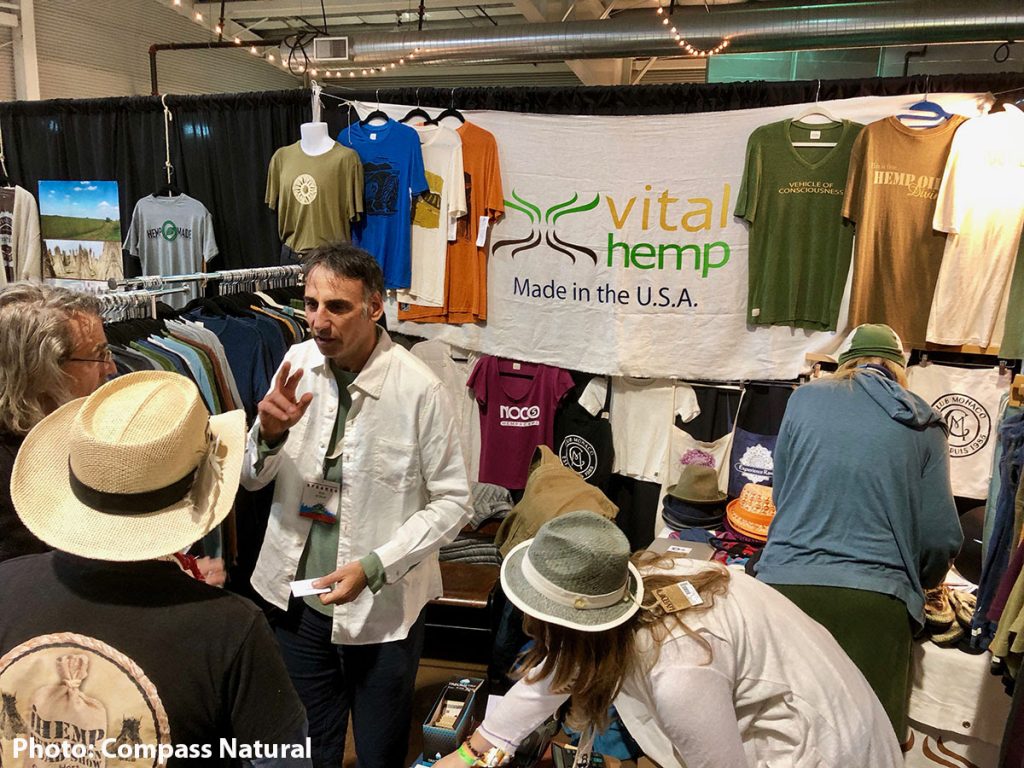
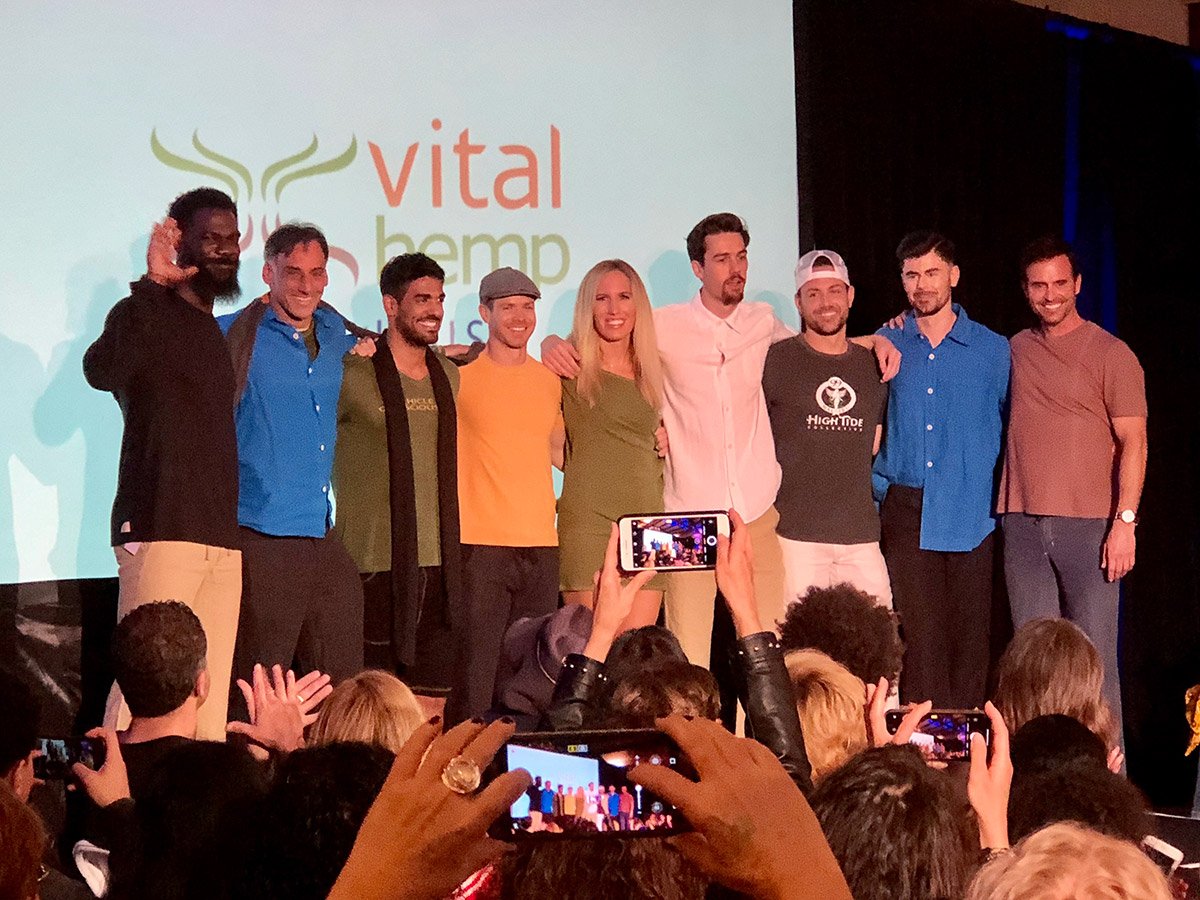
    CAPTION:  Hemp-based clothing brand Vital Hemp was featured on the runway at the Style & Sustainability Fashion Show in Santa Monica, CA, in December 2019, presented by the City of Santa Monica’s Office of Sustainability and the Environment, Lexus Santa Monica, and Sustainable Works.

    By Heather Collins

    Cotton, silk, satin, and lace might be up against some strong competition in the next few years thanks to the growing use of sustainably produced hemp in textiles and fashion. Hemp, which is no stranger to the textile world, has actually been cultivated globally for centuries for fabric. In fact, according to the blog My Hemp Craft, hemp was a familiar and natural material used for rope during ancient Egyptian times and was also used as cloth for sails on ships throughout history, as it could weather storms crossing the seas (indeed, the word “canvas,” for the heavy cloth used in sail making, is derived from the word cannabis.)

    Additionally, My Hemp Craft points out that while material evidence of hemp used in ancient times dates back only 9,000 years, pottery and metal objects with hemp rope-like impressions have been found at archaeological sites dating back as far as 26,000 BC. These findings suggest that our Paleolithic ancestors made use of the fibers of this versatile plant.

    Sturdy and durable, hemp gained popularity in the United States when Presidents Washington and Jefferson both proudly grew hemp on their plantations. According to the blog THCINT.com/Hempology, it was once mandated that Americans were to grow hemp during the Colonial Era.

    The hemp plant, when grown as a clothing material, grows significantly taller than other cannabis varieties, and it has noticeably longer fibers. The long fibers are what give hemp its strength when made into rope, clothing, bedding, or upholstery. Hemp fiber has been successfully made into shirts, handbags, shoes – you name it. It’s a strong cloth that is both appealing from an environmental and design standpoint, and hemp’s benefits outweigh other materials, such as cotton and polyester.

    Research published by SEI indicates that cotton needs about 50% more water per season than hemp, which can grow with little irrigation. More than 70% of the global cotton harvest comes from irrigated land, which poses a risk for groundwater contamination. Hemp takes very little water and is strong enough to grow in fields without depleting natural resources.

    According to Hempology, 42 hemp mills were built in the United States in 1941, primarily in the Midwest. Hemp was a popular commodity, and farmers were drawn to its appeal as a cash crop. Also, there was a sincere sense of patriotism by growing domestic plants versus buying hemp from abroad. Once the mills started production, hemp was revered as an innovative and cutting edge product. However, in 1944 the government shut down the hemp mills, citing lack of needs due to “war purposes.” Essentially, those farmers who were growing about a million acres of hemp suffered financial despair, as they were expecting to reap a significant profit thanks to hemp’s bounty. Ultimately, the farmers had nowhere to turn to manufacture their crops due to the government’s orders to shut down.

    Hemp in Everyday Fashion

    Today, Patagonia, Inc. and popular fashion brands are taking note of the benefits of hemp, as it is more absorbent, and easy to blend with other fibers in clothing. In fact, Patagonia created a mini-documentary highlighting the history of hemp and its potential power to create soft, light, and breathable fabric. Thanks to the passage of the U.S. Farm Bill in 2018, eco-fashion brands realize the regenerative agricultural potential hemp has in creating more jobs domestically and sourcing U.S.-grown hemp for their clothing lines.

    Iconic U.S.-based blue jeans brand Levi Strauss has been experimenting with hemp fabric by combining it into its cotton jeans for several years and discussed its plans with the Business Insider. Product innovation teams at Levi’s indicate that they have been using hemp in blue jeans, but they still need time to truly ‘cottonize’ it and make it soft and appealing for everyone. With sustainability at its core, Levi’s developers acknowledge this process will take time to make hemp the softest, most durable textile that provides a good fit and a lasting pair of jeans.

    Featured recently at a sustainable fashion runway show in Santa Monica, CA, Vital Hemp founder Ron Alcalay has long expounded the benefits of hemp fashion for everyday living. “Hemp’s come a long way and so has Vital Hemp,” he says on his website. “We intend to reintroduce people to the superior qualities of hemp by producing the most comfortable, healthy and sustainable hemp clothes possible. As vital members of the sustainable business community, we aspire to be a part of the groundswell…re-legalizing the cultivation of industrial hemp in the U.S.A. so that we can all benefit from the myriad uses of this amazing plant—for clothing, food, paper, fuel, and so much more.”

    Even footwear is exploring the benefits of hemp with shoe designers ready to go the extra mile by utilizing hemp as its main fabric. Take it from year-old company DopeKicks, the first waterproof hemp tennis shoe. They believe their sustainable footwear is not only fashion-forward but also “the coolest, eco-friendly, super resistant and waterproof shoes accessible to everyone.”

    After a long day, Jungmaven wants everyone to lay down in comfort to the soft, appealing cloud-like feel of hemp sheets, pillows, and blankets every night. The bedding brand uses sustainable hemp material to create luxurious products for a healthier future for the planet.

    Interested in learning more about hemp’s journey into fashion? Be sure to join in on the fun for a hemp-centric Fashion Show at 7th Annual NoCo Hemp Expo, March 26-28, 2020, at the National Western Complex in Denver. Tickets are available at https://nocohempexpo.com/.

    PHOTO: Compass Natural (photo of Vital Hemp fashion models on stage)

    \# # #

    Heather Collins is a seasoned Public Relations professional who works closely with Compass Natural Marketing on lifestyle and hemp brands. Additionally, Collins has operated h | c marketing and communications, an independent project-based firm that provides strategic insight to clients within the natural products industry, including national trade associations plus, renowned leading health and wellness experts.

    News Briefs

  • Ready to Wear: Hemp, Fashion and Climate Change

    Ready to Wear: Hemp, Fashion and Climate Change

    By Hemp Magazine

    We’re killing our planet. That shouldn’t really be news to anyone now. Unless you choose to utterly reject science and bury your head up your… well… in the sand, that’s a current reality, not a future projection.

    Whether it’s climate change, environmental degradation, or simple resource exhaustion, we’ve been hearing for decades that our current models of production and consumption as humans have to be modified. If you’re brave enough to frequent the news these days and push past hyper-partisan debates, you’ve probably noticed that study after study from the U.N., the U.S. government, and nonprofits are ringing the town bells, begging the public to understand and care.

    Visualize the causes of this situation, and what do you see? Deforestation in the Amazon, billowing smoke clouds from coal-fired power plants, the Pacific’s plastic soup? What we wear doesn’t pop up in the mind so quickly. But, our clothes — and how they’re produced — play a significant role in adding to the planet’s problems.

    Is Hemp the Solution We’ve Been Waiting for?

    Photo: California-based Vital Hemp produces hemp fashion that looks and feels good, and is good for people and the planet.”https://thehempmag.com/2019/04/fast-fashion-hemp-textiles-and-the-climate-crisis/

    News Briefs

    Kentucky Farmers Launch Organic Hemp Co-op
    by Southerly

    Big Box Retailers CVS, Walgreens Roll Out CBD
    by New Hope Network

    USDA: Farmers Can Import Hemp Seeds from Other Countries
    by Hemp Industry Daily

    Startup to IPO: 5 Lessons Learned While Growing a CBD Brand
    by Chris Husong, Elixinol

    Upcoming Events

    Don’t Miss Season 2 of the Let’s Talk Hemp PodcasIn this new episode of the Let’s Talk Hemp 422 Podcast, you’ll hear Patrick Flaherty from P F Design Lab, who is studying the entire supply chain of hemp in the U.S. to better understand where hemp can replace traditional materials. While the hemp market in the United States continues to grow, there is still a disconnect between the farmers growing the hemp and the manufacturers who can make use out of it. This is an amazing story of the versatility and opportunity that remains largely untapped in the emerging hemp market.
    24 Patrick Flaherty – Fiber and the Future

    About Let’s Talk Hemp
    Let’s Talk Hemp is a publication of Colorado Hemp Company focused specifically on the subject of industrial hemp and cannabis. We present features and curate news from across the globe to share the benefits of cannabis on health, energy, manufacturing and planet (H.E.M.P.).

    Send press releases and news announcements to news@letstalkhemp.com


  • 4th Annual Hemp Harvest Party!

    4th Annual Hemp Harvest Party!

    After 4 years the US hemp industry is finally starting to lose its baby-fat… Look how many more farmers and how many more acres of hemp were grown in Colorado and across the U.S. in just a single year!

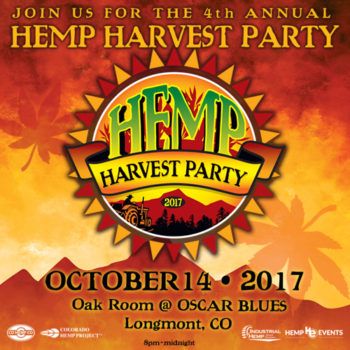
    At the 4th Annual Hemp Harvest Party, on Saturday, October 14th you can experience the living U.S. hemp movement in action, presented by Lilu’s Garden.

    Join industry leaders CoHempCo and Colorado Hemp Project as they host at the Oak Room at Oskar Blues Brewery in Longmont, CO, from 8pm-midnight to celebrate “an industry of trail blazers and leaders who have worked hard to accelerate the progress made during this year’s planting, growing and harvesting season.”

    Growers, processors, distributors, and even users are all pioneers in the hemp movement. Enjoy live entertainment with big screen hemp movies, network with hemp enthusiasts, and satisfy in amazing Oskar Blues beer flavors, hemp mulled wines, whiskey and vodka. Grab a special hemp cappuccino or latte from SteepFuze, and savor tasty hemp baklava desserts from Satya Creative.

    Meet Chef Kent of Z-Catering who will be creating special hemp-harvested goodies for purchase, featuring “Hemp Rocks” a German-style krautburger made with farm-to-fork fresh veggies and meats, spiced with a hemp-infusion, and topped with Colorado Hemp Company’s Hemp Green Chili. (Vegan and GF Options)

    The hemp industry itself is gaining weight quickly with more consistent planting of stable genetics; its firming-up muscle from another season of harvesting and processing; and more and more knowledge and experiences are gained and shared each day.

    The Oak Room is a wonderfully-warm event space with lots of tall solid tables, leather cushion booths, and high brewery ceilings. Purchase tickets today as this event is always a lot of fun and generally sells out!

    Right now, we are all pioneers in the movement. We are all leaders in our own individual hemp projects. We all have something to offer.

    Come celebrate and encourage each other as equals in the larger hemp community. For right now, the success of the community depends not on just one person, but on the endurance of all its members.

    Thomas Ivory, Jr.

  • Shop Eco-Conscious Fashion at NoCo Hemp Expo 4

    Shop Eco-Conscious Fashion at NoCo Hemp Expo 4

    Don’t let all the other exciting and innovative uses for hemp at NoCo Hemp Expo 4 distract you. Even though hemp textiles and fashion have been around for a long time (millennia in fact!), wearing your hemp is still an excellent way to support the industry while enjoying a superior product over cotton.

    To highlight the importance of hemp fashion and introduce consumers to some of the many innovative companies making high quality hemp clothing and other goods, NoCo 4 has created a Fashion Alley where you can pick out the latest in hemp gear. If you follow the “green carpet” down to the interactive green screen you can vogue it up and get your picture taken in your new hemp gear thanks to the Digital Workshop Center.

    While cotton has been the undisputed textile king for the past several hundred years (for sometimes controversial reasons), the challenges of growing and processing cotton have taken a toll on the environment and have made alternative fabrics an urgent need for our planet.

    Cotton uses 50% more water to grow as hemp (and 4 times as much once production is factored in!) which is leading to water scarcity and even desertification in some places where cotton is grown.
    Hemp plants can be grown very close together which means a greater yield in addition to eliminating the need for herbicides due to the inability of weeds to compete with such a densely grown crop.
    Cotton needs twice as much land to produce the same amount of fiber as hemp and accounts for 25% of all pesticide use worldwide.

    And this just scratches the surface! Hemp is also much more durable than cotton and just as versatile, which means longer lasting clothes. These facts alone make hemp a better choice for the eco conscious consumer looking to break free from the low-quality fast fashion culture of today.

    Furthermore, hemp clothing is great for the whole family. Kristen Kunau, co-owner of Freida Farms and avid hemp consumer, says, “I love that I feel good when my family wears hemp because it doesn’t destroy the earth, it lasts forever, and when it’s worn in it gets really soft and comfy.”

    While you may not find much in the way of hemp clothing at your local mall just yet, a quick internet search will lead you to a vast array of hemp clothing options. Many makers are selling their wares via company websites and Etsy, such as some of the retailers that will be at the NoCo Hemp Expo like Satori Movement, Hemptique, Recreator, and many others.

    Fashion Alley is sponsored by Hempy’s and EnviroTextiles. Hempy’s sells 100% hemp products that are 100% made in America. They offer hemp t-shirts, hats, wallets, craft supplies, and even jeans! One of their core values is long-term sustainability in all aspects of what they do and they have a total commitment to environmental consciousness and workforce responsibility.

    EnviroTextiles is a pioneer in sustainable textiles, specializing in hemp and other natural fibers. They are industry leaders in the effort to improve corporate responsibility and transparency in manufacturing processes and labeling. They currently provide wholesale hemp fabric and finished promotional products to over 65 countries.

    These companies are on the forefront of the growing hemp clothing market. Buying hemp textiles and fashion is a great way to make an ecological choice (and look great too!). Be sure to visit the Fashion Alley at this years NoCo Hemp Expo to see the cutting edge styles and pick up a few essentials to round out your wardrobe.

    Laurie Hanselmann is a writer, nonprofit management guru, and lover of the natural world. She enjoys exploring how to find more meaning and connection in her life as a ‘Type B’ person through self improvement and productivity hacks. You can find her at persistentlybetter.com.

  • NoCo Hemp Expo 4 Showcases Fashion Alley & Global Hemp Village

    NoCo Hemp Expo 4 Showcases Fashion Alley & Global Hemp Village

    Expo areas focus on innovative, creative applications of hemp

    Loveland, CO — (ReleaseWire) — 03/21/2017 –The NoCo Hemp Expo, the largest hemp-centric event in the U.S., has announced programming details for its Fashion Alley and Global Hemp Village during this year’s event on March 30 and April 1 at The Ranch Events Complex off I-25 in Loveland, Colorado.

    “The rest of the world has quite a head start on the U.S. given the outdated regulations our nation still has on the cultivation and uses of hemp as a natural resource,” said NoCo Hemp Expo Founder, Morris Beegle. “As we work to modernize domestic hemp legislation and policy, thought leaders and innovators from around the world can show us, today, the many ways hemp can be used in a profitable, sustainable way to build companies and create jobs.”

    Fashion Alley is sponsored by Hempy’s, which makes “planet inherited goods” and EnviroTextiles, providing “fabric for our future.” Hempy’s, based in Glenwood Springs, CO, specializes in 100% hemp, 100% made in America products. EnviroTextiles, also based in Glenwood Springs, manufactures and imports more than 100 hemp fabrics from around the world. Fashion Alley exhibitors also include Hemptique, Vital Hemp, Recreator, Satori Movement, and others.

    Visitors to the NoCo Global Hemp Village can travel the world of hemp through vendors from Nepal, Poland, South Africa, the Czech Republic, France, Croatia and Germany. The Village features innovative products and ideas from these international exhibitors, including hemp honey, soap, sneakers, and more. Learn about the latest in textiles and accessories, hemp beauty products, hemp foods, along with nutritional and therapeutic applications.

    For tickets to the Expo and access to the full range of programming during Friday’s Industry Day and Saturday’s public events, visit http://nocohempexpo.com/ticket-sales/.

    Major sponsors of NoCo Hemp Expo 4 include CBDRx, offering vertically integrated hemp extract services to the industry; EnerHealth Botanicals, promoting health and wellness products for your body and mind; and Nature’s Love, providing quality hemp extracts and Sub Zero Extracts offering extraction technology to the industry.

    About NoCo Hemp Expo 4, Colorado Hemp Company and TreeFreeHemp
    WAFBA LLC (We Are For Better Alternatives) is home to the NoCo Hemp Expo, TreeFreeHemp and Colorado Hemp Company, located in Loveland, Colorado and operating since 2012. Areas of focus include product and brand development, marketing, printing, production, events and advocacy. Learn more at NocoHempExpo.com, and find us on Facebook and Twitter.

  • The Rebirth of Industrial Hemp:   Processing and Bio-refineries 

    The Rebirth of Industrial Hemp:  Processing and Bio-refineries 

    Hemp is on the rise today, and facilities like Pure Hemp Technology and contributing to what Carl Lehrburger calls, “the thrust of the hemp revolution”. 

    By: Abbie Marks
    With the passing of the federal Farm Bill and supporting state pilot programs, local businesses are providing farmers an opportunity in industrial hemp while manufacturing eco-friendly products.

    Pure Hemp Technology, a hemp processing plant and bio-refinery located in Fort Lupton, CO is doing just that, promoting sustainable agriculture by converting industrial hemp into useable products.

    As of last year, Colorado Department of Agriculture reported 3,675 acres of hemp grown in 2016, nearly tripling in volume of growing space and in number of participants last year. According to the National Hemp Association, hemp farming nationwide grew 1,000% in 2015.

    Hemp farmers are driving the demand for companies like Pure Hemp Technology to process hemp today.

    In this video with Ed Lehrburger, Founder of Pure Hemp Technology and Dani Billings, Co-Founder  of Colorado Hemp Project and Nature’s Root discuss the role of the hemp plant in Colorado’s’ booming agricultural economy.

    “Processing represents the thrust of the hemp revolution.” –Carl Lehrburger, Executive Manager of Pure Hemp Technology

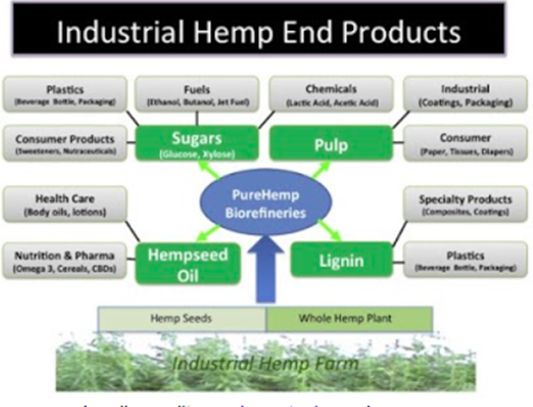
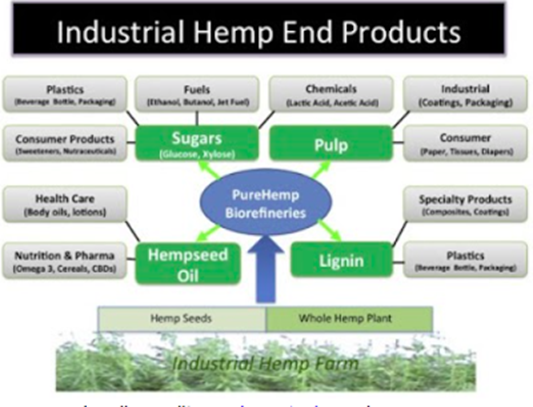
    Pure Hemp Technology is a wet processing plant which distinguishes them in their approach and represents a key “central supply chain” that simply doesn’t exist for whole plant processing.

    industrial-hemp-blog
    (media credit: www.purehemptech.com)

    This allows plants like Pure Vision to refine hemp into higher value products and strains in addition to fiber, pulps for paper, and other materials like lignin which consists of 20% of the plant. These materials  are processed into several applications from chemicals and plastics to sugars, sweeteners, alcohol, and more.

    Pure Vision/Pure Hemp Technology is a registered R&D facility in Colorado, producing different grades of pulps and stalks/hurd, long fibers, into useful products for green businesses.

    Processing these co-products into these higher value products is critical to growing hemp.

    “A company looking into textiles, processing, seed, etc, that only represents a fraction (of the market value),” says Lehrburger, “it makes growing it (hemp) more valuable (for American farmers).”

    Facilities like Pure Hemp Technology provide farmers a means to commodify their harvest as well as readily available sustainable alternatives and to everyday consumer goods.

    “Farmers have to be successful, pricing of commodities has to also be successful to buy seed, specialized equipment, etc.”

    In light of the decline in opportunity and the challenges faced by Rural American farmers today, Lehrburger discussed the potential for jobs not only in the growing and agricultural sectors but in processing and manufacturing.

    “The start of the hemp industry seems to represents a significant opportunity for revitalizing rural America, where the bigger picture is replacing oil-based products with bio-based products.”

    In this article from Environmental Health News, Jessica Knoblauch reports that “evidence is mounting that the chemical building blocks that make plastics so versatile are the same components that might harm people and the environment. And its production and disposal contribute to an array of environmental problems.” 1.

    Supporting the Industrial Hemp Farming Act, urging businesses to consider go green, and reaching out to congress is a huge push away from plastics and a way to help surge the rebirth of industrial hemp.

    For more information on hemp processing and bio-refineries like Pure Hemp Technology, join Ed Lerhburger and Carl Lerhburger at NoCo Hemp Expo on April 1-2 at The Ranch Events Complex in Loveland, CO. Ed will be speaking at the Let’s Talk Hemp stage along with several key industry experts and business leaders during Saturday, April 2. To learn more about the expo and view a full schedule of events click here!

    1. Knoblauch, Jessica A. “The Environmental Toll of Plastics.” Environmental Health News. N.p., 2 July 2009. Web. 30 Mar. 2016.


  • Introducing the NoCo Hemp Expo HempWall!

    Introducing the NoCo Hemp Expo HempWall!

    By: Rachel Jackson

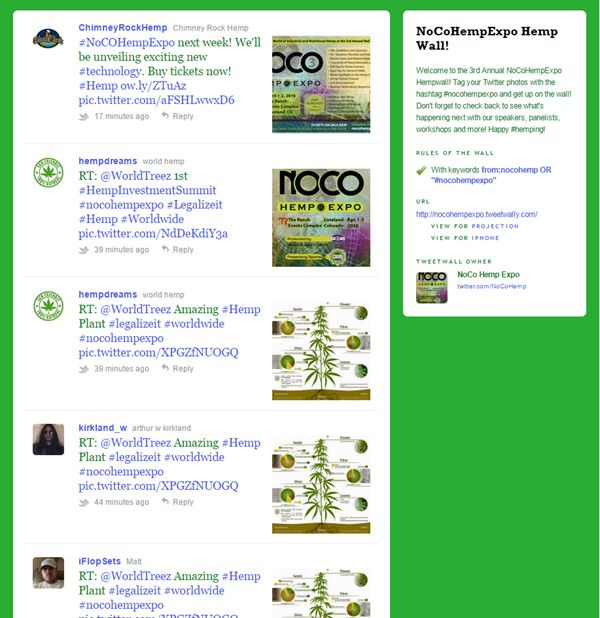
    2016 has been a monumental year for hemp, and especially big for the NoCo Hemp Expo! As the largest, smartest hemp expo in the country, we want to connect our message with people in every way we can. That’s why this year the NoCo Hemp Expo is unveiling a brand new interactive social media platform, the Tweetwall!

    Affectionately dubbed the HempWall, think of it as your interactive information stand. Throughout the Expo, we’ll be broadcasting the next big event, speaker, or panel happening up on screens all over the Expo!  So when you are looking for the next hempcentric activity, look no further than the HempWall! You’ll be totally connected to everything happening around you, so you’ll want to check back frequently to make sure you’re not missing a thing.

    But that’s not the whole reason we’re doing this. This is the 3rd year of the NoCo Hemp Expo, and we never would have gotten here if not for the loving support of all our attendees and volunteers. Without you we never would have gotten to be the biggest, baddest hemp expo in the country, and this year we want the spotlight to be on you! So we want to see YOU while you’re sampling, cooking, painting, jamming or just having fun at the #nocohempexpo! And we’re doing that through the magic of our HempWall.

    It’s pretty simple. Log in to your Twitter account, follow @NoCoHemp, and simply tag your photo, thought, or friends with the hashtag #nocohempexpo. It will automatically pop up on the HempWall, which is being projected up on screens all over the Expo! So when you snap a selfie with Ben Franklin, or find your new favorite hemp snack, put it on Twitter and hashtag #nocohempexpo, so everyone can see! Maybe you’ll even see someone you know.

    Nowhere near a Hempwall screen? Check your pocket. The Tweetwall also works on your mobile phone, if you pull up the website on your smartphone you’ve got the #nocohempexpo right in your hand. Send the link to your friend who couldn’t make it, and they can watch the #nocohempexpo livestream in front of their eyes. It’s almost as much fun as being there (almost.)

    You can check out the HempWall in action over at nocohempexpo.tweetwally.com. Get those Twittering fingers ready, and we can’t wait to see you April 1st and 2nd!

    Another great reason to check out the wall? We’re also going to be livetweeting the event! Think of it like your interactive information stand, we’ll keep you updated on speakers, panelists, workshops and more! You’ll want to check back to the screens frequently so you don’t miss a thing, and really get the whole expo experience!


  • How Building With Hemp Can Help Curb Climate Change

    How Building With Hemp Can Help Curb Climate Change

    Between the manufacture of building materials, transportation of those materials and construction equipment, energy use and worker transportation, along with the final disposal of construction waste, the United States building sector is becoming one of the world’s largest threats to climate change.

    Did you know?

    • Half of the world’s energy goes into buildings throughout their lifetime – from construction, through use, and finally demolition.

    • Buildings, and the construction and use of those buildings, also contribute to almost half of the world’s carbon dioxide emissions.

    • Transporting the materials to a building site constitutes 6-8% of total greenhouse gas emissions for a project.

    • Construction is one of the largest consumers of raw materials, using 25 percent of the world’s timber.

    • The manufacture of concrete and reinforced steel account for 94-95% of greenhouse gas emissions for construction materials.

    The U.S. Green Building Council reports that not only does the United States commercial and residential building sector consume 70 percent of electricity, but accounts for 39 percent of all CO2 emissions produced. In fact, U.S. buildings alone are said to be responsible for more carbon emissions annually than those of any other country, except China.

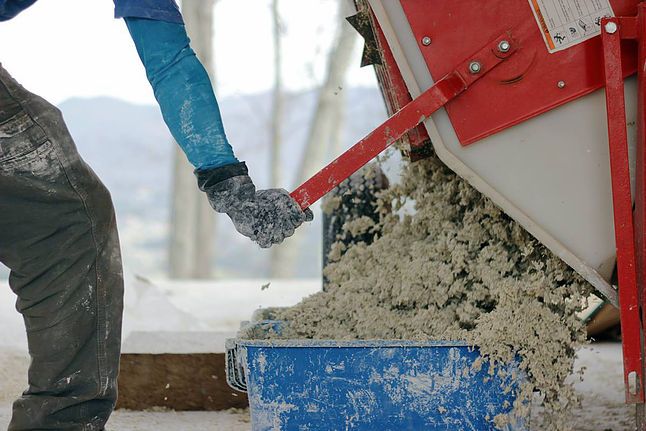
    Hempcrete is made of the inner woody core of the hemp plant (called shiv or hurd) mixed with a lime-based binder and water. It is environmentally friendly, non-toxic, energy-efficient and resistant to fires, mold and insects.

    Hempcrete, and other hemp building materials, have the ability to transform the building sector into a more energy-efficient and climate-friendly industry, playing a major role in reducing our ecological footprint. Here’s how.

    Manufacturing

    The manufacture of concrete and reinforced steel accounts for 94-95 percent of greenhouse gas emissions produced from construction materials. These materials are often made using poisonous chemicals and continue to release toxins into the environment even after the buildings are constructed.

    Contrary to these traditional construction materials, hemp is typically a low-maintenance, fast-growing agricultural crop that thrives in both temperate and tropical climates. While it grows, it absorbs carbon emissions and helps replenish the soil with nutrients. Once mature, it can be harvested and processed into a concrete-like mixture called hempcrete.

    Hemp processing is much less destructive to the environment than traditional concrete production. It requires less energy to produce, and it is a sustainable, annually renewable industrial resource.

    HempFlax is a company focused on the production and processing of sustainable resources, semi-finished and finished products made from ecologically grown fibre hemp and flax. They discourage unnecessary logging and deforestation by producing hemp wood for paper, construction material, sawdust and many other environmentally damaging consumer goods.

    Transportation

    Manufacturing building materials that are then transported to a building site to be constructed into a final structure, all emit large amounts of greenhouse gases and consume increasing quantities of energy. To reduce transportation costs and increase efficiency, hemp is often grown in close vicinity to the production facilities.

    On farm processing methods have also been explored in an effort to decrease these costs. Hypothetically, all processing and transportation equipment could run on hemp biodiesel – but that’s down the road.

    Pictured above: The Nauhaus Prototype Project, a hempcrete home in Asheville, North Carolina. Click here to learn more about our stay in The Nauhaus!

    Construction

    Hemp can replace traditional construction materials like concrete, timber, and steel with applications like hempcrete and other hemp-based construction materials like hemp fiberboard and hemp insulation.

    Hempcrete is lightweight, non-toxic, and biodegradeable. It is usually mixed on-site, although precast walls and blocks are also available. Building with hempcrete offers design flexibility, because it has the ability to form around any shape, then set and support its own weight.

    Energy Usage

    A significant amount of emissions come from the combustion of fossil fuels to provide heating, cooling and lighting, and to power appliances and electrical equipment. Hempcrete regulates temperature and humidity; in some cases completely eliminating the need for heating and cooling systems, resulting in noticeable energy savings.

    “Hempcrete is used as an environmental barrier for providing resistance to heat transfer and managing moisture of the building envelope,” says Kris J. Dick, an associate professor in the Department of Biosystems Engineering at the University of Manitoba in Winnipeg and director of Alternative Village, its construction research facility. “Engineers and architectural designers practicing in the field of nonconventional material applications have clearly indicated a need for more design data regarding hempcrete.”

    As time passes, the strength of hempcrete has shown to increase. The lime-binding agent that is mixed with the hemp hurd calcifies and gets harder over time. The average hempcrete building is expected to last several hundred years.

    Pictured above:  John Patterson from Tiny Hemp Homes showing Kentucky Hempsters, Kirstin Bohnert, his latest project in Berthoud, Colorado. Click here to learn more about our visit with John and his Tiny Hemp Home in CO!

    What to learn more about Hempcrete?


    Industry leaders and experts will gather together on April 1-2 in Loveland, Colorado for the NoCo Hemp Expo, the largest hemp-centric event in the country. Join John Patterson and Frank Wetenkamp from Tiny Hemp Homes for a “Building with Hemp” workshop from 1:00 pm – 2:30 pm on April 1 or 12:00 – 1:30 pm on April 2.

    Be sure to sign-up for our mailing list for future hempcrete building workshops this season!

    —

    Sources

    Image source (top): https://www.facebook.com/alembicstudio/photos/a.1018396308179468.1073741829.150498734969234/1138901149462316/?type=3&theater

    https://helix.northwestern.edu/blog/2011/03/construction-has-costly-carbon-footprint

    http://www.huffingtonpost.com/2012/05/10/hempcrete-hemp-house_n_1506662.html

    http://www.eesi.org/files/climate.pdfhttp://www.collective-evolution.com/2013/02/03/hempcrete-worlds-strongest-building-material/http://hempflax.com/en/what-is-hemp/hemp-processing

    https://www.asme.org/engineering-topics/articles/construction-and-building/green-alternative-to-insulation-materials

    http://hempflax.com/

  • Growers and Natural Food Companies Seek Local Hemp Seed

    Growers and Natural Food Companies Seek Local Hemp Seed

    Matt Birkholz, President of Colorado Hemp Works discusses how the Hemp Bill in Colorado has evolved the need for seed processing in the U.S.

    By: Thomas Ivory, Jr.

    Industrial Hemp seeds have a competitive nutritional value: second only to soy in protein, a better source of Omegas than fish oil, are dairy free, gluten free, vegan, non-GMO, and do not carry any allergens such as nut or tree-nut allergens.

    “As the stigma begins to wear down that somehow people are going to get high by eating hemp seed,” said Matt Birkholz, president of Colorado Hemp Works, “you might start to discover that the hemp seed is a great alternative.”

    Populations of vegetarians and vegans across the U.S. are steadily on the rise. The task of finding plant-based protein can be a challenge. For a long time, the best option has been soy. Hemp can be a great alternative that is more easily digestible by the human body.

    Colorado Hemp Works, based out of Longmont, Colorado, is a local Industrial Hemp seed processing facility that aims at providing the best alternative product. “There are a good amount of natural food companies across the U.S. who have been using hemp in their products for years,” said Birkholz, “and there are new ones coming on-line all the time. Initially what we’re (CHW) looking at is trying to supply those types of companies with a fresher product.”

    “Instead of the seed they buy from Canada, the hemp hearts or the by-products or the ingredients they buy, those seeds were processed months ago and in large batches, and then warehoused waiting for sale. Our business plan, our offering is: we bring the whole seed down to Colorado and we process it on-demand.”

    “So, if a natural food company wants to make their product on a Thursday, we’ll spend Tuesday and Wednesday processing their seed, and deliver Wednesday night or Thursday morning, and get them the freshest product that they can possibly have.”

    CHW takes the input of the whole seed and breaks it down, separating the seed shell casings from the hemp hearts, isolating and capturing each one. They currently dehull hemp seeds and have plans to bring in a commercial grade oil press.

    Right now, there is a big difference in the price between international seed and Colorado seed, because of the availability, and the laws of bringing viable seed into the State. “Our plan was to rely upon international sourced seed, at least for the time being, and then migrate over to Colorado sourced seed as soon as the market was there,” said Birkholz. “We thought it was 2017, 2018, before farmers in Colorado would have enough seed where it would make sense for them to sell to somebody like me for food grade products; as opposed to selling seed to other farmers for the genetic value.

    “What we’re finding, now that we’re operational and the word is starting to get out that we’re for real and we’re actually processing seed and the equipment is moving today, we’re finding a lot of farmers are starting to contact us.”

    This year, there are farmers who are growing up to 1000 acres for food grade seed. That puts CHW ahead of schedule for what they predicted.

    “We’re excited to be the first (hemp seed) processer, and currently the only de-sheller in the U.S., on a commercial scale,” said Birkholz. “We’re really excited to partner with Colorado farmers. And we’re really excited to be pushing this industry forward. We’re here to serve and we’re here to keep the industry moving.”

    CHW is leading the industry in Industrial Hemp seed processing. This gives American companies, and American consumers, the best local products. Visit their website, coloradohempworks.com, to learn more.

    “Hemp (oil) can go rancid quickly,” said Birkholz. “A lot of effort is put toward freshness. What is unique about us is the timing, and how close we can process to the time that our customers make their products.”

  • Going Green This Spring: Top Hemp Fashion Brands in 2016

    Going Green This Spring: Top Hemp Fashion Brands in 2016

    KY Hempsters

    Spring into Summer with Sustainable Hemp Fashion

    One thing we’ve fallen in love with when it comes to hemp is the fashion! Long gone are the days of burlap sacks and hippie necklaces, we’re talking about top-notch designer digs and practical purchases that last a lifetime!

    Not only does hemp production require much less water with little to no pesticides compared to cotton, it’s naturally better than any synthetic material.

    As people become increasingly conscious about their purchasing decisions, we believe it’s important that hemp textiles are readily available. While the hemp textile industry is in need of further development here in the U.S., many companies located across the country are taking strides to make hemp mainstream and advocate for its commercialization. We’ve listed just a few of our favorite sustainable hemp fashion companies below that are making green the new black.

    Pretty Birdie Co.

    hemp-fashion1

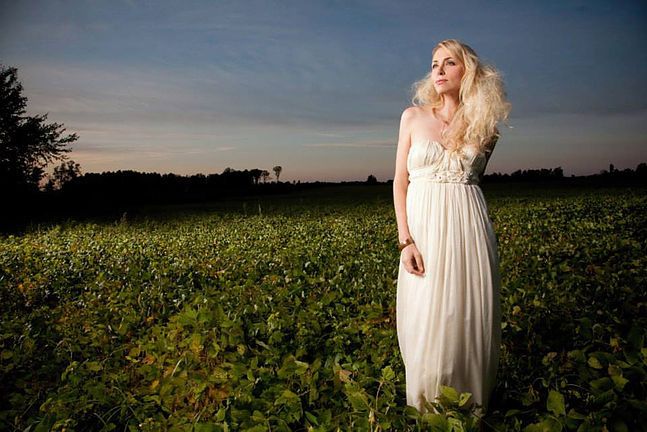
    Stephanie Teague Trippe has defined high-class hemp fashion through her company, Pretty Birdie Co.From elegant wedding gowns to classic business attire, Stephanie offers women the look and feel we want on the inside, and on the outside!


    With stunning, hand-sewn pieces made using a variety of hemp-blended materials, you can feel confident that your Pretty Birdie purchase is contributing to sustainable, more environmentally friendly practices.

    Plus, her designs are phenomenal! Even catching the eye of four-time Grammy winning artist, Esperanza Spalding, who has been seen wearing Stephanie’s designs on multiple occasions.

    We love our Pretty Birdie pieces and probably wear them too often – they really do fit better each time we wear them! The picture to the left is from last summer when we had a photo-shoot in one of the fields we worked with, showing off our Pretty Birdie outfits! Stephanie has recently expanded her company to include kids clothing and will rebrand with a launching of a new website, stay tuned!

    Jungmaven

    hemp-fashion3


    When it comes to being comfy and cool, Jungmaven has us covered! So far, the 60% hemp 40% cotton blend shirts have been our absolute favorite. We can even wear them in the field and the hemp doesn’t stick! The photo below was taken after transferring raw hemp material, and there’s no hemp anywhere on the shirt. Not to mention, it’s so airy and allows our bodies to breath while we work.

    hemp-fashion4

    We can also throw them on with leggings and a cute scarf for an everyday outfit. Founder, Robert Jungmann, caters to men and women with a variety of simple, colorful, comfortable, yet versatile hemp shirts perfect for all activities.

    Jungmaven’s vision is to have everyone in a hemp T-shirt by 2020 to help mitigate climate change. 

    We’ve got ours, Do you?!


    Hemp Blue

    hemp-fashion5

    Did you know at one point Kentucky produced a fabric called “Kentucky jeans” made from hemp? In fact, the first Levi Jeans were made using hemp canvas. Now, Hemp Blue is setting an all-new standard with a premium hemp denim line for men and women.

    In December, the L.A. based company launched the Hemp Blue project through a Kickstarter campaign, which was successfully funded well over the goal of $25,000. We can’t wait to get our first pair of Hemp Blue jeans this Spring!


    Recreator

    hemp-fashion6

    Who doesn’t love hemp screen tees and sustainable apparel with funky fresh designs? Recreator is re-creating hemp fashion from L.A. with local production from experienced artisans who believe in high-quality, ecological standards. All shirts are dyed, cut and sewn with a distinct pride.

    Minawear Hemp Lounge

    hemp-fashion7

    Ladies, if you’re in the mood to move shop Minawear Hemp Lounge for hemp yoga pants, tops, sundresses and accessories perfect for getting out and moving about! Owner and Founder Mina Haggard prides herself in promoting health, education and care of the planet through her clothing. 

    hemp-fashion8

    Check us out rockin’ our hemp clothes at one of our events last year! Alyssa (pictured left) is wearing the olive spaghetti stap tunic from Minawear Hemp Lounge (see below) and Kirstin (pictured right) has on the flower of life design from Recreator!

    Step’n-Out in Hemp at NoCo

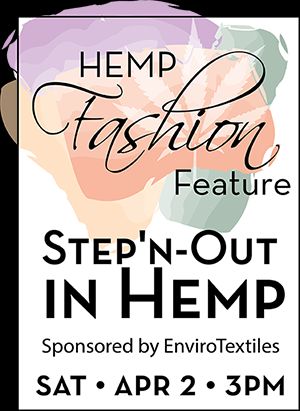
    Interested in learning more about hemp fashion? The NoCo Hemp Expo is hosting a Hemp Fashion Show on Saturday, April 2 at 3:00 pm in Loveland, Colorado at The Ranch Events Complex. Sponsored by Envirotextiles, Step’n-Out in Hemp offers a first-hand view into the world of sustainable, eco-friendly hemp fashions from the companies who are revolutionizing the textile industry today.

    Enviortextiles has been leading the way in hemp fabric and textile production in Colorado and the United States since 2002. The mother-daughter duo, Barbara Filippone and Summer-Star Haekse have been long-committed to producing quality fibers and catalyzing the need for a “cotton” clothing upgrade. 

    Some of the companies mentioned above will be at the Expo for you to connect with! We look forward to seeing even more hemp fashion brands and expanding our hemp wardrobe. Go green with hemp this spring at NoCo Hemp Expo and join us on Saturday, April 2nd at 3:00 PM to support all things hemp and the much-needed movement towards sustainable clothing and textiles in the U.S.

    For more information visit www.nocohempexpo.com.

  • Recharge Your Wardrobe This Spring with Hemp:  Sustainable Fashion and Textiles at NoCo 3

    Recharge Your Wardrobe This Spring with Hemp: Sustainable Fashion and Textiles at NoCo 3

    Eco-friendly clothing companies aim to bring hemp-trade to the U.S. in 2016.

    Sponsored by EnviroTextiles, Step’n-Out in Hemp offers a first-hand view into the world of sustainable, eco-friendly hemp fashions from the companies who are revolutionizing the textile industry today.

    Long-committed to producing quality fibers, EnviroTextiles leads the way in hemp fabric and textile production in Colorado and in the U.S. Mother-daughter duo Barbara Filippone and Summer Star-Haeske have owned and operated the Glenwood Springs green-company in since 2002.

    Their efforts have catalyzed the need for a “cotton” clothing upgrade in the U.S, bridging cultural values through the core of the East Asian hemp trade, and shedding light of the harmful chemicals being used in everyday apparel.

    hemp-fashionAs one of the most durable and long-lasting fibers on the planet, hemp requires less water to irrigate the plant and fewer acres to grow than the standard cotton fiber. Hemp fabric softens over time, and unlike cotton, uses little to no pesticides.[1]

    Showcasing business attire, casual wear and elegant evening gowns, NoCo 3 features hemp fabrics and designs made by Fibre Poet, Hemptique, Recreator, and more like Hemp Blue, an LA-based hemp denim company whose recent Kickstart campaign reached well over its pledged goal of $25,000 in December 2015.

    Importing hemp has been at a high cost to most preliminary manufacturers in the U.S., but given recent changes in state and federal legislature regarding allowing farmers to grown hemp, EnviroTextiles and clothing companies of the like are poised to deliver some of the most natural fibers grown on U.S. soil in years to come.

    Go green with hemp this spring at NoCo Hemp Expo and join us on Saturday, April 2nd at 3:00 PM to support all things hemp and the much-needed movement towards sustainable clothing and textiles in the U.S.

    Press Contact:
    Abbie Marks
    (985) 518-7493
    abbie@nocohempxpo.com


    [1] KY Hempsters. “Hemp vs Cotton: 3 Reasons Why Cotton Is Not King (and Why Hemp Should Be).” Leafly. N.p., 8 Oct. 2015. Web. 16 Mar. 2016.