Tag: regenerative agriculture

  • Regenerative Ag: Healing the Planet with Hemp

    Regenerative Ag: Healing the Planet with Hemp

    By Christina Sasser

    The world as we know it is experiencing a time of great transformation. Climate change is now considered a major public health emergency by leading scientists around the world. The world needs a multifaceted approach to combat climate change, and one important way to do so is through radical adjustments to farming practices. According to a 2019 report from the U.N. Environment Programme, agriculture is currently the planet’s largest form of land use, occupying 40% of the earth’s surface and responsible for 25% of greenhouse gas emissions. Regenerative agriculture is a holistic system of farming principles that could change these trends. It seeks to rehabilitate and enhance the entire ecosystem, actually “improving the resources it uses, rather than depleting them.”

    Regenerative agriculture is unique in its ability to both reduce greenhouse gas emissions and to also capture them through carbon sequestration, which is the longterm removal of carbon from the atmosphere. When plants photosynthesize, they take in carbon dioxide from the air and transform it into carbon that the plant uses to grow. The excess carbon created during this process is then transported through the plant and into the soil, where it can feed fungi and microbes, which in turn provides more nutrients for the plant. Carbon can remain stored in the soil for thousands of years or can be released back into the atmosphere through farming practices like plowing and tilling, in which soil is mechanically dug, stirred or turned. Project Drawdown, a global research organization that identifies, reviews and analyzes the most viable solutions to climate change, ranks regenerative agriculture as one of the top actions we can take to ensure we have a planet worth living on in the future.

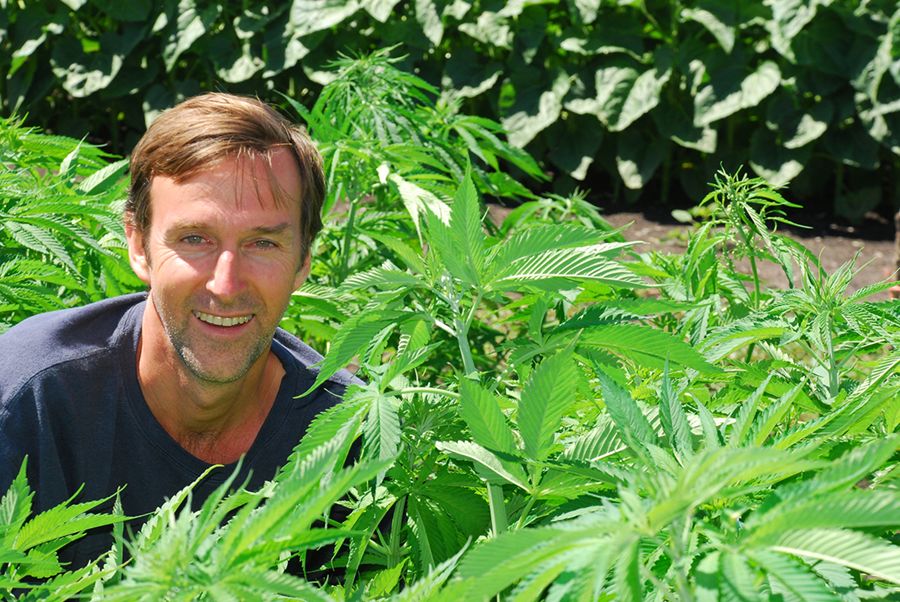
    Regenerative hemp farming offers hope for a brighter future amidst the challenges and uncertainty that we face today. Since the passage of the 2018 Farm Bill, there has been a massive increase in hemp cultivation in the U.S. While the market is still nascent and unstable, that hasn’t stopped thousands of farmers all across the country from planting their first crops of hemp. Amongst those farmers, you will find a small but growing group of valiant, compassionate, intelligent farmers who are using the opportunity to grow hemp using the principles of regenerative agriculture, as hemp is a particularly well-suited crop for it. Almost all varieties of hemp are naturally resistant to pests and predators. Harmful pesticides that are typically used in mono-crop industrial agriculture needn’t be used, meaning hemp farms have become havens for pollinators like bees and small birds and animals.

    Hemp is an important crop in the regenerative agriculture movement for a number of reasons.

    Deep Roots: Despite it being an annual crop, its roots reach down into the soil, helping to hold it together, reducing erosion and also loosening the soil allowing more delicate plants to grow afterward in crop rotation.

    Biomass: Some biomass will be harvested for CBD products (which is currently the most widely produced end product), and some of that biomass will return to the soil and decompose, feeding nutrients back into the ground.

    Fast Growing: Hemp grows relatively quickly, making an excellent ground cover as the plants easily block out room for weeds. While most cover crops are not commercially valuable, hemp has a relatively high market value, making it a “win-win” for both the soil and the farmer. Scientists estimate that for every ton of hemp grown, 1.63 tons of CO2 is removed, making it ideally suited for carbon sequestration, even more than trees or other plants of similar size.

    Bioremediation: Using plants to decontaminate soil and water after industrial pollution or after years of toxin build-up from industrial agriculture can restore the earth. Hemp can easily grow in contaminated soils, absorbing heavy metals and toxins into the plants themselves.

    Low Water Consumption: Hemp is a relatively hardy plant, needing much less water than most crops. Food and agriculture are the largest consumers of water, requiring many times more than what we need for personal use. Up to 70% of the water taken from the ground and rivers goes into the irrigation of agricultural commodities. In some parts of the United States, agriculture literally threatens to dry up entire ecosystems, making low water consumptive crops essential in ecologically sustainable farming.

    Diverse Applications: Did you know that there are over 50,000 known uses or applications for hemp? Ranging from medicine, food, biofuels, fiber, building materials, paper, textiles, clothing, to a viable replacement for plastics. Every single part of the plant has a useful purpose!

    Regeneratively-grown hemp offers humanity the possibility of a beautiful and green new future. It may seem like an impossible dream from where we stand right now, but, just a decade ago, it was hard to imagine that hemp would even be legal, let alone that the cultivation of the plant would grow to over 230,000 acres in just the first season since the Farm Bill was passed!

    Even if you are not a hemp farmer, you can directly take part in regenerative agriculture practices right at home, in your own backyards, through the reduction of unnecessary digging, mulching or adding composted organic matter to your soil, as well as using cover crops in your garden (or ground covering ornamental plants) to reduce soil erosion and improve soil structure. Not only is it good for the environment, getting your hands dirty is good for your health, too!

    About Christina Sasser

    Christina Sasser is the CEO, co-founder, and chief product formulator at Vital Leaf, a Portland, Oregon based wellness company that infuses the healing potential of regenerative hemp into their line of ethically sourced and sustainable products. She has been working in the natural products industry for over 15 years, and, before starting Vital Leaf, she was a holistic chef and nutrition educator.

  • There Is Healing in the Soil: A Reflection on Being Black in Agriculture

    There Is Healing in the Soil: A Reflection on Being Black in Agriculture

    By Scheril Murray Powell, Esq.

    In February 2020, I spent time in Africa (The Motherland), in Jamaica (my MOTHER’s land), and at agricultural conferences and farms throughout the United States. At one point years ago, I had no interest in spending time outside, much less on a farm. However, when I became a part of the Cannabis industry, that all changed. Cannabis led me to Agriculture and encouraged me to embrace my Agrarian past. I have now come to love my time spent on farms around the world. So as I reflect on another revolution around the sun, I step fully into my profession as a Cannabis and Agricultural Attorney.  I have even come to refer to myself as an Agriculturalist.

    As a young child living in New York, I grew up enjoying my grandmother’s garden.  She planted tomatoes, mint, roses, and corn annually.  The cycle of planting season, harvest, and then the fall season was a part of my life, but I barely noticed it.  Once we moved to Florida when I started high school, my parents started to plant fruit and vegetables that they’d longed for from their past life in Jamaica. We had bananas, numerous citrus fruits, varieties of mangoes, Ackee (the Jamaican National Fruit), coconuts, June Plum, yams, and sugar cane growing in the yard. Each month represented a season of harvest for different plants. Though my parents had lived in the United States for decades, they had not forgotten the “goodness” of freshly grown food on your plate, especially if grown by your own hands. In contrast, I could not tell one tree from another unless the identifying fruit was in season. When I visited my family in Jamaica, there were chickens in the yard and goats traveling up and down the streets. However, I did not associate those animals with livestock farming; they were just my entertainment.

    Later in life, I found unexpected links to these memories within my Cannabis journey. As soon as I started participating in the cannabis community, I noticed the lack of diversity, especially with regard to the inclusion of brown people. The “Farm to Pharmaceutical” and “Farm to Bedside Table” movement did not reflect my community nor my heritage. Black people have been farming and feeding America for CENTURIES. Why then in this lucrative farming opportunity known as Cannabis, did I fail to see significant numbers of black people gaining cultivation licenses in my beloved industry? How did we get here? In order to answer that question, I explored my own relationship with agriculture and with the soil.

    The Trauma of Enslavement

    There is a lot of trauma associated with black people and the soil. Many of us associate farming and working in the soil with the historical period of enslavement. The image of black people toiling in the soil reminds us of oppression, forced labor, rape, and torture. Despite the gardens of my childhood, I was one of those people. But as I started to attend Black Farmers’ Conferences around the country, I noticed some alarming trends. The first trend is that black farmers were aging and I did not see enough of my generation or the next who were willing to follow in the profession. I also took note of the fact that there was not as much discussion of technological innovation at these conferences akin to those I saw in the mainstream conferences.

    I knew that part of my mission was to first address my trauma related to working in the soil and then encourage more black people to do the same, especially younger black people. Farming, bringing a seed to life, and stewardship of the land, are all important parts of our heritage that need to be preserved. I committed myself to spending more time on farmland, and as I did so, I fell in love with it. I started taking Agriculture certification classes offered for new farmers by Dr. Gilbert L. Queeley, PhD., at Florida A & M University so that I could be credible in my outreach to Black Farmers. At this point, I transitioned from being solely a Cannabis Attorney, to an Agriculture Attorney as well. I also changed my language about the era of enslaved people of the African Diaspora in the United States. In Ghana, I was reminded by Dr. Princess Asie Ocansey, a prominent member of the Ghanaian royal family and internationally-recognized business engineer and humanitarian activist, that Black people were never simply slaves. They were scientists, doctors, philosophers,  community leaders, teachers, mothers, sons, daughters, fathers, architects, builders, hunters, who were enslaved by people who would commit treacherous acts in order to have free labor.

    In my recent trip to Ghana, I got to put my feet in the water of the other side of the Atlantic, which would have been the last part of home seen by those who were enslaved and brought to America. I was also given my African name: the name that I would have had if my ancestors’ lives had not been disrupted by enslavers. By knowing my name – Ama (born on a Saturday) Serwe (beloved daughter of the king) – I felt a bit of fog clearing with regards to my identity. I could reposition the 400 years of enslavement and trauma as just a “pause,” allowing me to determine who I was meant to be and how  I was meant to contribute to my community. There is power in restoration and having a mindset of overcoming the past. And as we know, your past does not dictate or define your future.

    Trauma of Incarceration

    In the Black community of the United States, it is safe to say that everyone knows someone who was incarcerated for a cannabis-related crime. I often say that a Cannabis charge is the gateway to the prison industrial complex. As a result, it is difficult to initiate a conversation with a Black Farmer about growing Cannabis. This is also true for hemp, even though it was legalized and descheduled at the Federal level by the 2018 Farm Bill. When I speak to black farmers about growing Cannabis, there is a hesitation because our experience demonstrates that a person can be locked away for decades for just a joint.

    The Great Migration

    The HBO series The Watchmen opens with a scene of the brutal elimination of “The Black Wall Street” in Tulsa, Oklahoma through the massacre of 1921, known as the single worst event of racial violence in American history. Unfortunately, this was not an isolated occurrence in post-enslavement America. A self-sustaining community of black people was considered a threat. Lynchings were a common occurrence well into the 20th Century. As a result, many black people left their land, their Agrarian professions, and everything they knew in order to move North for safety and opportunity. Some spoke of their family’s history in the South, others never mentioned it again due to the pain, and their children knew better than to ask. We became detached from our love of growing food and the land.

    At one of the minority and small farmers conferences where I speak, I met Lillian “Ebonie” Alexander, Executive Director of the Black Family Land Trust, one of the nation’s only regional land trusts dedicated to the preservation of Black and other historically underserved landowners’ assets. Alexander did an excellent presentation detailing exactly what was lost during this migration. However, as is evident through the very existence of her organization, this relationship with the soil is still present in our DNA. I believe that is a huge contributor to the growing number of black people who are embracing Urban Agriculture in cities across America.

    The Decline in the Number of Black Farmers

    The most recent USDA census indicates that the percentage of Black Farmers is at 1.6%, which is not representative of the percentage of Black People in the American population. In 1920, that number was 17%. The trauma and migration discussed earlier partially explain why that number has not increased over time. Further explanations include the generational gap between older farmers with experience and the younger generation, in addition to the issue of the documented systematic elimination of black farmers due to access to capital issues and unfair practices.

    Despite these factors, I believe that cannabis can bridge that gap and create an “Agricultural Renaissance”. It is time for us to take back control over what we put into our bodies and how we nourish ourselves. So much of our well-being, health, and quality of life is tied to what we put into our bodies and the best way to control that is to grow your own. My mom refers to planting and nurturing her plants as therapy. I really believe that there is a level of healing that we as black people cannot tap into unless we reclaim our relationship with the soil and living things.

    Moving Forward

    When I speak at conferences around the world, I encourage people of color to get involved with growing their own food. If I, a person who barely went outside to witness the family garden, could become an Agriculturalist and hemp farmer, then anyone can restore their relationship with farming and the soil. An important part of this transition is finding available resources. I have learned the most by attending farming conferences, taking courses, and reaching out to extension programs of local Universities. I am now the Executive Director of the Black Farmers and Agriculturalists of Florida. This is not something that I would have predicted ten years ago. My consulting firm Green Sustainable Strong  works with farmers all over the world. My recent trip to Ghana has inspired me to incorporate contributing to the continent of Africa into our Agricultural Development Strategy.

    Black Farmers in this  country have always been a vital and necessary presence. They are not going to disappear on my watch.

    About Scheril Murray Powell

    Scheril Murray Powell is an Agricultural and Cannabis Attorney.  She is In House Counsel for Sunflora/ Your CBD Store.  She is the former Director of Federal Affairs for the Florida Department of Agriculture and current Executive Director for the Black Farmers and Agriculturalists of Florida. She is on the Board for the Hemp Feed Coalition and U.S. Hemp Roundtable.  She is President of Green Sustainable Strong, LLC, SMP Staffing, LLC, and Cannurban.com. Scheril is the recipient of the Crohn’s Foundation Blood, Sweat, and Tears Award and the Cannabis MVP Award from the Cannabis Business Award. She works on legalization efforts with leaders of Foreign Nations.

  • Hemp at the Crossroads

    Hemp at the Crossroads

    Will We Regenerate with Hemp, or Choose Corn 2.0?

    By John Roulac

    America’s hemp movement has come a long way in the past 25 years. Today, hemp CBD is experiencing its own day in the sun moment. Everywhere you turn, there’s a news story—from CVS rolling out hemp to 800 stores to Martha Stewart getting into CBD-infused pet products. In the coming decade, sales of hemp CBD are expected to rival those of vitamins.

    Yet there’s a growing concern among conscious consumers about the fact that the hemp plant is a major bioaccumulator that concentrates pesticides and other contaminates. Shall we choose hemp CBD flowers grown in RoundUp-soaked non-organic soils, or select those grown on organically farmed land? Shall we support organic farmers or farmers that spray Monsanto chemicals ?

    Corn 2.0

    Many of the current leaders in CBD, and new entrants including Canopy Growth and the recent Manitoba Harvest purchaser, Tilray, hail from the pot industry.

    The pot barons bring with them a cowboy culture born from years of operating in the shadows of the black markets. The pot industry is infamous for its environmental destruction, copious use of chemicals, and lack of transparency. In a rush for corporate profits, the pot mavens seem to want to steer the hemp industry into a remade version that we could call Corn 2.0. We are not only talking chemicals but GMO breeding to create “THC-Free” hemp varieties, un-labeled of course ; )

    Hemp, like corn, draws nitrogen out of the soil as it grows. The vast majority of hemp grown in the USA for fiber or flowers utilizes great amounts of synthetic nitrogen fertilizer, causing major eco damage to local streams, lakes, and oceans. Indoor pot growers use the same type of harsh nitrogen fertilizer made from fracked natural gas.

    Unfortunately, the U.S. Hemp Authority(a trade group formed to create standards and to certify products), is not requiring brands to label the fact that they’re using GMOs or even list whether a brand’s hemp is from Europe or China. Many longtime hemp allies are not happy with this rushed , ‘pay to play’ standard, created by the pot barons themselves with help from the industrial ag sector. (See this letter that I co-signed: https://cannabusiness.law/open-letter-regarding-the-us-hemp-authority-certification-program/.)

    Beyond soil health itself, fertilizers are a main contributor to climate change, and runoff following storms is the leading cause of ocean dead zones in the Gulf of Mexico. We all need to heed the following wake-up call: At our current rate of excess carbon and heat, every fish, dolphin, and whale in our seas is projected to vanish by 2040 because of plankton die-off.

    Regeneration with Hemp 

    A major difference in how certified-organic hemp is grown is the use of renewable cover crops like clover or alfalfa to provide the nitrogen. Want to get the Cliff’s Notes on how agriculture, the leading cause of global climate change, can also be the leading solution through better practices such as composting, cover crops, and biodiversity? Ready for a paradigm shift? Watch the two-minute trailer for Kiss the Ground  (https://vimeo.com/242796310), a major motion picture (co-produced by this writer).

    The booming hemp industry can pivot to more eco-friendly and climate-beneficial farming practices. It can focus on soil health versus the vague corporate doublespeak of “responsible farming” and “sustainable methods.” Hundreds of hemp brands have claimed that their hemp is organic, yet have failed to deliver proof of organic certification for their growing methods or even their brand.

    The Choice Is Ours

    With ocean die-off and the increasing intensity of climate change bearing down on us, it’s crucial for us to choose to regenerate with hemp. Cleaner farming practices make cleaner botanicals. Doesn’t the choice seem rather easy?

    As consumers and retailers favor brands that are working to regenerate with hemp, organic farmers will increase their acres—while the acreage of non-organic, eco-destructive “Corn 2.0” hemp farmers will inevitably shrink.

    Look for the USDA organic symbol on hemp products from CBD to hemp seed oil. RE Botanicals is excited to be on this leading edge—along with new fresh hemp juice brand Lumen; organic hemp CBD brand Nature’s Love; Nutiva the largest organic hempseed brand, Mad Agriculture, a Colorado NGO working to help farmers be more regenerative; the venerable Rodale Institute; Mark Lewis, a Colorado soil farmer growing hemp in 2019; and soils health guru Ray Archuleta, who was a key note speaker at the world’s biggest hemp exposition and conference, NoCo Hemp Expo 2019.

    It’s time to regenerate with hemp!

    John Roulac is the founder of RE: Botanicals, offering USDA Certified Organic full spectrum hemp extract products. He also is the founder of the superfoods company Nutiva, and five ecological nonprofit groups, including GMO Inside. He’s written four books, including Backyard Composting and Hemp Horizons. Visit www.johnroulac.com, Facebook.com/John.Roulac.