Tag: CHAMP

  • Newsletter – July 16, 2020

    Newsletter – July 16, 2020

    Experience Counts: Colorado Hemp Industry Challenges CDA’s Selection of MJ Consultancy to Oversee State’s Hemp Center of Excellence

    In the midst of a pandemic, economic uncertainty and the 2020 growing season for industrial hemp farmers, the Colorado hemp industry has united in protest to challenge the recent contract award to establish the Colorado Department of Agriculture’s (CDA) Hemp Center of Excellence (COE). This is the first time that the Colorado hemp industry and its leaders have come together to speak out against the Colorado Department of Agriculture’s decision to hire the Marijuana Policy Group (aka Marijuana Policy Group Consulting, Denver, CO) to actualize the Hemp Center of Excellence’s five year plan.

    In a letter to Colorado Commissioner of Agriculture Kate Greenberg, hemp industry leaders expressed concerns that the state’s hemp industry “will not accept any marijuana-related group contracted to management, planning, laying out a plan or facilitating stakeholders in the development and/or goals of the Hemp Center of Excellence.”

    In addition, the state of Colorado’s hemp business community is demanding that “the CDA begin/restart the contract process again in accordance with all state laws, rules, and regulations. We request the CDA directly include the Colorado hemp industry’s involvement by setting up a hemp stakeholders committee to establish rules and parameters for the selection criteria, which would be open to the public for full transparency.”

    State and national hemp industry leaders Tim Gordon, Morris Beegle and Veronica Carpio jointly said the issue is “not about creating a division of hemp and marijuana, but rather the concern of a fair process which includes hemp stakeholders, and immediate action by the CDA and Governor Polis.”

    read full article here

    Colorado Hemp Advancement

    According to hemp industry stakeholders Tim Gordon, Morris Beegle, and Veronica Carpio, the issue surrounding the establishment of Colorado’s Hemp Center of Excellence is “not about creating a division of hemp and marijuana, but rather the concern of a fair process which includes hemp stakeholders, and immediate action by the CDA and Governor Polis.”

    NEWS BRIEFS
    hemp sales

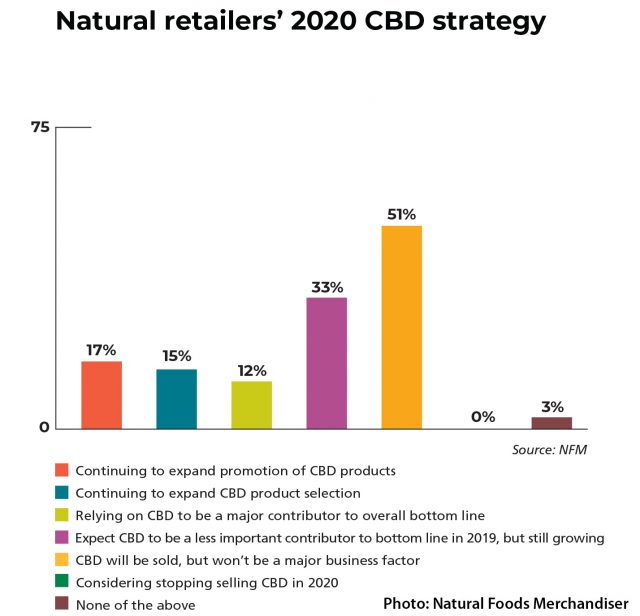
    Hemp CBD Sales Doubled Year Over Year Growth in 2019

    By Natural Foods Merchandiser Market Overview 2020
    noco hemp expo 2021

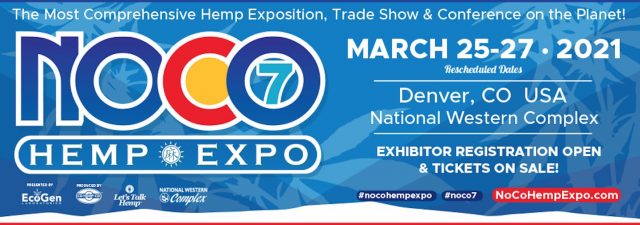
    Exhibitor, Sponsor Registration Now Open for NoCo7, March 25-27, 2021

    By NoCo Hemp Expo
    cdot

    Federal DOT Reviews Hemp Legalization’s Impact on Truck Drivers

    By U.S. Dept. of Transportation
    survey

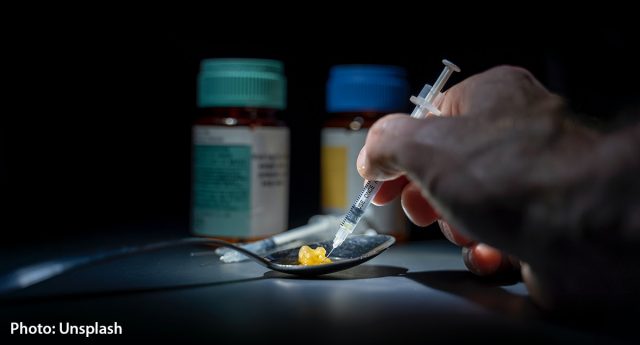
    Survey: 84% of U.S Consumers Believe CBD Can Replace Opioids

    By AmericanMarijuana.org

    HEADLINE NEWS

    Call to Action: Vote Hemp Urges Community to Sign Petition Calling for Congress to Approve 1% THC Limit in Hemp

    By Vote Hemp

    U.S. Treasury FinCEN Guidelines Clarify Due Diligence Requirements for Financial Institutions Regarding Hemp Businesses

    By MG Retailer

    Hemp Bill Leaves Some Cops Unable to Enforce Marijuana Laws in Georgia

    By The Atlanta Journal-Constitution

    Doane University-owned Lab Becomes First ISO Certified Cannabis/Hemp Testing Lab in Nebraska

    By KOLN News, Lincoln NE

    Hawaii State Bill Would Ban Smokable Hemp, CBD Edibles

    By Hawaii House of Representatives

    Court Ruling Allows Indiana Ban on Smokable Hemp

    By Hemp Production News

    Hemp Businesses in New Jersey Poised to Grow

    By Law.com

    Hemp Community Loses Industry Veteran Erik Rothenberg

    By Vote Hemp

    FOOD, BEVERAGE & SUPPLEMENTS

    Can CBD Reduce Lung Inflammation in Covid-19 Cases?

    By Brain, Behavior and Immunity Journal

    White House Completes Review of CBD Guidance from FDA, but Will Public Get to See It?

    By Marijuana Moment

    Jane Fonda Launches Campaign for Uncle Bud’s Hemp and CBD

    By Globe Newswire

    New Research Backs Canine Cannabis Use For Osteoarthritis

    By Forbes

    FASHION, FIBER AND CONSTRUCTION

    Levi Strauss Appoints New Chief Sustainability Officer to Advance Cottonized Hemp, Environmental Initiatives

    By The Sourcing Journal

    Why Hemp Should Be Used as a Sustainable Building Material

    By Innovation News Network

    Could Hemp Insulation Play a Role in Green Homes?

    By The Cannabis Exchange

    FARMING AND AGRICULTURE

    Greenhouse Grown Hemp Finds Niche in Smokable Hemp

    By Greenhouse Grower

    CBN, CBG More Alluring to Hemp Farmers as CBD Prices Drop?

    By Westword

    Wyoming Police Raid Hemp Farm; Accuse Owners of Illegally Growing Marijuana

    By WyoFile

    Penn State Extension Offers Budget Models for Hemp Farmers

    By Cannabis Business Times

    Mississippi Passes on State Program; Tells Hemp Farmers to Apply Directly to USDA Program

    By Hemp Industry Daily

    INTERNATIONAL NEWS

    “Fiebre Verde:” Ecuador Sets Industrial Hemp THC Limit at 1%

    By Puente & Associates

    Peru Opens Door to Commercialization of CBD Products

    By Hemp Industry Daily

    South Korea Establishes “Free Zone” for Industrial Hemp

    By HempToday

    EVENTS

    Penn State Extension Hemp Webinar Series: Strategies for Partnering with Others, July 27, 2020, Noon – 1:00 pm EDT

    Hemp Industry Deep Dive Virtual Global Tour, by Cannatech, Aug. 4, 2020, 12:00pm EDT

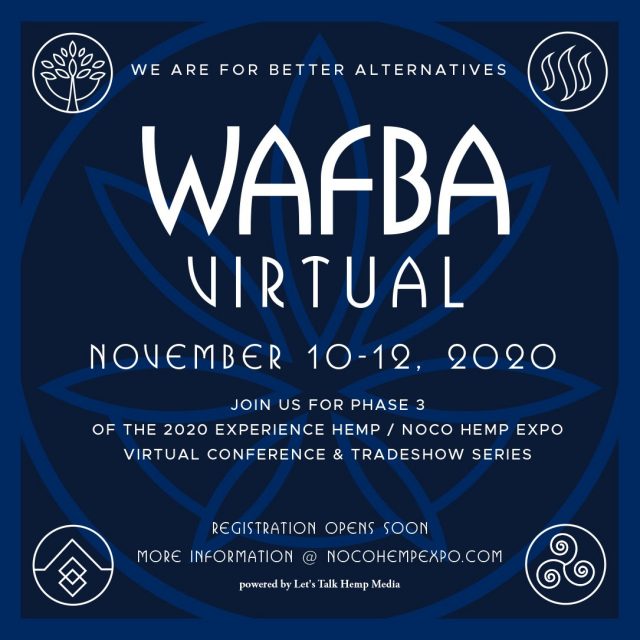
    WAFBA – We Are for Better Alternatives – Virtual Conference & Trade Show, Presented by NoCo Hemp Expo and Let’s Talk Hemp, Nov. 10-12, 2020; Details Coming Soon

    NoCo Hemp Expo – NoCo7, March 25-27, 2021, National Western Complex, Denver, CO

    Southern Hemp Expo, Aug. 20-21, 2021, Nashville, TN
    noco hemp expo 2021

    Read the Let’s Talk Hemp Summer Solstice 2020 Digital Magazine

    The hemp industry proves that, even in a world beset by pandemics and racial injustice, human and planetary healing can and will triumph. Read all about it in the Let’s Talk Hemp Summer Solstice 2020 Digital Magazine, produced in conjunction with the Experience Hemp Summer Solstice Virtual Conference & Trade Show, Let’s Talk Hemp Media, and NoCo Hemp Expo, in partnership with Honeysuckle Magazine.

    Featuring testimony from industry experts across diverse disciplines, Let’s Talk Hemp’s Summer Solstice edition dives into the pressing questions of the day. What is the future of hemp in a post-COVID world? What does Black representation in hemp look like, and how can we create opportunities for social equity? How can we take the next steps toward a regenerative society and integrative medicine? The answers may surprise you.

    Read the Let’s Talk Hemp Summer Solstice 2020 Digital Magazine Here.


    Order Your Copy of Doug Fine’s New Book, American Hemp Farmer

    doug fine

    American Hemp Farmer, the sixth book from author Doug Fine, follows the rigors and pleasures of an entire hemp season from soil preparation and genetics acquisition through harvest and regenerative marketing. It’s immersive. It’s wildly funny. The follow up to Doug Fine’s bestselling Hemp Bound, American Hemp Farmer pulls no punches, and because it is written by an actual hemp farmer and entrepreneur, it tells you what you need to know if you want to join the hemp renaissance.

    Order American Hemp Farmer Today

    Available at One Planet Hemp

    Subscribe to the Let’s Talk Hemp YouTube Channel

    #LetsTalkHemp is the ultimate platform that focuses on “Changing the Cannabis Conversation”. We provide news, education, and information about Hemp and Cannabis to our viewers so that they can learn more about the industry and get tips and tricks on the latest technologies. Subscribe to our channel and learn about everything from legal updates, farming, production, and new products entering the Hemp & Cannabis space.

    The Kannaboom Podcast

    Episode 50 – Morris Beegle, Musician and Hemp Entrepreneur

    We’ve known for decades that hemp is a versatile crop, useful for food, and as a textile, building material and biofuel. Yet because it’s related to cannabis, hemp has been shunned, its value denied. As we look for positive ways to recover from the pandemic, in the context of ongoing climate change, are we finally ready to realize the tremendous economic potential of hemp? We asked Morris Beegle, who has launched multiple hemp-based businesses across various industries, for his perspective.

    Listen, and learn:

    • How Morris made the pivot from a career in music into success as a hemp entrepreneur
    • Why hemp, a regenerative, sustainable crop, is a better alternative for the environment and consumers
    • How to succeed in the hemp industry, whether you want to find a job or start a company
    • Why musicians have been closely tied to cannabis / hemp
    • How Morris developed the first high-end hemp guitar

    Listen Here


    About Let’s Talk Hemp

    Let’s Talk Hemp is a publication of Colorado Hemp Company (a division of We Are For Better Alternatives) focused specifically on the subject of industrial hemp and cannabis. We present features and curate news from across the globe to share the benefits of cannabis on health, energy, manufacturing and planet (H.E.M.P.). Colorado Hemp Company also is the Producer of NoCo Hemp Expo and Southern Hemp Expo, the nation’s leading hemp conferences and expositions.

    Publisher: Morris Beegle, Elizabeth Knight

    Editor: Steven Hoffman

    Web Developer: Debby West

    Design: Allen Haeger

    Circulation: Evan Tompros

    Contributor: Heather Collins

    Financial Officer: Lori Buderus

    Let’s Talk Hemp Podcast: Morris Beegle

    Send Us Your Hemp News!

    Send press releases and news announcements to news@letstalkhemp.com
  • States Take the Lead

    States Take the Lead

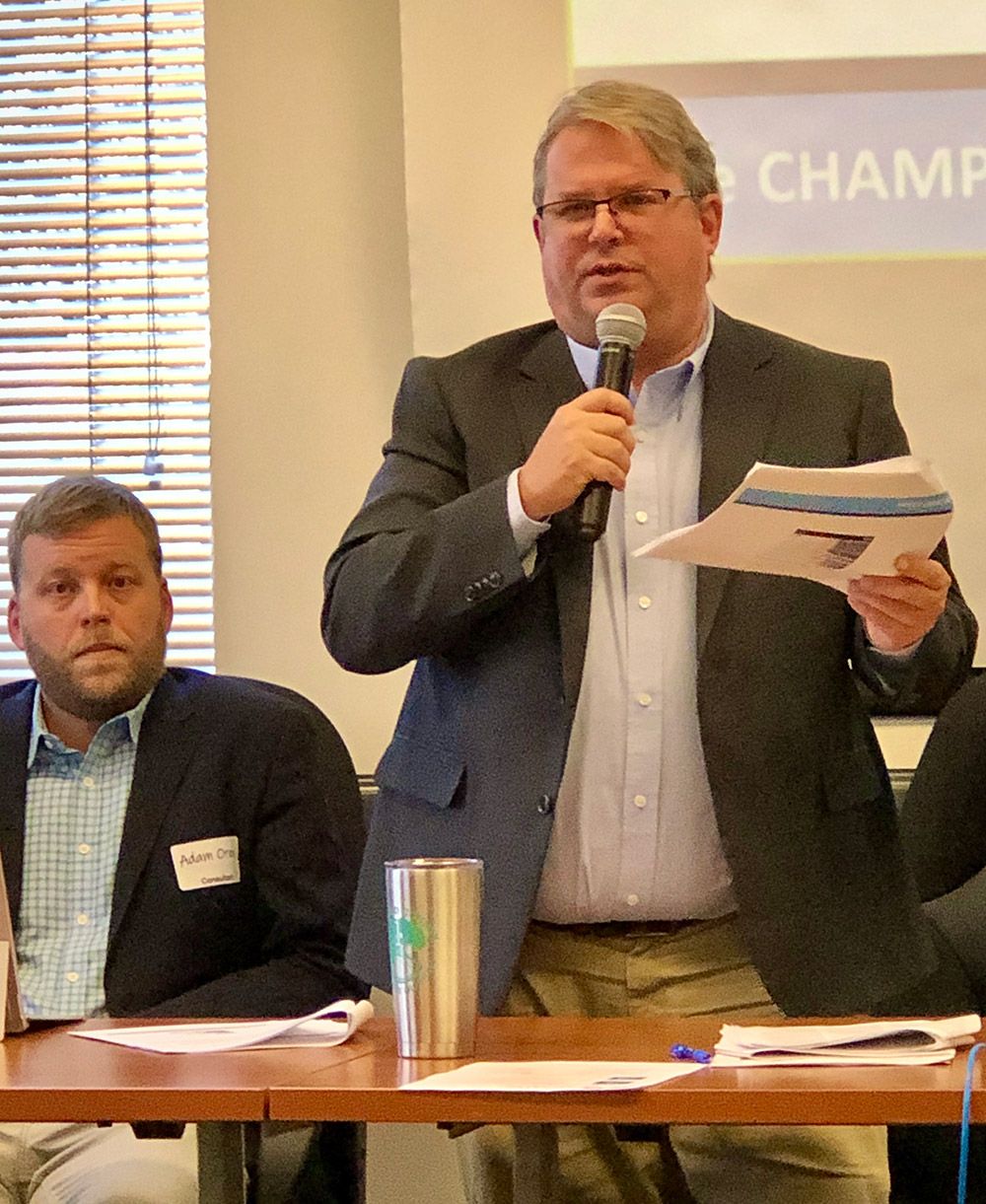
    Brian Koontz, Manager of the Colorado Department of Agriculture’s Industrial Hemp Program (right), shares the state’s concerns
    over USDA’s Interim Final Rule for U.S. hemp production at a public hearing in Broomfield, CO, on December 10. Photo: Compass Natural

    Colorado’s CHAMP Hemp Initiative Welcomes Public Comments in Responding to USDA’s Interim Final Rule on Hemp

    As state and industry leaders sift through USDA’s Interim Final Rule set to govern U.S. hemp production in order to craft a response in advance of the December 30 comment deadline, a number of common concerns are emerging, not the least of which is the rule’s increased potential to place farmers at risk.

    By Steven Hoffman

    The Colorado Department of Agriculture’s Hemp Advancement & Management Plan (CHAMP) initiative welcomed on December 10 more than 100 hemp industry members, advocates, farmers, researchers, academics and others to the agency’s office in Broomfield, CO, for a public meeting to hear comments on the USDA Interim Final Rule (IFR) to establish a national hemp production program and how it affects the state’s own plan for hemp.

    The goal of the hearing was to gather comments from the public and coordinate a unified response from the state of Colorado to the USDA in advance of USDA’s December 30 comment period deadline regarding the Interim Final Rule governing U.S. hemp production. In addition, state leaders gathered information at the hearing to help align Colorado’s comprehensive hemp plan with IFR requirements.

    The comment letter to the USDA, to be prepared on behalf of the state in coordination with the Colorado Department of Agriculture (CDA), the state’s Attorney General and the office of the Governor, will be signed by Governor Jared Polis and Agriculture Commissioner Kate Greenberg. The response will express the state’s perspectives and concerns as a first mover and leader in industrial hemp regarding USDA’s IFR and its impact on Colorado hemp producers who have already been operating under a well-established, state-managed regulatory system in Colorado since 2014. At issue is where USDA rules differ from Colorado regulations and how the state’s farmers may be subject to increased violations and financial risk from seemingly inflexible federal rules that don’t allow for variation in a young, maturing industry.

    To date, the USDA has received approximately 1,100 comments regarding the IFR. Hemp and industry leaders and advocates are urging all constituents to submit comments. “The USDA needs to hear from all of us and there should be 100,000 comments, not 1,100,” said one Colorado hemp farmer commenting at the Colorado CHAMP public hearing. The U.S. Hemp Roundtable prepared a letter outlining its issues with the IFR, and other states including Maine submitted comments to USDA sharing their concerns about USDA’s rule.

    Percent of Violations Could Increase Under USDA’s IFR

    “The way [the IFR] is written, the percentage of violations could increase. More farmers could be unnecessarily subject to violations,” observed Adam Orens, a consultant with Colorado State University and CHAMP who reported at the hearing on how the USDA’s IFR could impact the state’s hemp producers. “USDA’s set of rules was written for a state with half or less of the total acreage of Colorado. Given the expected scale of production in Colorado, we have concern that public and private investment could be affected as a result of USDA’s IFR on hemp,” he added.

    Orens noted that USDA’s IFR will govern hemp for two years, after which a Final Rule will be issued. “The two year interim period allows for a full crop cycle; the 2020 season will be a test drive,” he added.

    According to Orens, USDA’s interim rule defines acceptable levels of THC (“with a hard limit of 0.3%”), covers registration for hemp farmers, sampling, testing, disposal of “hot” plants, and enforcement and violations. “The showstopper is that USDA will require 100% of all lots to be sampled, while only random sampling had been required in Colorado,” Orens said. “Plus, the top one-third of the plant is to be tested; it’s not more specific than that. We see a challenge there with logistics,” he added.

    Orens added that in terms of percentages of THC content, under USDA’s IFR, “the line is drawn at 0.5%.” “If the crop sample tests at greater than 0.3%, it must be destroyed. If it tests at less than 0.5%, it is not considered a negligent violation. If a crop comes in at greater than 0.5%, that is considered a violation. In Colorado, the limit is 1%, so that is different.” Orens noted that if a farmer receives three violations in one year, a suspension would be issued under the USDA interim final rule.

    A concern raised by a number of hemp growers at the hearing was that crop sampling and testing for THC content must be conducted within a very narrow window of 15 days prior to anticipated harvest. Harvest is not allowed until samples are taken and the crop cannot enter the stream of commerce until THC content is verified. Farmers expressed concern that, with the current scarcity of approved testing laboratories, the overwhelming demand for sample testing during the harvest months of September and October would create an impossible backlog, impacting the allowed window for sampling and testing and in consequence, farmers’ harvests. A number of citizens also asked why “hot” crops have to be destroyed and not repurposed into fiber, animal feed, or other uses where the farmer doesn’t have to lose the entire income on his or her crop.

    Adding potential insult to injury, just as hemp farmers have been cleared under the 2018 Farm Bill to qualify for crop insurance, USDA’s interim rule pulls the rug out on farmers if a crop tests “hot.” According to CannaLaw Blog, “Hemp with a THC level above the compliance level will not constitute an insurance cause of loss…The lack of crop insurance coverage for hemp that fails testing, when combined with the rules about crop destruction, creates enormous risk for hemp farmers. A farmer may try to do everything right only to end up with an uninsurable crop that must be destroyed and a complete loss of their investment into hemp farming.”

    USDA’s rules further require that testing labs be registered with the U.S. Drug Enforcement Administration (DEA). But current DEA rules limit registration to jurisdictions in which medical or recreational marijuana is legal, reports CannaLaw Blog. “Although the number of such jurisdictions is growing, no one in the industry believes that the number of DEA registered laboratories can handle the quantities of hemp being produced by American farmers. This is an area where Congress may need to place pressure on the USDA and DEA to avoid causing a significant bottleneck in the hemp supply chain.”

    States Will Need to Adopt Final USDA Rule by November 1, 2020

    Brian Koontz, Manager of the Colorado Department of Agriculture’s Industrial Hemp Program, told the public meeting attendees, “We can operate under our existing state plan through October 31 of next year; after that all states including Colorado will need to adopt USDA’s final rule regarding hemp on November 1, 2020.

    Koontz expressed the state’s concern that, given the 100% testing requirement, more testing staff will be required and testing labs will have to be certified by the DEA. “About 2,000 acres of hemp were ordered destroyed in Colorado last year, and that was at an average of 25% testing. Given the 100% testing requirement, our concern is that the percentage of crops required to be destroyed may significantly increase, which could adversely affect our state’s farmers,” Koontz said.

    Koontz also noted that, whereas the USDA IFR stipulates that hemp growing licenses will not be issued to individuals with any felony convictions, “that rule should not apply to farm workers, drivers and others who are not key personnel,” he said.

    “Also, USDA in its IFR did not address certified seed. However, we see this as important, as hemp growers want reliable genetics,” Koontz added, and he encouraged people to submit comments to USDA regarding their concerns and thoughts on certified seed and seed genetics.

    Commenting at the hearing, Ed Lehrburger, founder of Pure Hemp Technology and Chair of Colorado’s Hemp Advisory Committee, offered: “When farmers’ crop tests hot, it can destroy hopes and dreams. As such, I recommend that USDA’s definition of hemp be changed. The 0.3% THC limit must be increased to 0.5%. Any hemp crop testing at greater than 1% THC could be considered as ‘noncompliant,’ he suggested.

    Speaking on behalf of the Rocky Mountain Farmers Union, Nick Levendofsky, RMFU’s Director of External Affairs, told the CDA and CHAMP officials conducting the public hearing, “We support the issuance of the rule overall as it supports an emerging industry that can help rural farmers. However, dealing with acceptable levels of THC is not something we’ve seen before. Our real concern is that testing could be too costly and may reduce opportunities for rural farmers. Disposal is also a concern. Family farmers should have the same opportunities in hemp, not just venture capital backed operations, and a negligent violation should not be so punitive as to deter farmers,” he commented.

    Hunter Buffington, Director of the Colorado Hemp Feed Coalition, wondered if DEA involvement in the hemp program “is another example of government overreach? No other crop has to deal with the DEA,” she observed. Buffington and others also advocated that by requiring testing of the top one-third of the plant “ignores the rest of the plant.” She advocated for testing homogenized samples of the whole plant instead, and also asked that the program make exceptions for research and development. “We want stable and compliant varieties. The rule is written for farmers but not for researchers. An exemption is absolutely necessary to allow institutions to conduct research,” she said.

    Jared Stanley, co-founder of Charlotte’s Web, noted that industrial hemp is not just CBD. “The 2018 Farm Bill allows for all parts of the plant,” he reminded the CHAMP hearing panel. Stanley also advocated for exploring the allowance in the program for an export market for U.S. grown hemp. “American hemp was created via this program,” he said. “We need to promote an export market for our hemp so we don’t have to grow hemp in Uruguay just to sell to Europe.”

    In summary, says CannaLaw Blog, “Everyone in the hemp industry ought to submit a comment. Submitting a comment is easy: just click here. Note that you can also upload documents, such as prepared statements or other relevant materials.”

    # # #

    Steven Hoffman is Managing Director of Compass Natural, providing brand marketing, PR, social media, and strategic business development services to natural, organic, sustainable and hemp/CBD products businesses. Compass Natural serves in PR and programming for NoCo Hemp Expo and  Southern Hemp Expo, and Hoffman serves as Editor of the weekly Let’s Talk Hemp Newsletter, published by We are for Better Alternatives. Contact steve@compassnaturalmarketing.com.


  • We are the CHAMPions

    We are the CHAMPions

    We are the CHAMPions

    A New Public Private Partnership, the Colorado Hemp Advancement & Management Plan (CHAMP), Is Set to Strengthen the State’s Leadership Position in Hemp

    By Steven Hoffman, Compass Natural

    With the passage in 2012 of marijuana legalization in Colorado, the hemp industry also got an early start in the state, and Colorado is now considered one of the country’s epicenters of hemp agriculture, manufacturing and production. To further that leadership position, Governor Jared Polis has created a unique new public-private initiative, the Colorado Hemp Advancement & Management Plan (CHAMP). His priority in establishing the CHAMP initiative is for “Colorado to remain an innovating force in the promotion of this high-value agricultural commodity,” says the CHAMP website.

    Led by Betsy Markey, former Representative to U.S. Congress and current cabinet member of the Polis administration and Executive Director of the Colorado Office of Economic Development and International Trade, along with Colorado Commissioner of Agriculture Kate Greenberg, CHAMP is a year-long statewide initiative that brings together state, local and tribal agencies, as well as industry experts in cultivation, testing, research, processing, finance, economics and marketing.

    News Briefs